
Documentation is one of the biggest time drains in mental health practice. Progress notes, treatment plans, and session summaries take hours that could be spent with clients or on self-care.
Voice AI tools can cut documentation time significantly while maintaining clinical quality.
Granola: exclude clinical capture
Granola must not capture patient visits, therapy sessions, client assessments, case discussions, handoffs, or patient documentation on Free, Personal, or Business accounts. Granola documents HIPAA support for Enterprise customers with HIPAA enabled and a signed Business Associate Agreement (BAA). Its security FAQs limit current BAA coverage to desktop and laptop apps. Free, Personal, and Business accounts must not store or process protected health information (PHI). Consent alone does not change these account restrictions. An Enterprise deployment requires your organization’s approval of the contract, configuration, and intended workflow; this article does not recommend Granola for clinical capture.
Granola sends audio to a cloud transcription provider and uses cloud AI processing. Bot-free capture does not mean local-only processing. Removing names afterward does not undo that processing. Do not infer clinical accuracy, EHR support, or compliant documentation from general meeting summaries.
Only consider an explicitly approved non-clinical administrative meeting with no PHI or sensitive client records, such as planning public website content. Stop capture if that boundary cannot hold. For clinical work, require a purpose-built, organization-approved service and appropriate contractual protections; this guide does not verify another vendor's clinical suitability. Read the clinical documentation requirements.
The Tools
WisprFlow for Clinical Documentation
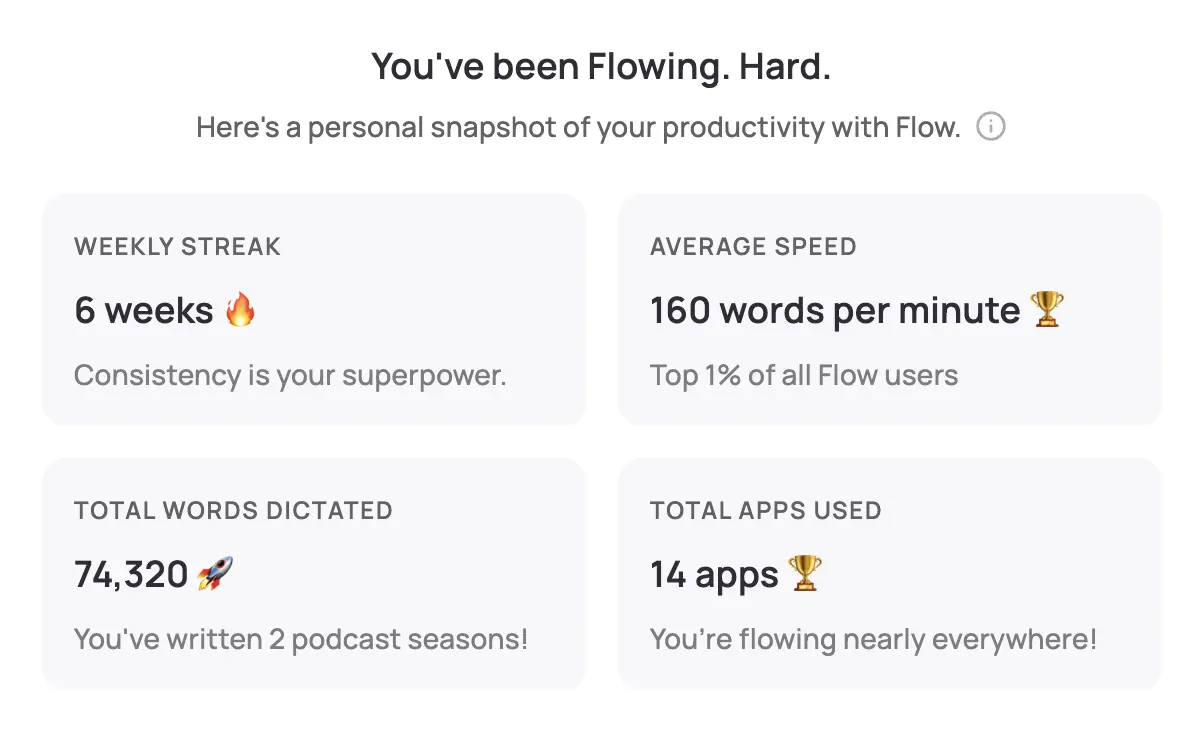
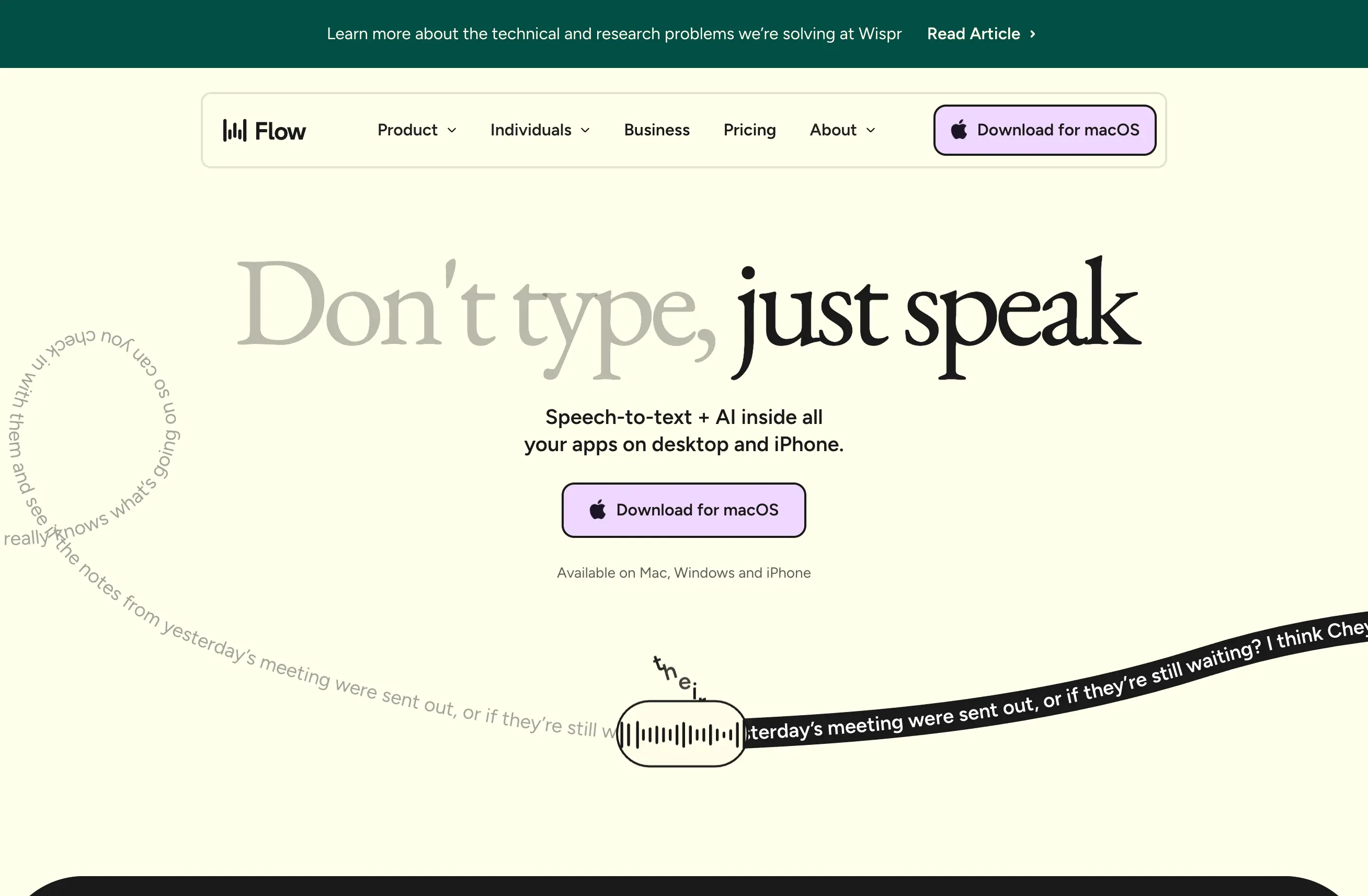
WisprFlow is voice-to-text that works in your EHR, Word, or any system where you document.
Why Therapists Use WisprFlow
Dictate notes between sessions: Speak your progress notes immediately after a session while details are fresh. Takes 2 minutes instead of 10.
Works with any EHR: SimplePractice, TherapyNotes, Jane App—WisprFlow works at the system level, so it types wherever you click.
Professional output: AI removes filler words and formats properly. You get clinical documentation, not a transcript.
Clinical Use Cases
- Progress notes: Dictate immediately after sessions. "Client presented with..." flows naturally when spoken.
- Treatment plans: Speak through goals, objectives, and interventions.
- Intake summaries: Long initial assessments become manageable when dictated.
- Letters and referrals: Professional correspondence in seconds.
The 10-Minute Rule
Many therapists try to document during the 10 minutes between sessions. Voice makes this realistic—2-3 minutes of dictation captures what 10 minutes of typing couldn't.
For Session Notes (WisprFlow)
WisprFlow processes your dictation—you're speaking your notes, not recording client sessions. This is no different from typing notes, just faster.
Daily Practice
- Before session: Review previous notes
- During session: Be fully present
- After session: 2-minute dictated progress note via WisprFlow
- End of day: Review and finalize documentation
Time Savings
| Task | Traditional | With Voice AI | Daily Savings |
|---|---|---|---|
| Progress notes (6 clients) | 60 min | 15 min | 45 min |
| Correspondence | 20 min | 5 min | 15 min |
| Total | 80 min | 20 min | 1 hour |
That's 5+ hours per week returned to clinical work or personal time.
Getting Started
- For documentation: Try WisprFlow - works with any EHR
Is this HIPAA compliant?
Tools can be configured for compliance, but your practice must evaluate any AI tool that touches client information. WisprFlow processes your spoken words (your notes), not recordings of clients.
Can I record sessions with clients?
That's a separate ethical and legal question. These tools are for YOUR documentation efficiency, not session recording.
Does dictation work with clinical terminology?
Yes. WisprFlow learns your vocabulary. DSM terminology, medication names, and therapeutic modalities are recognized accurately.
What about accents or speech patterns?
Modern AI handles diverse speech patterns well. Accuracy improves with use as the system learns your voice.
Paperwork burnout is real. Voice AI won't solve systemic issues in mental health, but it can give individual practitioners meaningful time back.
How each tool turns speech into text
The useful difference is where the text appears and how much work remains afterward.
Traditional typing stays precise and familiar for short edits.
WisprFlow dictates into any app with AI formatting, and it is free to try.

Discussion
Giscus