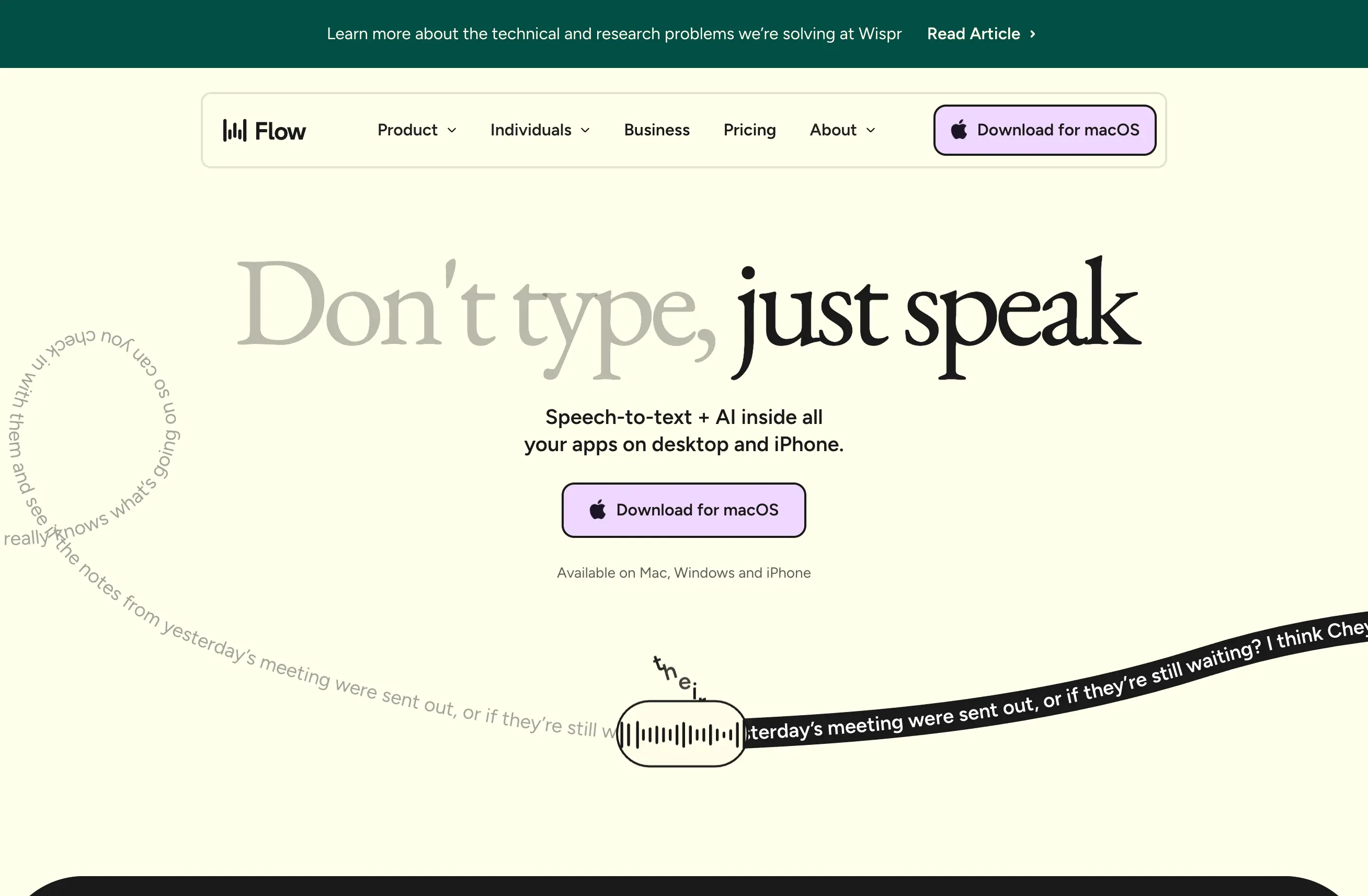
The Android dictation field changed on February 23, 2026, when WisprFlow launched native Android support. Before that date, Android users were choosing between Google Voice Typing, Speechnotes, Otter.ai, and a handful of niche alternatives. None of them were doing what WisprFlow was doing on iOS and macOS. Now that gap is closed. Here's how the current Android dictation field actually stacks up.
Google Voice Typing: Fast but Dumb
Google Voice Typing is built into every Android device and it's fast. Real-time transcription, zero latency, works everywhere the keyboard works. But it's not doing AI enhancement — it's doing speech-to-text and stopping there. No contextual correction, no smart punctuation from speech patterns, no custom vocabulary that learns your domain.
For quick search queries or short messages, it's fine. For anything longer than a sentence — emails, documents, dictated notes — the raw output quality starts to show cracks. You spend editing time cleaning up what it got wrong instead of refining what you actually meant.
Speechnotes: Solid for Simple Dictation
Speechnotes has been around for years and it's a competent, no-frills dictation tool. It transcribes reliably, supports offline mode via Google's on-device speech engine, and has a clean interface. Good choice for simple text capture where you just need words on a screen.
What it doesn't have: AI-powered post-processing, cross-platform sync, keyboard-level integration across other apps, or any intelligence about what you're trying to write. It records and transcribes. Full stop.
If your needs are simple, Speechnotes works. If you're dictating anything you'd describe as "work product," you'll outgrow it quickly.
Otter.ai: Built for Meetings, Not General Dictation
Otter.ai is genuinely excellent at what it was designed for: recording and transcribing meetings, with speaker identification and summary generation. If you're in back-to-back calls and need a searchable meeting record, Otter is purpose-built for that.
General dictation — emails, documents, notes, code comments — is not where Otter shines. The UX is optimized around the meeting recording workflow. Keyboard integration is limited. The free tier has hard usage caps. And the AI enhancement is meeting-oriented, not document-oriented.
Rev.ai and Transcribe Me: Asynchronous, Not Real-Time
Rev.ai and Transcribe Me are both primarily asynchronous transcription services — you upload audio, you get a transcript back. High accuracy, but the turnaround time (even with their AI tiers) isn't compatible with live dictation workflows. These tools solve a different problem: transcribing recorded audio files, not dictating new content in real time.
WisprFlow: AI Enhancement on Top of Accurate Transcription
WisprFlow is doing something the other options aren't: it runs your voice input through an AI layer that understands context, corrects errors semantically rather than acoustically, and produces output that reads like something you wrote rather than something you said.
The practical difference: you speak at a natural conversational pace, with hesitations and imperfect enunciation, and the transcript comes out clean. Other apps transcribe what you said. WisprFlow produces what you meant.
On Android specifically, the keyboard integration works system-wide. Set WisprFlow as your input method and voice-to-text is available in every app without switching context. That's the same capability iOS users have had since WisprFlow launched on that platform, now available to Android's user base as of February 2026.
The Accuracy Gap in Practice
In two weeks of parallel testing across the major Android dictation apps, the accuracy gap on technical content — software development terminology, product names, domain-specific jargon — was the most pronounced differentiator. Google Voice Typing handles common vocabulary well and falls apart on anything specialized. WisprFlow, with a loaded custom vocabulary, handles technical terms accurately and consistently.
For non-technical content — emails, narrative writing, general business communication — the gap narrows but WisprFlow's contextual editing still produces cleaner output.
Verdict
Google Voice Typing is free and good enough for casual use. Speechnotes is a solid basic option. Otter.ai is the right tool if meetings are your primary use case. None of them are competing with WisprFlow for professional dictation workflows.
Download WisprFlow for Android — the February 2026 Android launch brings the best AI dictation tool to the platform where most of the world's mobile users actually live.
How each tool turns speech into text
The useful difference is where the text appears and how much work remains afterward.
Traditional typing stays precise and familiar for short edits.
WisprFlow dictates into any app with AI formatting, and it is free to try.

Discussion
Giscus