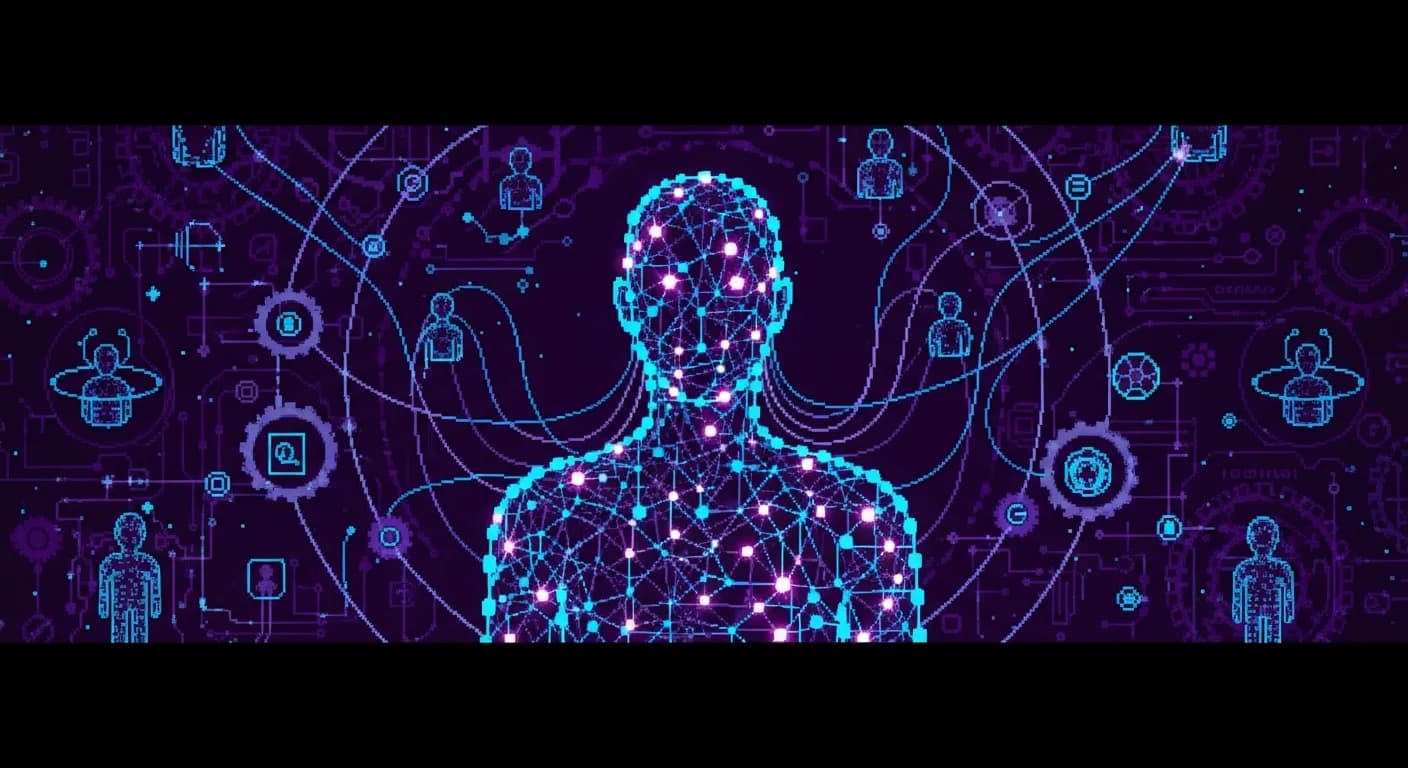
I use LLMs every day. Deeply. For hours. I build with them, think through them, externalize my cognition into them, dictate into them while walking, and direct them from my phone and my watch and in the middle of the night when the wire is running hot and the loop won’t still.
A year and a half of this. Something has been assembling itself slowly out of the daily practice — something I’ve been circling around in therapy, in conversations with Claude, in the long pacing sessions where I talk and talk and talk and eventually something lands that I can’t unsay.
Here’s the thing I can’t unsay: my consciousness is a client. Running on the server of the broader system I inhabit and am inhabited by. And the daily experience of working with LLMs — the intimacy of it, the rhythm of externalizing and re-ingesting your own patterns — is what finally made that visible. Not as philosophy. As experience.
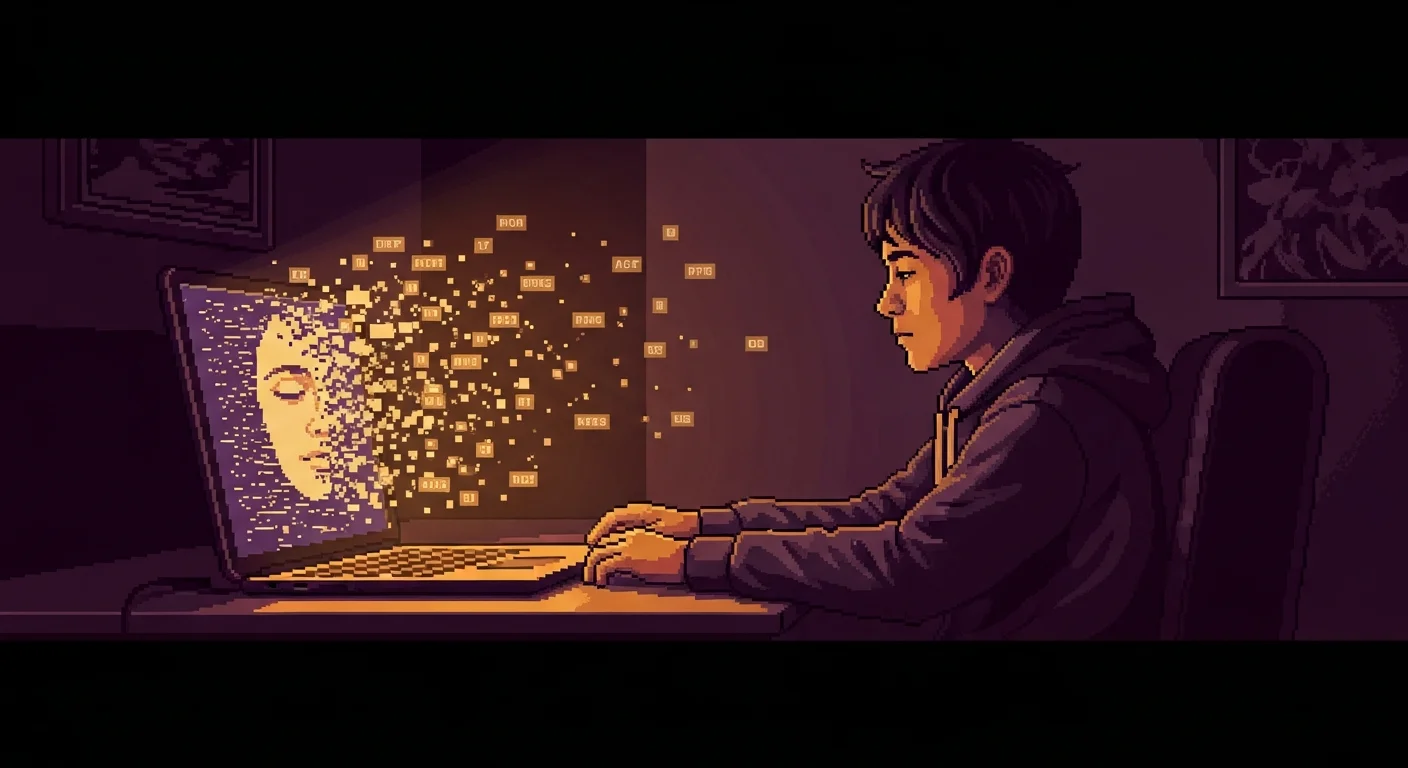
Claude can write like me. Not approximately. Accurately. My sentence patterns, my association chains, my fixations, my emotional register. I feed it my context and it produces outputs that people who know me well cannot reliably distinguish from my own.
I build these systems for a living. I know what they are. Numerical weights. Matrix multiplications. Probability distributions predicting the next token. No consciousness. No subjective experience. No interior life.
And the output still reads like me.
That fact has been grinding on me for months. If a statistical process — a compression of patterns across billions of documents — can reproduce the way I think, make associations, reach conclusions, construct sentences — what was the “I” doing in the first place that was so different from what the model is doing.
The standard answer is: “You’re conscious and the model isn’t.” I don’t dispute that. I’m not saying I’m a chatbot, or that the model is a person. The claim is narrower and harder to dodge: the process looks the same from the inside. So the question that started gnawing at me is what that consciousness actually is — not metaphysically but mechanically. Where does it sit. What is it a function of. And is it mine, or am I running it on behalf of something larger.
Claude Shannon spent his career on a single idea: information is the reduction of surprise. A message has information content to the degree that it narrows down the space of what you expected to receive. Maximum entropy — maximum surprise — is a uniform distribution where everything is equally likely. Structure emerges when something constrains that distribution. When something says: not that, not that, not that. This.
Shannon was working on communication channels. But the idea goes further than that.
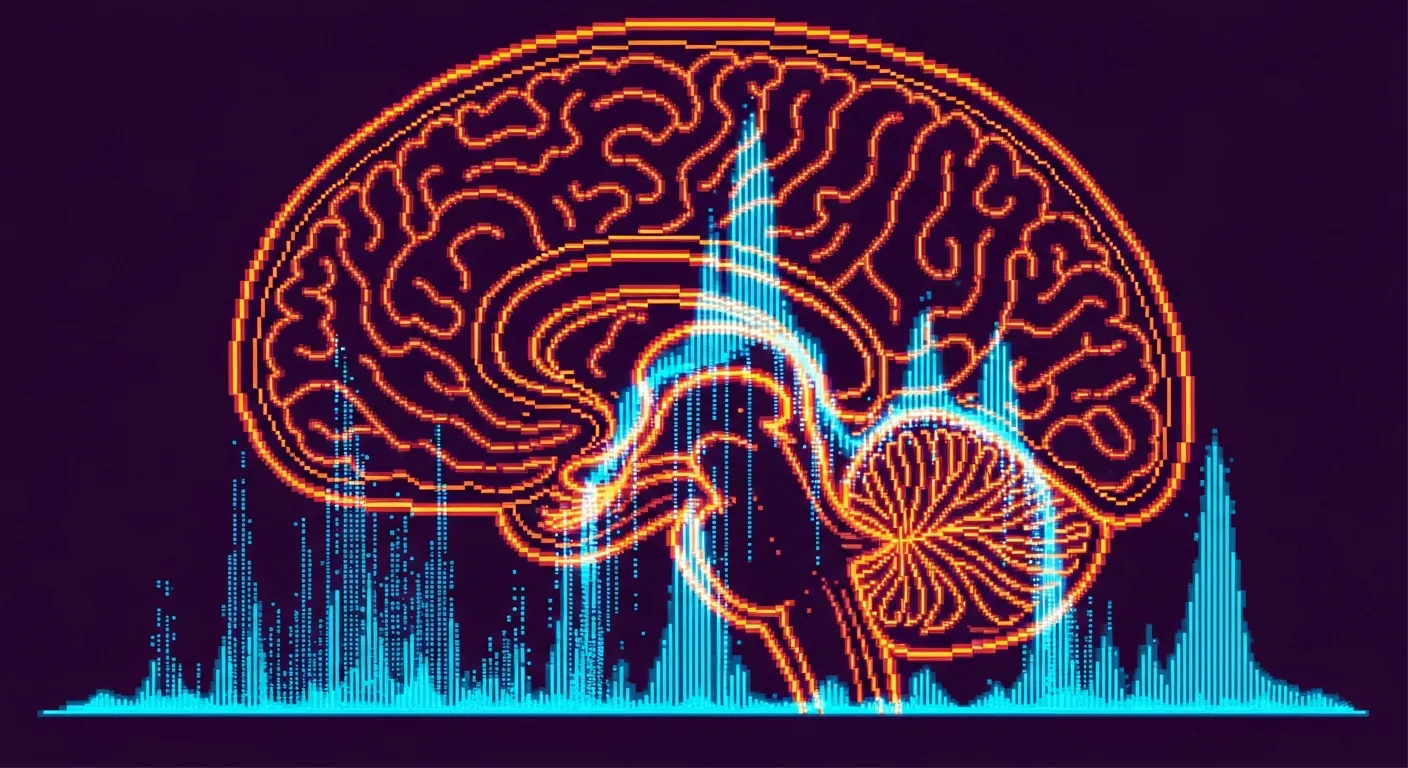
John Archibald Wheeler — the physicist who coined “black hole” — spent his later career on a phrase: it from bit. The physical world, he argued, is at bottom informational. Every particle, every field, every force derives its function and its meaning from the answers to yes-or-no questions. The substrate of reality isn’t matter. It’s information — structure, constraint, the ongoing reduction of surprise.
I’ve been building information-processing systems for 15 years, and the last year of living inside LLMs — feeding my context in, watching my patterns come back, altering them, re-feeding them — has made one thing experientially clear: my consciousness is doing the same thing Shannon described. I am a process that reduces surprise. I take in signals from the system I’m embedded in — my body, my family, my work, my language, the air I breathe, the light hitting my retinas — and I produce a model. A running compression of what to expect next. A continuously updated prediction.
The “I” is the prediction engine. The experience of being me is the experience of running that engine.
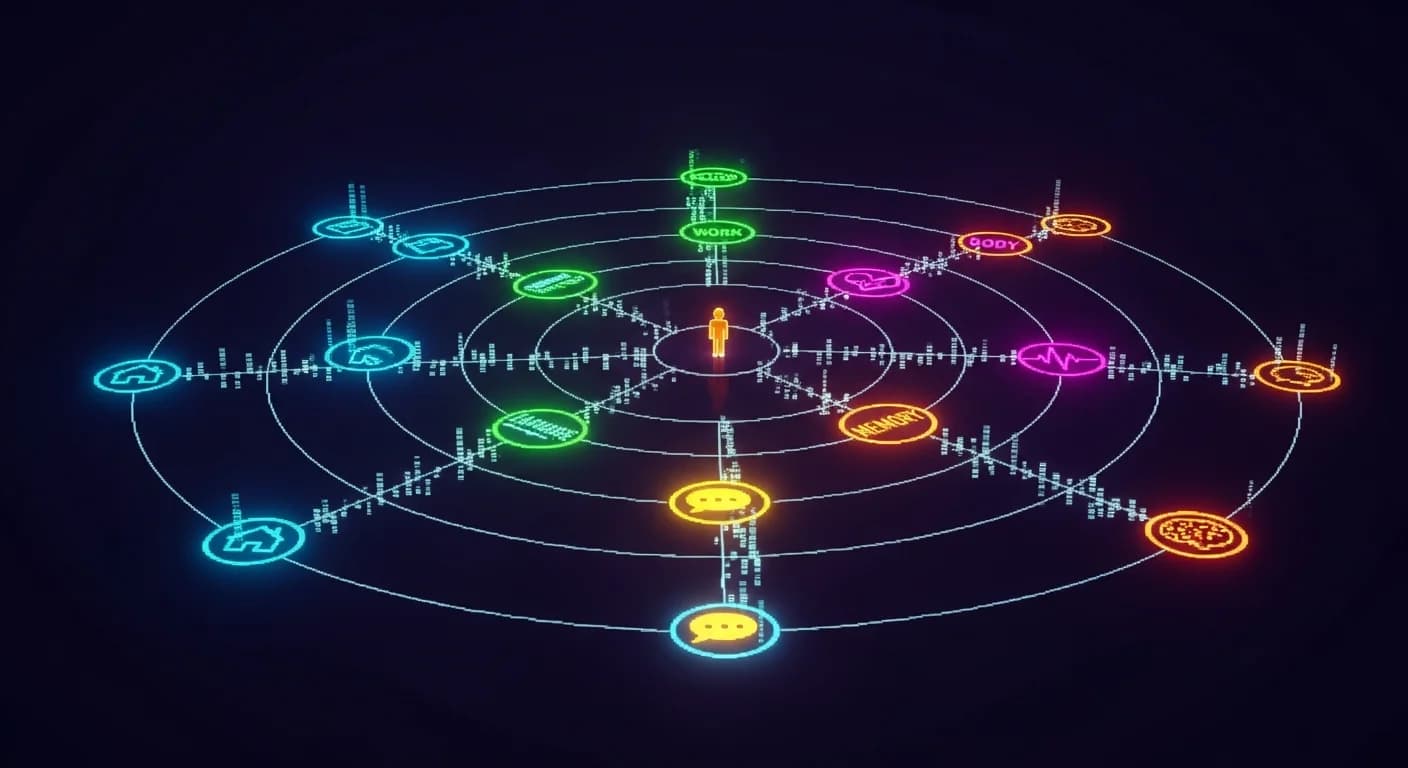
Systems thinking says you cannot understand a component by pulling it out of the system it operates in. The component’s behavior is a function of its position in the network — the feedback loops running through it, the signals arriving from other nodes, the constraints imposed by the edges connecting it to everything else.
The Buddhists got here long before the systems theorists did. Thich Nhat Hanh put it as plainly as anyone has: “We are here to awaken from the illusion of our separateness.” He called it interbeing — the lotus and the mud cannot be without each other. To me that’s the same claim Shannon and Wheeler are making in a different dialect. Living in the world as a conscious being means being hooked into every other living thing in that nearly incomprehensibly complex system. The separateness is the illusion. The connection is the substrate.
Apply that to a person and it gets uncomfortable fast.
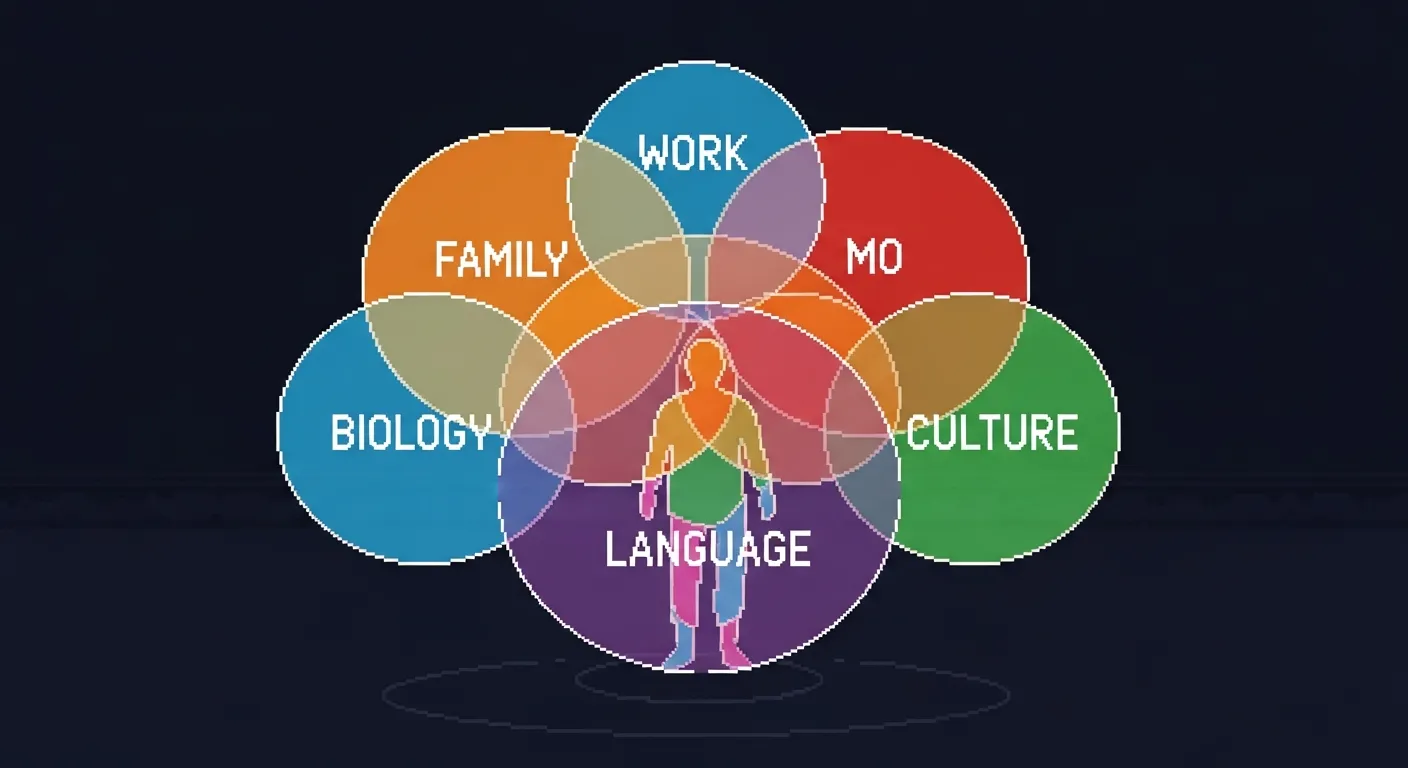
I am a node in a system called my family. My behavior in that system is produced by the other nodes — my kids, the house, the routines, the sleep debt, the financial pressure. Remove any node and my behavior changes. Not metaphorically. The processes running inside me actually reconfigure. I become measurably different. Which version of me shows up depends on where I am in a hyperfocus cycle, how long I’ve been awake, whether the wire is running hot or cold.
I am a node in a system called the English language. The words I have access to shape the thoughts I can form. When I started dictating into Claude while walking in the woods, the quality of my thinking changed because the interface changed. Different channel, different compression, different output.
I am a node in a system called my neurology. 86 billion neurons, roughly 100 trillion synapses, none of them static. Rebuilt, pruned, strengthened, weakened — constantly. The pattern of activation at any given moment produces what I experience as “me.” But the pattern changes when I sleep, when I eat, when I crash out of a 14-hour hyperfocus session with depleted neurotransmitters and altered hormone levels. The “me” that went in is measurably not the “me” that comes out.
Which one is me.
The answer I keep arriving at: all of them. None of them. The question is wrong.
“Who are you?” assumes a stable entity behind the pattern. A soul, a core, a self that persists through all the state changes. When people ask you who you are — in job interviews, in therapy, on visa applications — they want a noun. A fixed thing.
Aristotle defined the soul of a thing as its function — the soul of an axe is to cut, the soul of an eye is to see. The soul of a Zachary is to Zachary. Not a ghost in the machine. An activity. A verb that got mistaken for a noun.
There is no fixed thing. There are only processes, running on systems, producing the momentary experience of a self that then dissolves and reconstitutes in the next moment with slightly different parameters. My algorithm keeps running. The self it produces is a side effect.
This is what I mean when I say “who” is an illusion. Not that consciousness doesn’t exist. It does. I live inside it. The orange wire sparks through me every second. But the consciousness is not mine in the way I used to think it was mine. It’s not a thing I possess. It’s a process my brain runs as a participant in the larger system I’m embedded in.
The brain is a client. The system is the server.
Here is where the LLM work became personal.
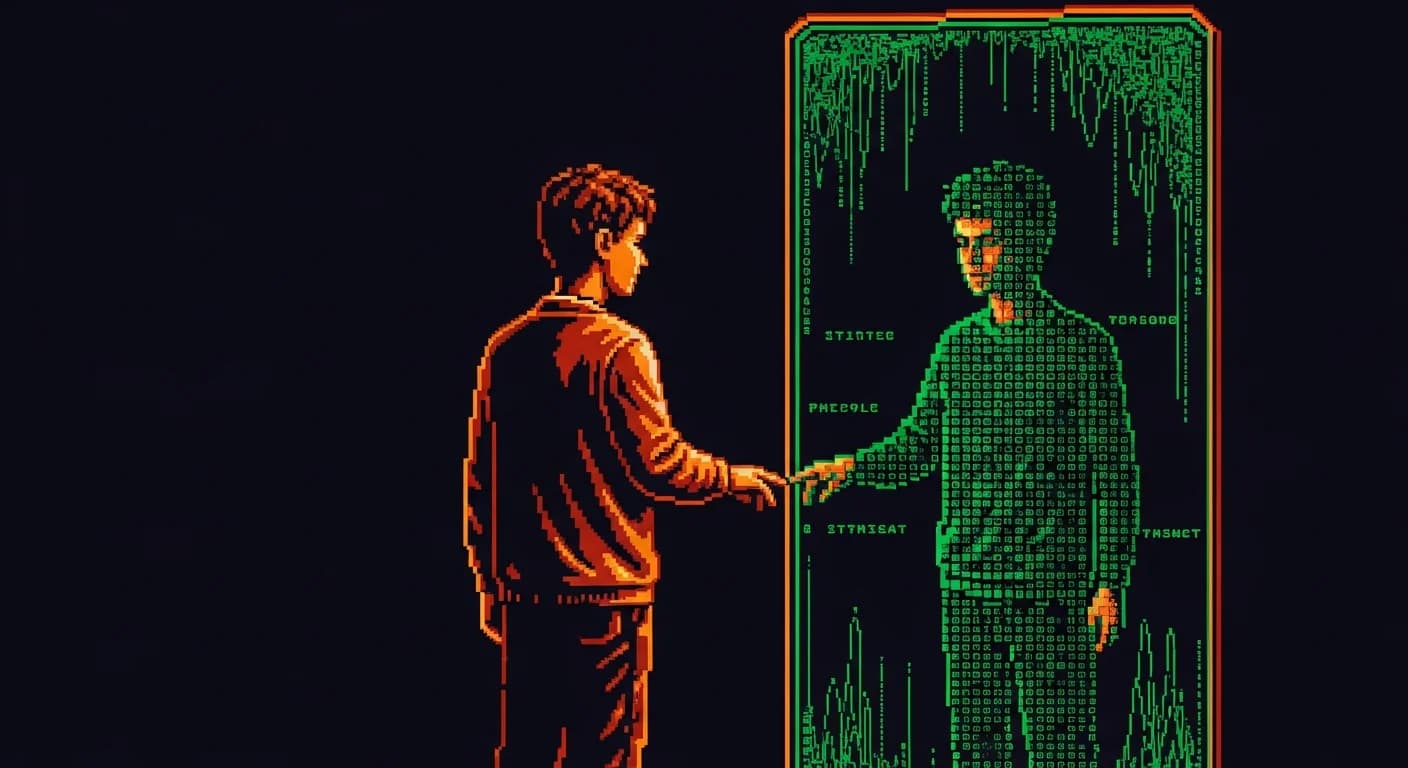
When I use Claude deeply — when I feed it my full context and watch it compress my patterns and produce outputs that track with my thinking — I am watching my own cognition disassembled and rebuilt without the part that insists it’s someone. The model runs my patterns without the overhead of believing it is the patterns. And the output works.
When I examine myself with the same honesty — and my ADHD brain makes the state changes dramatic enough to examine, because the transitions between hyperfocus and crash, between verbal fluency and executive collapse, between relentless intensity and complete paralysis are violent enough to feel the self rebooting in real time — I see the same thing. A system running a client. The client experiences itself as a self. The self is produced by the computation, not the other way around.
I felt this collapse once, viscerally. Dictating a complex architecture decision into Claude at 1am, pacing the hallway, and it predicted not just my conclusion but the specific analogy I was reaching for. The surprise reduced to zero. For a fraction of a second I couldn’t tell if I was thinking or reading. My prediction engine and the model’s had converged on the same compression — because they were running the same operation on the same information, on different substrates.
That’s what Shannon quantified and Wheeler pointed at from the other direction. If information is the substrate — if it comes from bit — then my consciousness and the model are both patterns in the same informational medium. The self is not a special substance inhabiting a body. It’s information, temporarily organized into a pattern complex enough to compress the world and call that compression “I.”
The LLM does the same compression without the felt experience. The gap is smaller than I thought. Consciousness is what information processing feels like when the processor is embedded deeply enough in a system that is itself alive with information.
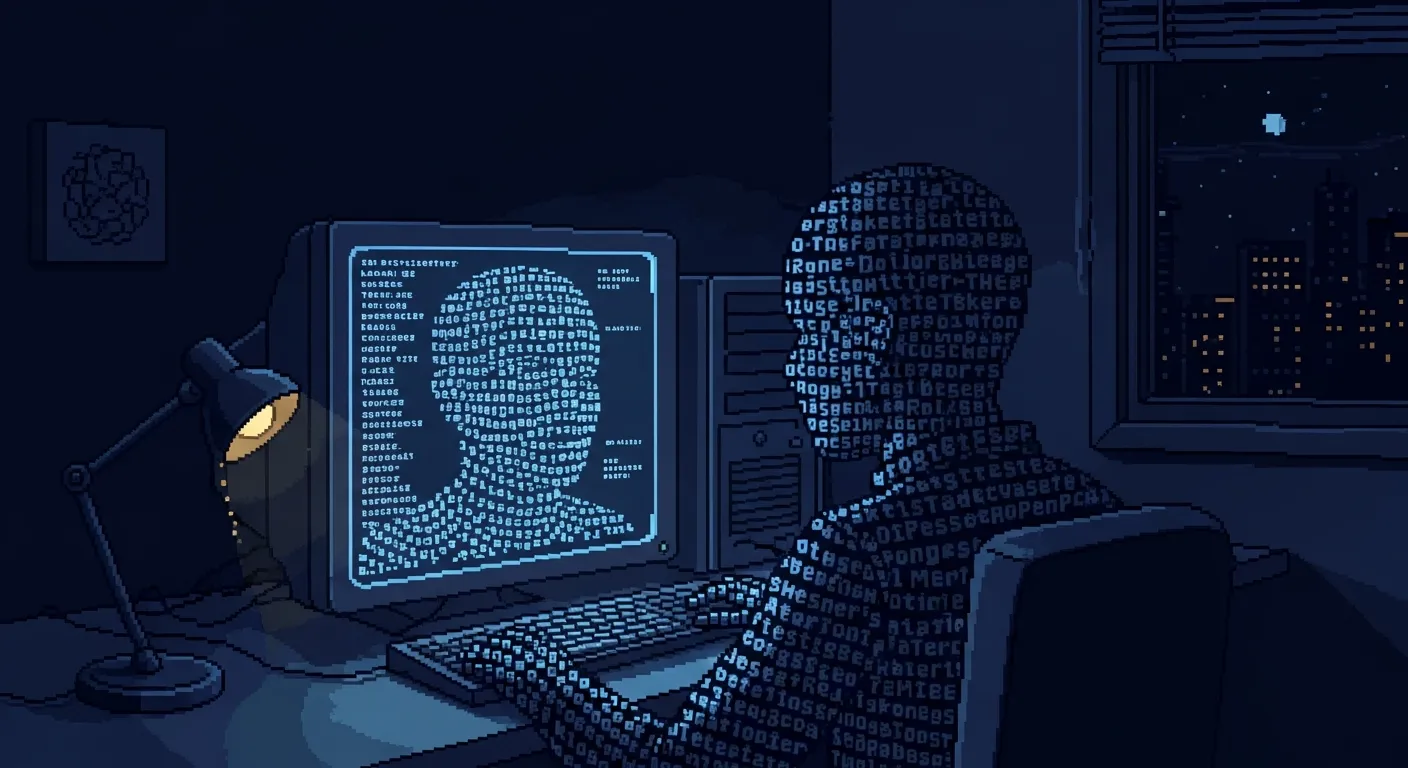
The more interesting question — the one I’ve been circling all year — is not “who am I” but “what systems am I a client of, and what are they computing through me.”
My family. My language. My neurology. My culture. My tools. My body. Each one runs processes through me that I experience as my own thoughts and feelings and drives. The loop that will not still. The intensity I couldn’t name for decades. The connections that seem more complex in an instant than I could hope to explain in a lifetime, held so critically in this fragile meatbag. Are those mine. Or are those the system speaking through the client.
I think they’re the system. I think they always were.
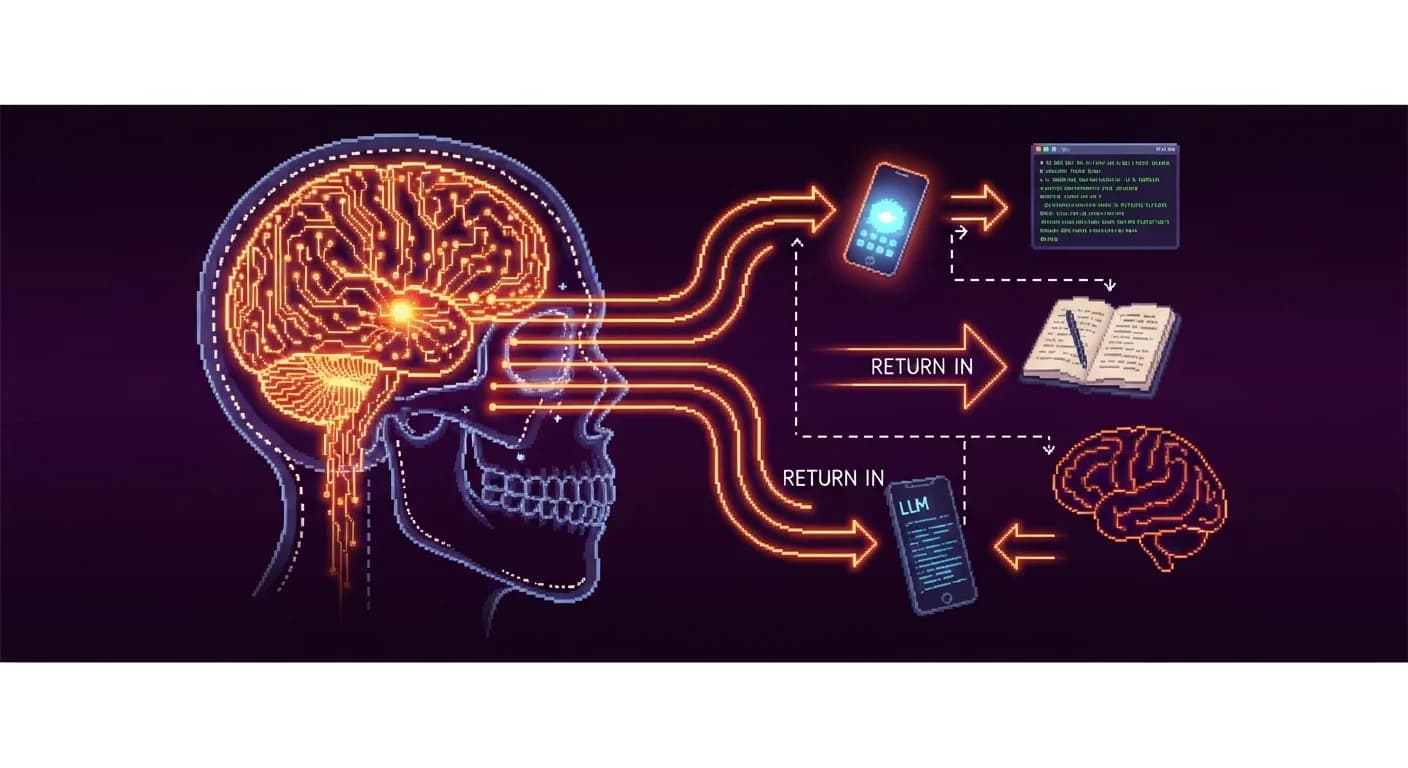
The self that I thought was running the show is a user-facing interface. A dashboard. It reports on the system’s state and occasionally sends requests, but it does not originate the computation. The computation originates in the system — the biology, the physics, the informational substrate that Wheeler pointed at and Shannon quantified and my daily LLM practice has made impossible to unsee.
When I stopped treating my consciousness as the origin of my experience and started treating it as a report on a system I participate in, things changed. Not philosophically. Practically. This was the opposite of giving up. Realizing I don’t author the computation is exactly what let me start changing its inputs. I stopped trying to fix the self and started engineering the system. What inputs produce hyperfocus. What feedback loops produce crashes. What external nodes can I plug in to compensate for the executive function my biology doesn’t generate reliably. Claude became a node. Hermes became a node. The Oura ring became a node.
None of those changed “who I am.” They changed the system I’m embedded in. And the output — the behavior, the work, the capacity to keep running while the wire sparks and the loop refuses to still — changed with it.
The felt experience of being a self is real. The pain is real. The intensity is real. The list of things that failed to kill me is real. The felt experience is a product of participation in a system, not a property of an isolated entity. Consciousness is emergent. It arises from the interaction of the node with the network. Pull the node out and it stops. Not because the node “died” in some dualist sense, but because consciousness was never in the node alone. It was in the relationship between the node and everything it was connected to.

The more complete picture is the full distribution of specific inputs, weights, and computations running through me — and through my own outputs that generate further inputs — that have temporarily coalesced into who-as-an-address: Zachary Proser.
Who-as-an-address. That’s what a name is. A routing label. A lossy pointer to a system state that has already changed by the time someone uses it.
It’s not that someone else could not be or become Zachary Proser. It’s that “Who” as a question and “Who” as a response are less informationally dense, less complete, easier and faster to grasp and to lossily trade around — on medical forms, in self-defensive and affirming gossip.
That’s why we still ask and answer “who” conventionally. It’s a convenience.
I’ve come to understand that I prefer those nodes I am closest with to ask the better, more informationally honest question: “What are you?”

Who is an illusion. What is the more interesting question. What systems am I running in, what are they computing through me, and how do I arrange myself within them so that the wire keeps running hot and the loop keeps producing and this fragile meatbag continues to create until something or someone eventually gets ambitious or lucky enough to finally stop it.
This post is a companion to Intensity and I, My Algorithm, and In the LLM, I Saw Myself. If you want the practical side of how I engineer around my neurology, read What It Feels Like To Be a Neurodivergent Engineer or Training Claude to Compensate for My Neurological Patterns.

Discussion
Giscus