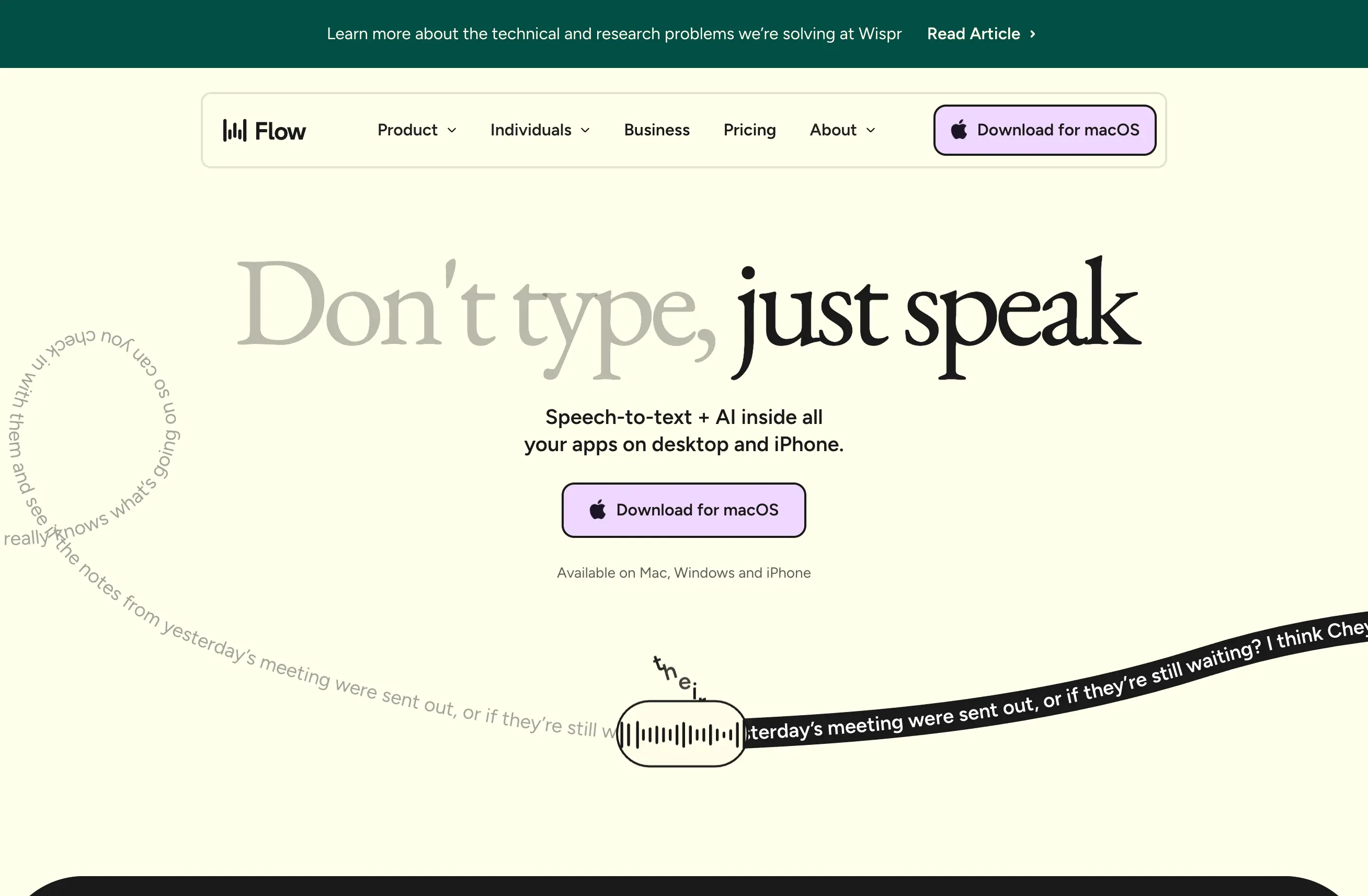
The WisprFlow Android app launched February 23rd, 2026, bringing voice-controlled coding to mobile development workflows. After testing it for three weeks on my Pixel 8 Pro, the results surprised me.
I'm hitting 179 words per minute speaking code into my phone. That's faster than most developers type on desktop keyboards.
Mobile Development Reality Check
Most mobile development happens on laptops anyway. But the WisprFlow Android app changes the equation for specific workflows:
Code reviews on the go — Speaking comments and suggestions while walking between meetings feels natural. The voice-to-code accuracy means my feedback includes actual implementation suggestions, not just "looks good."
Documentation sprints — I knocked out three README files and a troubleshooting guide while waiting for flights. Speaking documentation flows better than typing it.
Bug triage — Creating Linear tickets with full technical context while looking at the actual device exhibiting the bug. No context switching between phone and laptop.
The app shines for tasks where you're already holding your phone and thinking about code.
Voice Recognition Accuracy
The Android app uses the same speech recognition as the desktop version. Function names, variable declarations, and even complex nested objects come through clean.
Testing with React Native code:
const handleUserAuthentication = async (credentials) => {
  try {
    const response = await authService.validateCredentials(credentials);
    if (response.success) {
      setAuthState({ isAuthenticated: true, user: response.user });
    }
  } catch (error) {
    console.error('Authentication failed:', error);
  }
};
That entire function came from voice input. Zero manual corrections needed.
Android-Specific Features
The mobile app includes several features that make sense for Android workflows:
Intent integration — Share text from any app into WisprFlow for voice processing. Useful for turning Slack messages into proper bug reports.
Background processing — Keep recording while switching apps. Your voice input continues processing while you reference docs or check logs.
Clipboard sync — Generated code automatically copies to clipboard for pasting into your IDE.
Battery Impact
Three weeks of testing shows minimal battery drain. WisprFlow uses local processing for speech recognition, so it's not constantly hitting network APIs.
On my Pixel 8 Pro, 30 minutes of voice coding uses about 3% battery. Comparable to a podcast app.
Integration with Development Workflows
The Android app works best as part of a larger voice-coding setup. I keep WisprFlow running on both desktop and mobile, switching context as needed.
Desktop for heavy coding — Full IDE integration, complex refactoring, debugging sessions.
Mobile for documentation and communication — README files, commit messages, issue descriptions, code review comments.
The handoff between devices stays smooth because everything syncs through the same WisprFlow account.
Bottom Line
The WisprFlow Android app fills a specific niche. It turns dead time into productive coding time, especially for documentation and communication tasks.
If you're already using voice for development work, the mobile app extends that workflow to scenarios where pulling out a laptop isn't practical.
Try WisprFlow free on Android and see how voice coding changes your mobile development workflow.
How each tool turns speech into text
The useful difference is where the text appears and how much work remains afterward.
Traditional typing stays precise and familiar for short edits.
WisprFlow dictates into any app with AI formatting, and it is free to try.

Discussion
Giscus