Nonprofit organizations operate with a structural resource tension that never fully resolves: program staff are hired for their ability to deliver services, then also expected to generate the documentation that sustains the funding that pays for those services. The grant writer who is also the program coordinator who is also the community outreach lead is a common configuration, not an exceptional one.
The documentation burden is substantial. Grant narratives. Program progress reports. Outcome measurement summaries. Funder meeting recaps. Donor thank-you letters. Board meeting minutes. Impact stories for the annual report. Each of these takes hours to produce through traditional typing, and they compete directly with program delivery for the same staff capacity.
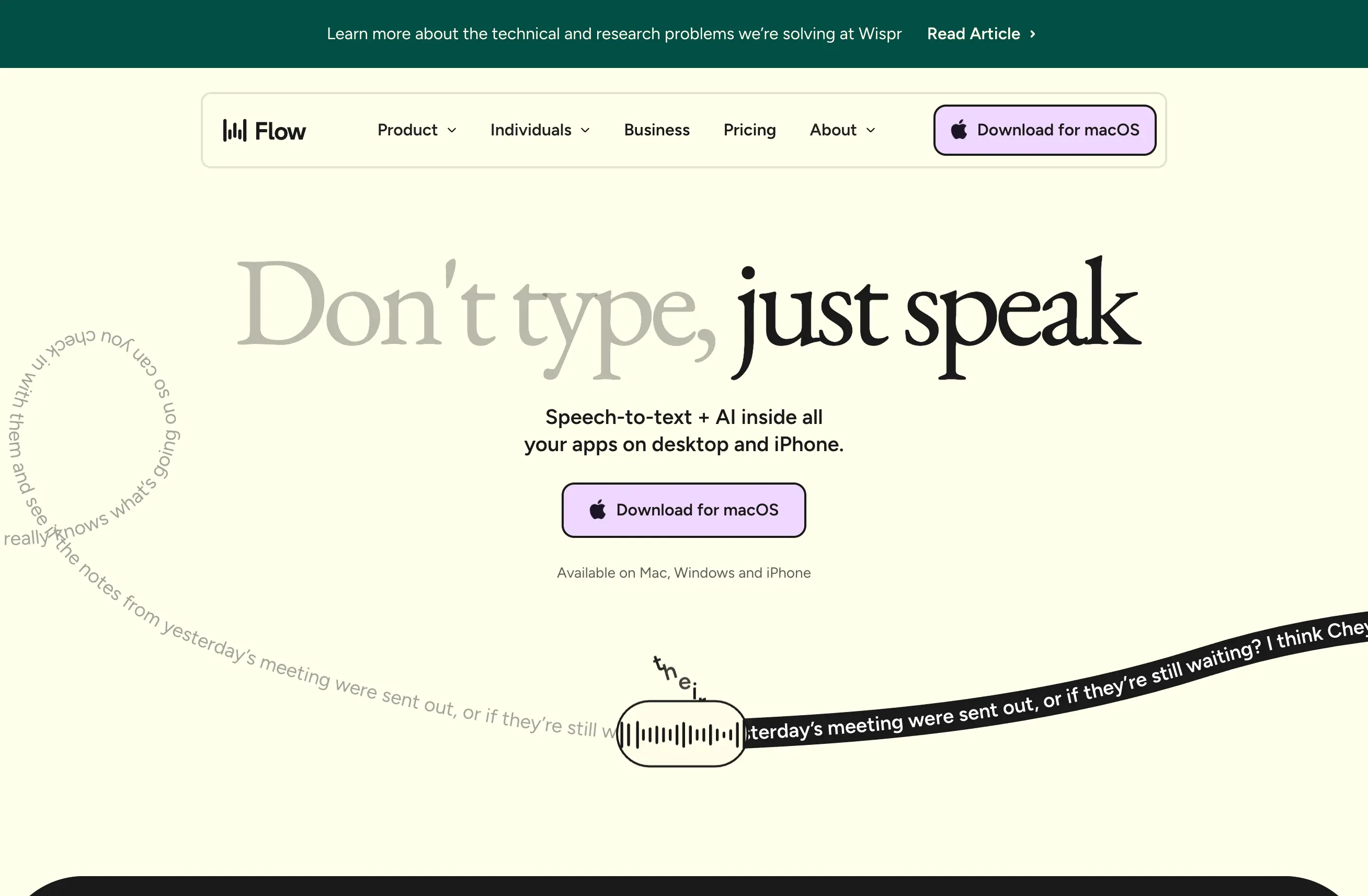
WisprFlow changes the throughput equation. At 150+ words per minute, voice dictation is three to four times faster than average typing speed. Nonprofit staff who learn to dictate documentation verbally can produce the same administrative output in significantly less time—time that goes back to program delivery.
Grant narrative drafting
Grant narratives have a predictable structure: statement of need, program description, goals and objectives, evaluation methodology, organizational capacity, and budget narrative. Experienced grant writers know this structure and can articulate the content for each section verbally faster than they can type it.
WisprFlow captures that verbal articulation accurately and feeds it into Google Docs, Microsoft Word, or whatever writing environment the grant writer uses. The draft that results from dictating each section out loud—in the time it would take to drive to the office—is the starting point for editing and refinement, not a blank page.
For organizations managing multiple active grant applications, the time savings compound. Dictating a 1500-word program narrative in 12 minutes instead of 45 means handling four times as many grant applications with the same staff hours. The program that was unfunded because the application deadline passed while other reports consumed staff capacity now has a viable path to funding.
Program progress reports and outcome documentation
Funders require progress reports on specific timelines—quarterly, semi-annual, annual. These reports document program activities, participant metrics, outcome achievement, and budget expenditure against goals. They're formulaic enough to be dictatable: you know what data goes in each section, and you can narrate it from the program data in front of you.
Program coordinators who conduct home visits, community workshops, or field services often accumulate mental documentation of their work throughout the day. WisprFlow lets them dictate that documentation during transit—returning from a home visit, walking between program sites, or during a break in service delivery. The notes that used to wait until end-of-day (and sometimes never got written) are captured while the details are fresh.
For evaluation-focused organizations required to document outcome achievement at the individual participant level, WisprFlow accelerates case note production. The caseworker narrates observations, service activities, and progress indicators verbally; WisprFlow transcribes them into the case management system or documentation template. The caseworker's mental bandwidth stays focused on the participant rather than on the typing task.
Donor communications and stewardship
Major donor relationships require personal communication that feels individual rather than templated. Personalized thank-you letters, impact updates tied to specific gifts, stewardship calls memorialized in email follow-ups—these communications are the infrastructure of donor retention, and they're time-intensive to produce.
WisprFlow makes this personalization faster. The development director can dictate a donor thank-you letter that references specific details from a recent site visit—naming the program participant the donor met, describing the outcome that resulted from the programmatic work they funded—in the time it takes to walk from one meeting to the next. The letter is personal because the staff member is narrating from direct experience, not generating from a template.
For fundraising campaigns, WisprFlow accelerates the cultivation materials that precede major gift asks. The case for support, the program overview one-pager, the impact narrative for a specific funding priority—all of these can be drafted by voice faster than by keyboard. The development team produces more cultivation materials in the same staff hours, which translates to more major gift conversations.
Board meeting preparation and minutes
Nonprofit boards require substantive preparation: briefing materials, financial reports, program updates, strategic discussion documents. Executive directors who prepare these materials for board meetings spend hours producing documents that board members read in twenty minutes.
WisprFlow accelerates the preparation side. The executive director who narrates the program update during the commute—covering the key metrics, the significant developments, the decisions needed from the board—produces a draft that requires editing rather than origination. The financial narrative that explains the budget variance can be dictated during a walk; the strategic discussion document can be spoken from the outline that's already in the director's head.
Post-meeting, the board secretary who dictates minutes from notes taken during the meeting produces a draft minutes document in a fraction of the time required for traditional transcription.
Field documentation and community outreach
Nonprofit program staff working in the field—community health workers, social services caseworkers, youth program staff, environmental educators—generate significant documentation requirements from work done away from a desk. Traditional documentation workflows require returning to the office to enter data and write reports.
WisprFlow changes this by making field documentation possible in real time. A community health worker can dictate client visit notes immediately after leaving the client's home. A youth program staff member can document a participant interaction while waiting for the next session to start. An outreach coordinator can draft a community partner email during the commute home.
The documentation that gets entered in real time is more accurate and more detailed than documentation entered at the end of a long day. For programs where detailed documentation affects service planning, the data quality improvement is operationally significant. For organizations subject to audit—government-funded programs with strict documentation requirements—timely and accurate field documentation reduces compliance risk.
WisprFlow gives nonprofit staff a way to match their documentation output to their program output without requiring additional staff hours. The result is organizations that can report their impact with the same thoroughness they apply to delivering it.
How each tool turns speech into text
The useful difference is where the text appears and how much work remains afterward.
Traditional typing stays precise and familiar for short edits.
WisprFlow dictates into any app with AI formatting, and it is free to try.

Discussion
Giscus