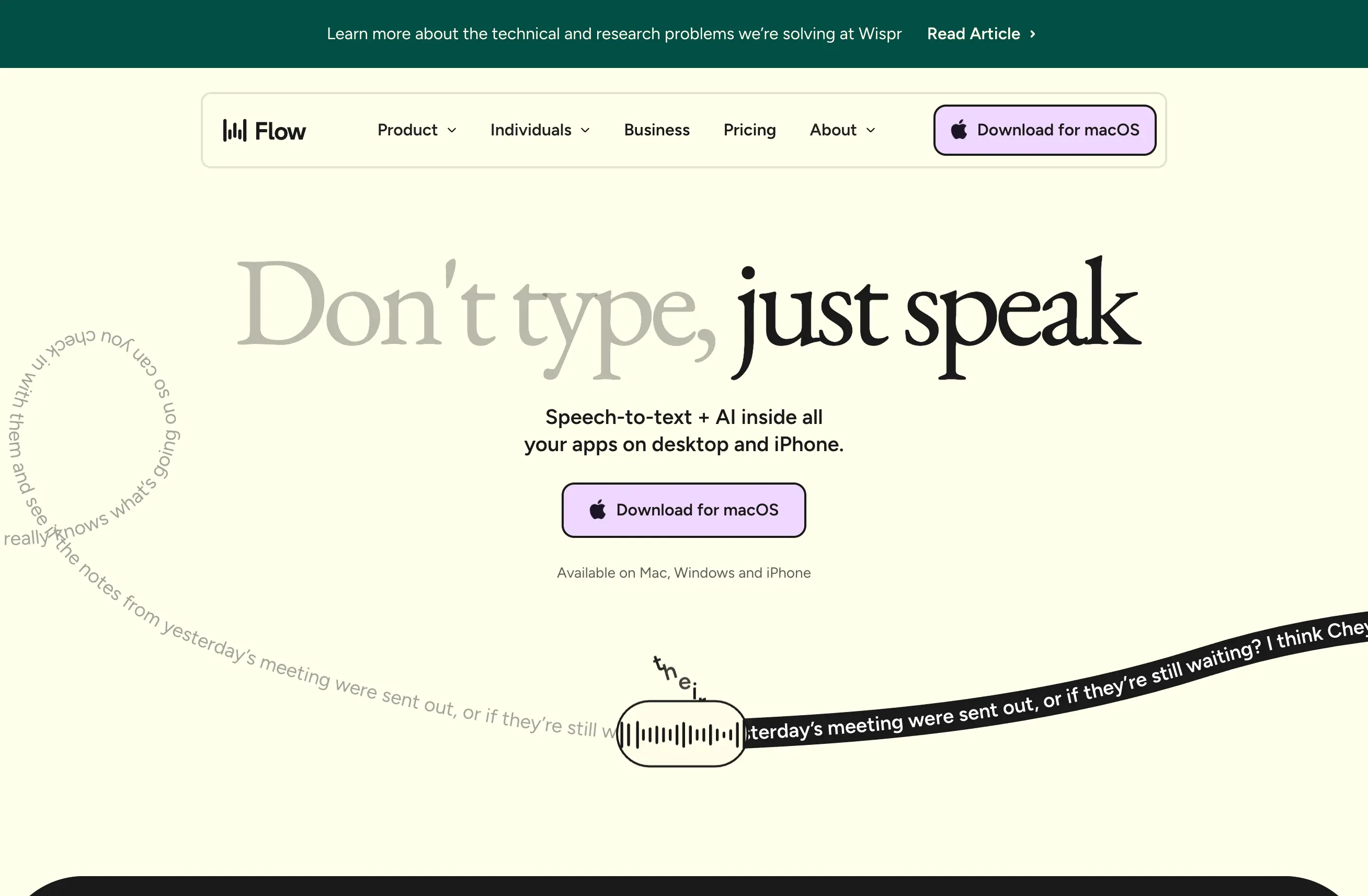
Apple's Voice Memos app and Google Recorder are solid for quick voice notes, but they're just storage. WisprFlow adds AI transcription that makes your recordings actually useful. Here's when the upgrade makes sense.
The Basic Voice Memo Problem
Voice recordings are a productivity dead-end. You capture the thought, but finding and using that information later is painful:
- No searchable text means scrolling through hours of audio
- No organization beyond folders and basic tagging
- Can't copy quotes or action items without re-typing
- Sharing requires sending entire audio files
What WisprFlow Adds
Real-time transcription: See text as you speak, not just audio waveforms
Searchable content: Find specific quotes or topics across all recordings
Export options: Copy text, send summaries, integrate with other apps
AI processing: Automatic summaries and action item extraction
When Voice Memos Are Enough
Don't pay for WisprFlow if you:
- Record very short notes (under 2 minutes)
- Rarely reference old recordings
- Only need basic audio reminders
- Don't share voice content with others
The built-in apps work fine for simple personal reminders and quick thoughts.
When WisprFlow Makes Sense
Long-form content: Meeting notes, interviews, brainstorming sessions. Anything over 10 minutes becomes much more valuable with searchable transcripts.
Professional use: Client calls, research interviews, lecture notes. You need to find and reference specific information later.
Team collaboration: Sharing voice insights with colleagues. Text summaries work better than making people listen to audio files.
Cross-platform access: Voice Memos locks you into Apple's ecosystem. WisprFlow works across devices and platforms.
Accuracy Comparison
I tested the same 10-minute technical discussion across all three tools:
WisprFlow: 94% accurate transcription, available immediately
Google Recorder: 86% accurate, Android-only, basic text export
Apple Voice Memos: Audio only, no transcription
The accuracy difference is significant for professional content with technical terms or proper names.
Feature Gap Analysis
| Feature | Voice Memos | Google Recorder | WisprFlow |
|---|---|---|---|
| Audio recording | ✓ | ✓ | ✓ |
| Real-time transcription | ✗ | ✓ | ✓ |
| Searchable text | ✗ | Basic | Advanced |
| Cross-platform | iOS only | Android only | All platforms |
| Export options | Audio only | Text, Audio | Multiple formats |
| AI summaries | ✗ | ✗ | ✓ |
| Team sharing | Basic | Basic | Advanced |
Pricing Reality
Voice Memos / Google Recorder: Free
WisprFlow: $10-20/month after free trial
The cost only makes sense if you regularly need transcribed voice content for work or complex personal projects.
Migration Strategy
If you have years of voice recordings in the built-in apps, you don't need to abandon them. Use both:
- Keep using Voice Memos/Recorder for quick personal reminders
- Switch to WisprFlow for anything you might need to reference, search, or share later
Many users find this hybrid approach works well. Quick thoughts go to the free app, substantive content goes to WisprFlow.
Bottom Line
Voice Memos and Google Recorder are great for what they do, but they're just storage. WisprFlow turns your voice recordings into searchable, shareable, actionable content.
The upgrade makes sense if you regularly record substantive content for work or if you want to actually use your voice notes instead of just collecting them.
Try WisprFlow's free trial with content you'd normally put in Voice Memos. The difference becomes obvious when you can search, share, and copy text from your recordings.
How each tool turns speech into text
The useful difference is where the text appears and how much work remains afterward.
Voice Memos is a good fit when you want to capture audio and review a transcript later.
WisprFlow dictates into any app with AI formatting, and it is free to try.

Discussion
Giscus