
Legal work is word-intensive. Contracts, briefs, motions, client emails, meeting notes—the volume of text lawyers produce is staggering. Voice AI tools are now good enough to meaningfully reduce this burden while maintaining the precision legal work demands.
This guide covers two tools I've found particularly effective for professional document work: one for dictation and one for meeting capture.
The Tools
WisprFlow for Legal Dictation

WisprFlow is a voice-to-text application that works system-wide on Mac. Speak naturally, and polished text appears wherever your cursor is focused—Word, Outlook, your document management system, anywhere.
Legal-Specific Benefits
Draft correspondence faster: Client emails, opposing counsel letters, and internal memos can be dictated rather than typed. The AI removes filler words and properly formats the output.
Works with legal terminology: WisprFlow learns your vocabulary. After a few uses, it recognizes case names, legal phrases, and party names specific to your matters.
Dictate into any application: Whether you're using Clio, MyCase, NetDocuments, or plain Word, WisprFlow works because it operates at the system level.
Practical Use Cases
- Email responses: Dictate a 300-word response in 90 seconds instead of typing for 5 minutes
- First drafts: Speak through the structure of a motion or memo before refining
- Time entries: Dictate detailed time descriptions directly into your billing software
- Notes to file: Document client calls and strategy sessions immediately after they happen
Speed Comparison
Average typing speed: 40-60 WPM WisprFlow voice speed: 150-180 WPM Effective improvement: 2-3x faster initial drafts
Granola for Client Meetings and Depositions
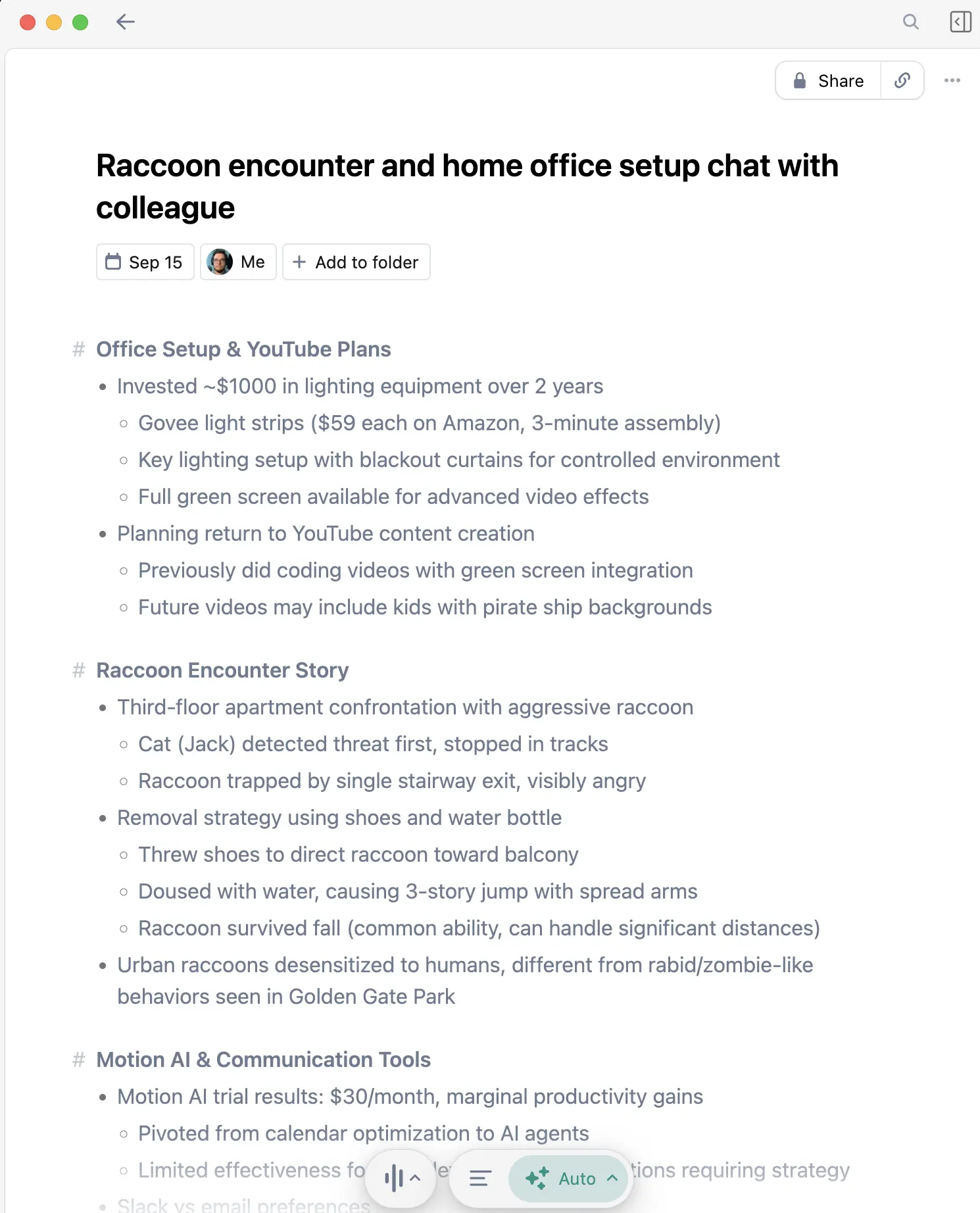
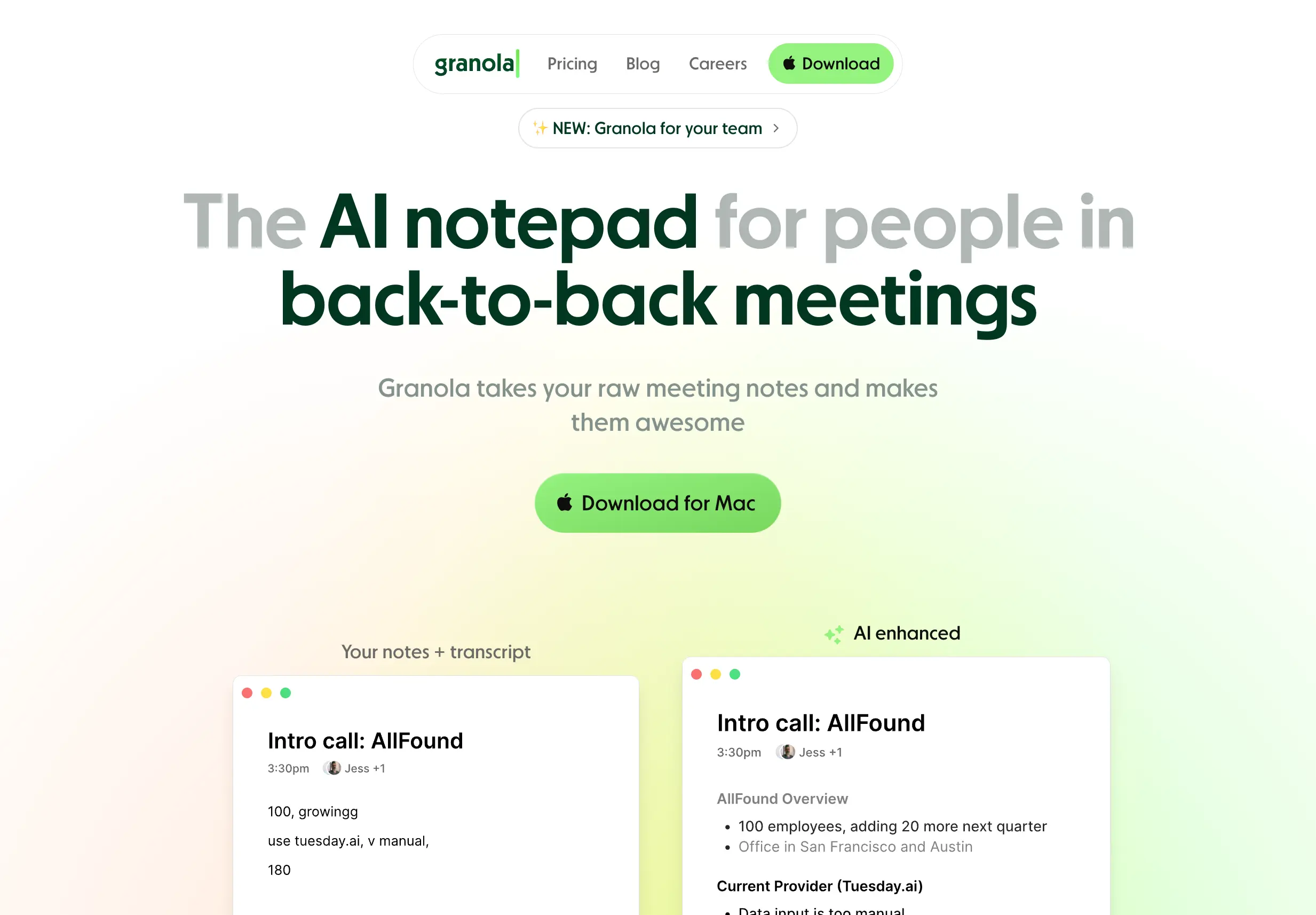
Granola captures meeting audio and generates structured notes without a bot joining your call. This distinction matters significantly in legal contexts.
Why "No Bot" Matters for Lawyers
Other meeting transcription tools join calls as a visible participant, announcing their presence. This can:
- Make clients uncomfortable discussing sensitive matters
- Alert opposing counsel that the meeting is being recorded
- Create awkward interruptions at the start of every call
Granola captures audio from your device's microphone. The recording is invisible to other participants.
Legal Use Cases
Client intake calls: Capture everything the client says without breaking eye contact to type notes. Review later to ensure you didn't miss critical facts.
Deposition preparation: Use the mobile app to record witness preparation sessions. Granola extracts key points and potential issues.
Settlement negotiations: Focus on negotiating, not note-taking. The transcript preserves exactly what was offered and discussed.
Team meetings: Strategy sessions generate automatic action items. No more "who was supposed to do what?"
Privacy and Security
- Enterprise-grade encryption
- Audio processed securely
- No data used to train AI models
- See their trust center for compliance details
Addressing Common Concerns
Attorney-Client Privilege
Both tools process data with encryption. However, firms should review their data handling policies and consider:
- Where data is stored
- Retention policies
- Access controls
Neither tool retains data longer than necessary for processing, but due diligence is always appropriate.
Court Reporter Replacement?
These tools don't replace official court reporters or certified transcriptionists for record purposes. They're productivity tools for internal work product and informal meetings.
Accuracy for Legal Terminology
WisprFlow's personal dictionary feature learns specialized vocabulary. After initial corrections, it reliably recognizes:
- Case names (Smith v. Jones)
- Legal phrases (voir dire, res judicata)
- Client and party names
- Court names and judge names
Recommended Workflow
For a typical client meeting:
- Before: Have Granola synced with your calendar (automatic meeting detection)
- During: Focus on the client. Take minimal notes if any.
- After: Review Granola's summary and action items. Use WisprFlow to dictate your notes-to-file.
For document drafting:
- Outline the document structure (can be dictated)
- Dictate the substance section by section
- Review and refine in your word processor
- Use voice for revisions: "Delete the second paragraph and replace with..."
Getting Started
WisprFlow offers a free trial, and new Granola users get their first three months free:
WisprFlow: Try free - Install takes 2 minutes. Start with email dictation to build comfort.
Granola: Get three months free - New users can sync their calendars and generate notes from real meetings for a full quarter before paying.
Related Guides
- Voice AI for Small Business Owners - General business productivity
- AI Voice Tools for Doctors - Healthcare documentation
- How to Record Meetings in 2026 - Meeting capture options
- WisprFlow Review - Full technical review
- Granola vs Otter.ai - Detailed comparison
Frequently Asked Questions
Is the recording admissible in court?
These tools create internal work product, not official records. For evidentiary recordings, consult applicable rules and use appropriate certified services.
Can I use this at depositions I'm taking?
For your own notes and reference, yes. This doesn't replace the official court reporter transcript.
What about consent requirements?
Check your jurisdiction's recording consent laws. Many states are one-party consent, meaning you can record conversations you're part of. Granola's non-visible approach doesn't change this legal analysis.
Does my firm need to approve these tools?
Recommended. IT and ethics committees should review any tool that processes client communications. Both tools have enterprise options with additional controls.
The billable hour won't wait for you to type. Voice AI tools offer a meaningful way to reclaim time without sacrificing quality—time you can spend on substantive legal work or, occasionally, on something other than work.
How each tool turns speech into text
The useful difference is where the text appears and how much work remains afterward.
Traditional typing stays precise and familiar for short edits.
WisprFlow dictates into any app with AI formatting, and it is free to try.

Discussion
Giscus