
Immigration law is documentation-intensive by design. Every case requires detailed personal narratives, supporting declarations, USCIS form annotations, country condition summaries, and client correspondence — often across dozens of active matters simultaneously. The margin between a granted petition and a denial frequently comes down to the thoroughness and specificity of the written narrative.
Voice AI tools allow immigration attorneys to produce more detailed, more thorough documentation in significantly less time.
The Tools
WisprFlow for Immigration Documentation
WisprFlow provides system-level voice dictation on Mac. Speak naturally and polished text appears in any application — your case management system, Word, immigration-specific software, or email.
Immigration-Specific Use Cases
Personal declarations and narratives: The heart of asylum, VAWA, U-visa, and cancellation cases is the client's personal statement. Dictate these narratives based on client interviews, producing detailed accounts of persecution, hardship, or abuse at 160+ WPM instead of laboriously typing each one.
Cover letters and legal briefs: USCIS submissions require detailed cover letters explaining the evidence and legal basis. Dictate these arguments naturally — the AI produces clean, professional prose.
Country condition summaries: When supporting asylum or withholding claims, dictate summaries of country condition evidence. Reference State Department reports, human rights documentation, and expert opinions by speaking through the analysis.
Client correspondence: Immigration clients need frequent updates on case status, RFE responses, and next steps. Dictate personalized updates quickly instead of spending twenty minutes per email.
RFE responses: Requests for Evidence demand thorough, organized replies. Dictate your response to each item, addressing deficiencies point by point.
Case notes and strategy memos: After reviewing a case file, dictate your assessment of strengths, weaknesses, potential issues, and recommended approach.
Handling Multilingual Practice
WisprFlow's personal dictionary handles the names, places, and terminology common in immigration practice:
- Foreign names and place names from any origin country
- Government agencies: USCIS, EOIR, ICE, CBP, DOS, NVC
- Form numbers: I-130, I-485, I-589, I-751, I-864
- Legal terminology: prima facie, notice to appear, master calendar hearing, individual hearing, voluntary departure
Granola for Client Interviews and Consultations
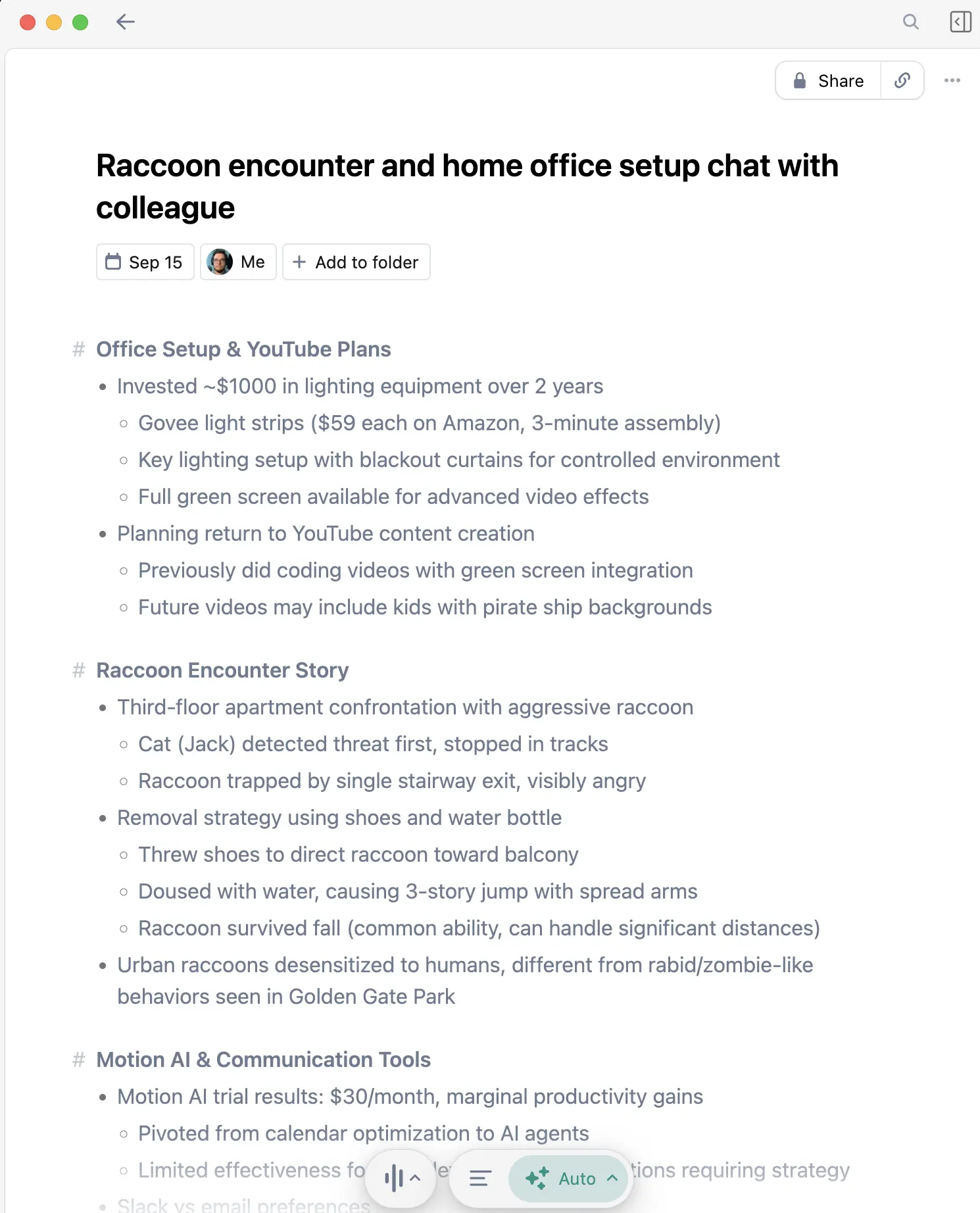
Granola captures meeting audio invisibly — no bot, no recording notification. For immigration practice, where clients are often recounting traumatic experiences, this invisible capture is especially important.
Why Invisible Capture Matters for Immigration Clients
Immigration clients — particularly asylum seekers, domestic violence survivors, and trafficking victims — are sharing deeply personal and often traumatic stories. A visible recording device or bot announcement can cause clients to shut down, omit critical details, or become retraumatized. Granola's invisible capture lets clients speak freely while you maintain full attention and empathy.
Immigration Meeting Scenarios
Initial consultations: Capture the client's complete story during the first meeting. Every detail — dates, locations, perpetrators, witnesses, prior filings — is preserved for later reference when drafting declarations.
Declaration preparation sessions: Walk the client through their narrative chronologically. Granola captures the full session, giving you a complete source document from which to draft the written declaration.
Interpreter-assisted meetings: When working through an interpreter, Granola captures the English portions of the conversation. Review afterward to ensure nothing was lost in translation.
EOIR hearing preparation: Prepare clients for immigration court testimony. Granola captures practice questions and answers, potential cross-examination issues, and coaching notes.
Daily Workflow: Immigration Practice
Morning (8:00 - 10:00 AM)
Review Granola notes from prior-day client meetings. Use WisprFlow to dictate personal declarations and cover letters based on captured interview details. Update case management entries.
Midday (10:00 AM - 1:00 PM)
Client consultations and follow-up calls captured by Granola. Between meetings, use WisprFlow to dictate RFE responses and client correspondence.
Afternoon (1:00 - 4:00 PM)
Primary drafting time. Dictate asylum briefs, country condition summaries, and legal memoranda with WisprFlow. Prepare hearing outlines by dictating key arguments.
End of Day (4:00 - 6:00 PM)
Review Granola summaries. Dictate case notes and time entries. Flag RFE deadlines and hearing dates.
Time Savings for Immigration Practice
| Task | Without Voice AI | With Voice AI | Time Saved |
|---|---|---|---|
| Personal declaration (10 pages) | 5 hours | 1.5 hours | 70% |
| USCIS cover letter | 1 hour | 20 minutes | 67% |
| RFE response | 3 hours | 1 hour | 67% |
| Client intake notes | 30 minutes | 5 minutes review | 83% |
| Country condition summary | 2 hours | 45 minutes | 63% |
| Weekly documentation total | ~18 hours | ~6 hours | ~12 hours reclaimed |
Getting Started
You can try WisprFlow free, while new Granola users receive three free months:
WisprFlow: Try free — Start by dictating client correspondence and case notes. Graduate to declarations and briefs once the tool has learned your immigration vocabulary. See the full WisprFlow review.
Granola: Start with three free months — Capture client consultations throughout the quarter and use the structured notes as the foundation for declarations and filings. Compare alternatives in the Granola vs Otter analysis.
Related Guides
- Best Voice Tools for Lawyers 2026 — Complete voice AI guide for legal professionals
- AI Dictation for Legal Documents — Drafting briefs and motions with voice
- Voice Notes for Client Meetings — Meeting capture for sensitive client conversations
- AI Voice Tools for Paralegals — Paralegal documentation workflows
- AI Tools for Lawyers — General AI tools for legal practice
Frequently Asked Questions
Is it ethical to record immigration client interviews without telling them?
Recording consent requirements vary by jurisdiction. In one-party consent states, you can record conversations you participate in. Many immigration attorneys inform clients as a matter of best practice. Granola's invisible approach simply means other participants on a call are not disrupted — you should still follow your jurisdiction's consent requirements and firm policies.
Can WisprFlow handle foreign names and places accurately?
The personal dictionary learns quickly. After correcting a foreign name or place once or twice, WisprFlow recognizes it reliably. For high-volume immigration practices, the dictionary builds a comprehensive reference within days.
How do I use Granola captures to draft declarations?
Review the structured notes from the client interview. Use the captured facts, dates, and narrative details as your source material. Dictate the formal declaration with WisprFlow, drawing directly from the Granola summary. This two-tool workflow cuts declaration drafting time dramatically.
What about EOIR or USCIS confidentiality requirements?
Both tools use enterprise-grade encryption and do not retain data for AI training. Review their security documentation and assess compliance with your practice's confidentiality obligations. Consult your state bar's ethics resources if you have specific questions.
Every detail in an immigration case matters — a missed date, an omitted fact, an inconsistency can determine the outcome. Voice AI ensures that nothing falls through the cracks between the client meeting and the filing.
How each tool turns speech into text
The useful difference is where the text appears and how much work remains afterward.
Traditional typing stays precise and familiar for short edits.
WisprFlow dictates into any app with AI formatting, and it is free to try.

Discussion
Giscus