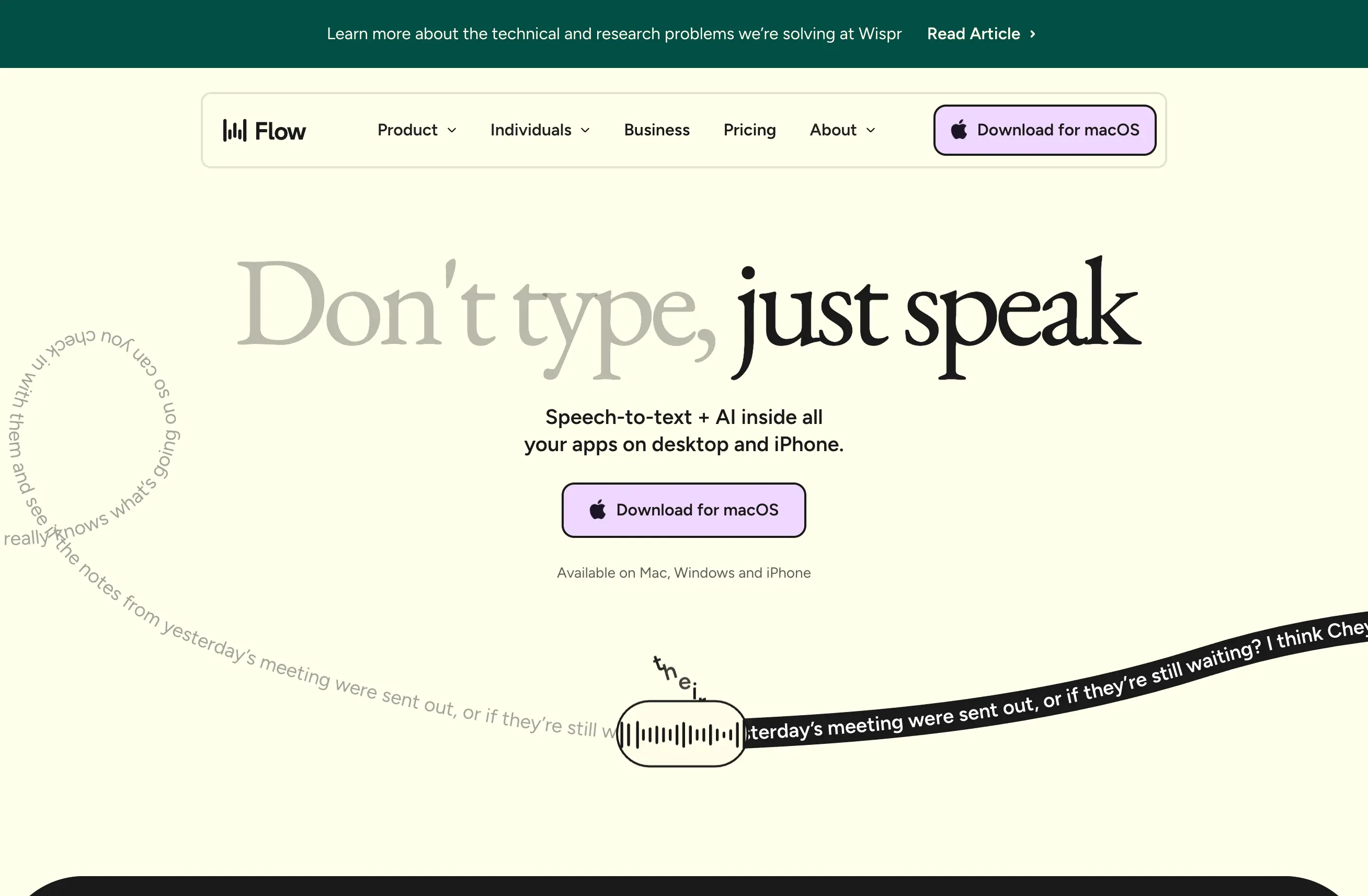

Attorneys produce more written work product than nearly any other profession. Briefs, motions, memoranda, client correspondence, time entries, discovery responses, settlement agreements — the list never ends. Voice AI has matured to the point where it meaningfully accelerates every category of legal writing and meeting documentation.
This is the definitive guide to voice AI tools for legal professionals in 2026. Two tools stand out for the distinct problems they solve.
The Two Tools Every Lawyer Needs
WisprFlow: System-Level Legal Dictation
WisprFlow operates at the system level on Mac. Speak naturally and polished text appears wherever your cursor sits — Clio, NetDocuments, Microsoft Word, Outlook, or your firm's practice management system.
Why Lawyers Prefer WisprFlow
Handles legal vocabulary: WisprFlow learns case names, Latin phrases, statutes, and party names. After a few sessions, terms like res judicata, voir dire, and prima facie transcribe correctly without manual correction.
Works everywhere on your machine: Unlike browser-based dictation, WisprFlow injects text at the OS level. Draft a motion in Word, switch to your billing software for time entries, then dictate an email to opposing counsel — all without changing tools.
Removes filler, keeps substance: The AI strips "um," "uh," and false starts. What reaches the page reads like a polished first draft, not a raw transcript.
Legal Use Cases
- Briefs and motions: Dictate argument sections at 160+ WPM, then refine structure and citations
- Client correspondence: A 400-word letter dictated in two minutes instead of typed in eight
- Time entries: Speak detailed billing descriptions directly into your time-tracking system
- Discovery responses: Dictate objections and responses to interrogatories without the typing fatigue
- Internal memos: Capture case analysis and strategy while the reasoning is fresh
Granola: Invisible Meeting Capture for Legal Professionals
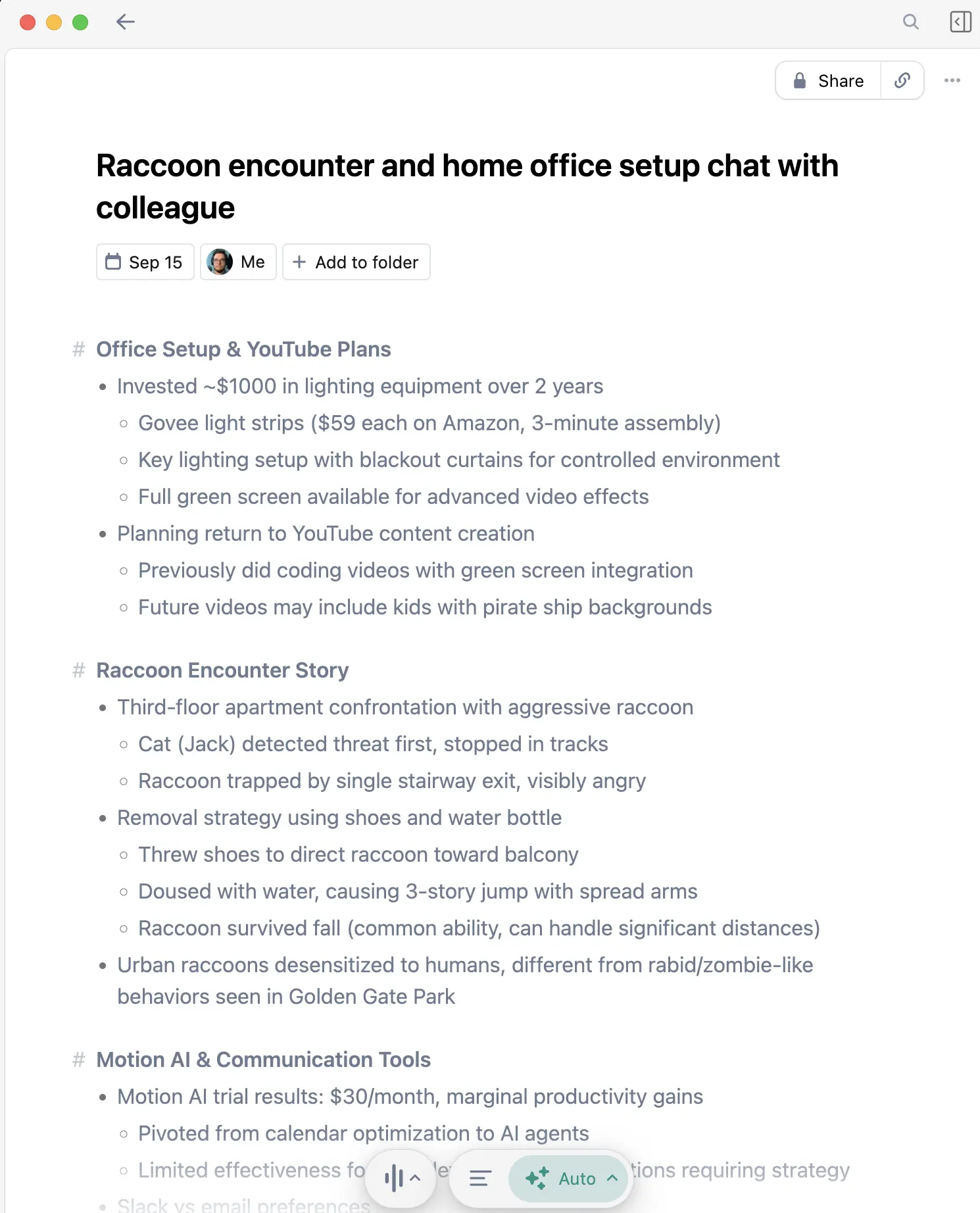
Granola captures meeting audio from your device and produces structured notes — no bot joins the call, no participant is alerted, no awkward recording announcements.
Why "No Bot" Is Non-Negotiable for Lawyers
A visible recording bot changes the dynamics of every legal conversation. Clients may hesitate to share sensitive facts. Opposing counsel may object or alter their approach. Granola eliminates this entirely by recording from your device's microphone.
Legal Use Cases
- Client intake consultations: Capture every detail without breaking rapport to type
- Deposition preparation sessions: Record witness prep and extract key testimony themes
- Settlement negotiations: Preserve exactly what was offered and what was conceded
- Partner strategy meetings: Automatic action items eliminate post-meeting confusion
- Mediation sessions: Full notes on positions and movement without a visible recorder
Daily Workflow: Voice AI Throughout Your Practice Day
Morning (8:00 - 10:00 AM)
Review Granola's notes from yesterday's late meetings. Use WisprFlow to dictate responses to overnight client emails and draft the morning's time entries.
Midday (10:00 AM - 1:00 PM)
Client meetings and calls run with Granola capturing everything. Between meetings, dictate notes-to-file and follow-up task lists with WisprFlow.
Afternoon (1:00 - 4:00 PM)
Peak drafting time. Use WisprFlow to dictate first drafts of briefs, motions, and memoranda. Dictate discovery responses and settlement demand outlines.
End of Day (4:00 - 6:00 PM)
Review Granola summaries from afternoon calls. Dictate remaining time entries for the day — no more reconstructing what you did from memory.
Time Savings Comparison
| Task | Without Voice AI | With Voice AI | Time Saved |
|---|---|---|---|
| Draft 5-page motion | 2.5 hours | 50 minutes | 60% |
| Client meeting notes | 30 min post-meeting | 2 min review | 90% |
| 10 time entries | 25 minutes | 8 minutes | 68% |
| Client email (400 words) | 8 minutes | 2 minutes | 75% |
| Notes to file | 15 minutes | 4 minutes | 73% |
| Weekly total | ~12 hours | ~4 hours | ~8 hours reclaimed |
Getting Started
WisprFlow offers a free trial, and new Granola users get their first three months free:
WisprFlow: Try free — Install takes two minutes. Start by dictating time entries and emails to build comfort before tackling substantive drafting. Read the full WisprFlow review for a deep dive.
Granola: Start three months free — Sync it with your calendar and evaluate the structured notes across a full quarter of meetings. See the Granola vs Otter comparison if you're evaluating alternatives.
Related Guides
- AI Tools for Lawyers — Overview of AI in legal practice
- AI Dictation for Legal Documents — Deep dive on drafting briefs and motions with voice
- Voice Notes for Client Meetings — Meeting capture strategies for attorneys
- AI Voice Tools for Paralegals — Paralegal-specific workflows
- Best Legal Dictation Software 2026 — WisprFlow vs Dragon vs built-in options
Frequently Asked Questions
Do these tools comply with attorney-client privilege requirements?
Both tools use enterprise-grade encryption and do not retain data longer than necessary for processing. However, every firm should conduct its own review through IT and ethics committees. Neither tool uses client data to train AI models.
Can I use Granola during depositions?
For your own reference notes, yes. Granola does not replace the official court reporter or certified transcript. It supplements your personal work product.
What about state recording consent laws?
Check your jurisdiction. Most states are one-party consent, meaning you can record conversations you participate in. Granola's invisible approach does not change the legal analysis — consent requirements apply regardless of the tool's visibility.
How quickly does WisprFlow learn legal terminology?
Within the first few dictation sessions. The personal dictionary adapts to case names, party names, judge names, and specialized phrases. Most attorneys report reliable recognition after two to three days of regular use.
Will my malpractice carrier have concerns?
Voice AI tools are productivity aids for internal work product, not client-facing deliverables. The same editorial review you apply to typed work applies to dictated work. Consult your carrier if you have specific policy questions.
Every hour spent typing is an hour not spent thinking, strategizing, or advocating. Voice AI returns that time to the substantive practice of law.
How each tool turns speech into text
The useful difference is where the text appears and how much work remains afterward.
Traditional typing stays precise and familiar for short edits.
WisprFlow dictates into any app with AI formatting, and it is free to try.

Discussion
Giscus