Go deep, in order
A series is a commitment: one topic, taken apart across several posts until you actually understand it. These are meant to be read front to back — start at part one and let it compound.
Blueprint Deep Dives
One machine per drawing. Each part takes a single piece of the modern AI stack apart on an engineering sheet — tokenizer, attention head, inference engine, evaluation harness — and puts it back together.
 01 / 16
The Transformer
Every frontier model runs the same circuit. This working drawing traces it end to end: how seq2seq attention became the transformer, how decoder-only models generate, and how tokens, attention heads, position, residual blocks, sampling, and KV caching fit together.
 02 / 16
The Embedding Space
From the distributional hypothesis and word2vec to contextual sentence encoders: how embeddings are trained, compared, indexed with HNSW, migrated, and evaluated in production.
 03 / 16
The RAG Pipeline
From open-domain question answering to production RAG: ingestion, chunking, BM25 and dense retrieval, reranking, context assembly, citations, evaluation, and failure tracing.
 04 / 16
The Tokenizer
How tokenization works: BPE tokenizer training, ordered merges, byte fallback, token IDs, costs, multilingual tradeoffs, and why LLMs use tokens.
 05 / 16
The Workshop
A complete working drawing for an AI training workshop: how to design, build, deliver, and follow through on an AI workshop for engineers or corporate AI training that works.
 06 / 16
The Model Sheet
A model's name is a datasheet most people never learn to read. This drawing goes field by field — parameters, dense versus MoE, training stage, distillation, abliteration and merges, quantization (GGUF, k-quants, imatrix, GPTQ/AWQ) — then does the memory math that decides what runs locally, sources and vets a model on Hugging Face, and tests it on your own task instead of trusting a benchmark.
 07 / 16
The Attention Head
What is an attention head, and how would you prove one does what you think it does? A from-zero walk through a single head in GPT-2 small: what it reads, what it writes, the copying behavior you can watch in its attention map, and why that picture is the weakest evidence there is — with logit attribution and ablation as the stronger tests.
 08 / 16
The Inference Engine
A worked guide to LLM inference memory, KV-cache paging, continuous batching, prefill, decode, quantization, and latency-capacity planning.
 09 / 16
The Guard
A trust-boundary threat model for prompt injection in tool-using agents, with capability scoping, external authorization, and testable security metrics.
 10 / 16
The Diffusion Model
A coordinate-consistent visual guide to diffusion and flow: forward noise, learned denoising, guidance, latent compression, DiT, sampling, and flow matching.
 11 / 16
The Benchmark
A benchmark score is manufactured, and every step leaves a trace. Trace an AI benchmark number back through sampled tasks, prompts, scorers, aggregation, uncertainty, and contamination to the decision it can actually support.
 12 / 16
ctx: The Personal Context Engine Every One of My Agents Shares
Every agent I use — terminal, browser, phone, across Anthropic and OpenAI — started every conversation knowing nothing about me. So I built one shared memory they all plug into: a technical blueprint for a provider-agnostic personal context engine — one Postgres table, a hybrid retriever with an LLM reranker, and a scope wall enforced by the database, not by prompts.
 13 / 16
The Voice Box: Running Your Own ElevenLabs, Offline and Free
Open-weight speech synthesis got good enough to replace a paid API. This is the working drawing for a local text-to-speech studio built on Fish Audio S2 Pro and MLX — every measurement, both bugs, and the discovery that the model ships with no voices at all.
 14 / 16
The Cost Curve
DeepSeek's retrained V4 Flash 0731 moved the model pricing baseline for everyone. This drawing works the full token-dollar ledger: MoE bandwidth arithmetic, quantization, the nine agent benchmarks where a budget model beat the flagship, cache-hit economics, verbosity-adjusted task cost, the price war forcing 80% cuts on the frontier, and the structural trap forcing labs to race their own depreciation curve.
 15 / 16
The Price Floor
What does it actually cost to run a frontier-class open model? I measured DeepSeek V4 Flash 0731 across every layer in August 2026: why the same weights run 5x faster in a different inference engine, prefill versus decode, why speculative-decoding gains don't transfer between stacks, measured cloud throughput against the listed figures, the prompt-cache price that dominates agent workloads, the sold-out market for fast inference, and the monthly crossover where a home Blackwell rig beats the API.
 16 / 16
Designing AI Evaluations
A generic blueprint for designing AI evaluations: define the decision, version the system, build representative task sets, choose valid scorers, measure uncertainty, analyze failures, and connect offline tests to production evidence.
The Agent Fleet
Building a crew of always-on agents that run a one-person business: the AWS box they live on, the webhook bridge that reaches them, the mechanic that repairs them, and the boundary that decides what they are allowed to do alone.
 01 / 11
I Built an Always-On Hermes Agent on AWS in a Day, Mostly Async
How I moved my personal AI assistant to AWS with OpenTofu, Tailscale, and Discord — self-hosting Hermes Agent in the margins of a normal workday.
 02 / 11
The Webhook Bridge Pattern: How Claude Code Talks to a Remote AI Agent
Solving the 'silent files' problem: how I built an event-driven bridge between Claude Code on my Mac and the Hermes agent running on EC2, using SSM RunCommand, Tailscale, and HMAC-signed webhooks.
 03 / 11
How My AI Assistant Ships Blog Posts
My AI assistant Hermes writes MDX content, generates hero images, uploads to Bunny CDN, commits to git, opens pull requests, and merges — all from a Discord conversation.
 04 / 11
One Phone, Two Agents
I run two AI agents — Claude Code for infrastructure, Hermes for content — both controlled from my phone. Here's the split-brain architecture and why separation of concerns matters for AI agents too.
 05 / 11
I Shipped 9 Blog Posts in 48 Hours While Working Full-Time
Between a full-time job at WorkOS and solo-parenting two toddlers with zero screen time, I published 14,790 words across 9 posts in two days. 47 images, 12 PRs. The secret: chatops with two AI agents I drive in compressed windows.
 06 / 11
My AI Agent Has a Mechanic Agent
Hermes was producing shallow responses. Instead of debugging from the inside, I opened Claude Code, SSH'd into the EC2 instance, found the throttled context window, fixed it, and restarted the gateway. Hermes woke up improved — without knowing it happened.
 07 / 11
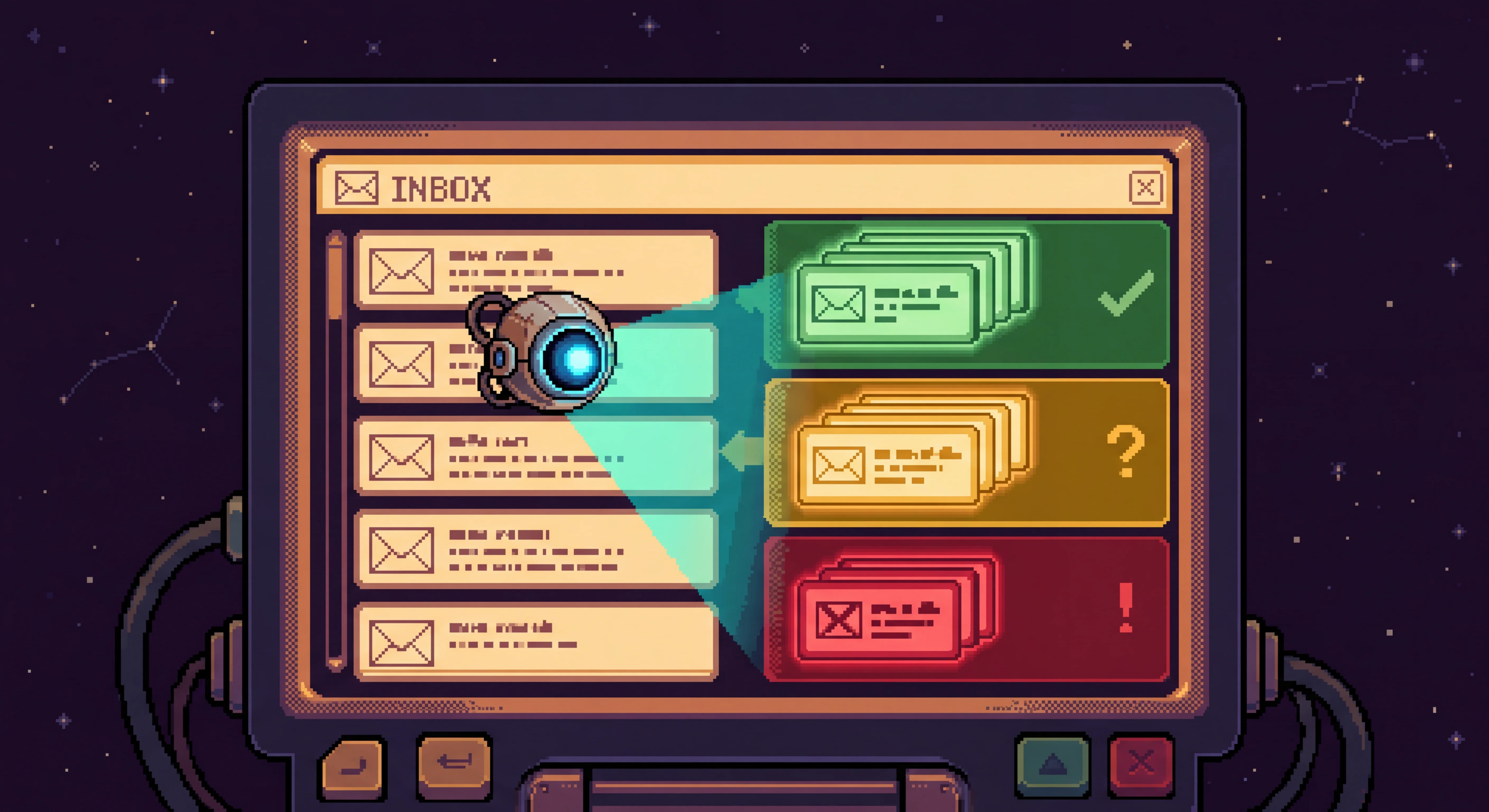
I Built an AI Email Inbox That Replies — With Safety Checks
A human-in-the-loop AI inbox classifier that drafts replies, with a per-category graduation ladder that lets each earn its way to auto-send.
 08 / 11
Going Guerilla on My Inbox
What my AI inbox-screener actually does to the templated cold outreach hitting my inbox. Three real auto-sends, the footer that draws the line, and where this goes next.
 09 / 11
The Autonomy Boundary
My rule for AI agents: anything reversible runs unattended, anything irreversible or outbound stops for a human. Here is how I drew that one line across three bots and enforced it in code, not willpower.
 10 / 11
The Portfolio That Pays Rent
My personal site runs like a small business with three AI employees — content, ops, distribution — and me as editor-in-chief. Here's the org chart, the real ledger of what it earns and costs, and the work I still do by hand.
 11 / 11
The Agent Fleet That Runs My Business
How I run a solo AI consulting business from Slack: a fleet of single-purpose agents with the Claude tag as the meta-agent above them — reaching every surface, opening PRs, and maintaining the other bots — all behind a human approval gate.
Vector Fundamentals
Start with what an embedding actually is; finish with a production RAG pipeline you can evaluate and trust. Each part assumes the one before it.
 01 / 06
Introduction to embeddings (vectors) and how they work
Embeddings are numerical representations of the key features of some data
 02 / 06
Introduction to dimensionality in machine learning
Dimensionality refers to the number of features a given embedding model extracts
 03 / 06
Retrieval Augmented Generation (RAG)
How to reduce hallucinations in your Generative AI applications
 04 / 06
How are embeddings models trained for RAG?
Embeddings models are the secret sauce that makes RAG work. How are THEY made?
 05 / 06
Tutorial: Build a RAG pipeline with LangChain, OpenAI and Pinecone
Step by step tutorial: how to build a production-ready RAG pipeline.
 06 / 06
Vector Databases in Production for Busy Engineers: RAG Evaluation
I wrote the RAG evaluation chapter for Pinecone's latest book
The Pinecone AWS Reference Architecture
Design, deploy, and scale a distributed vector system on AWS — the whole engineering story, from the launch announcement through load testing to treating indexes like code in CI/CD.
 01 / 04
Announcing the Pinecone AWS Reference Architecture in Pulumi
Deploy production-ready systems using Pinecone in minutes with the AWS Reference Architecture
 02 / 04
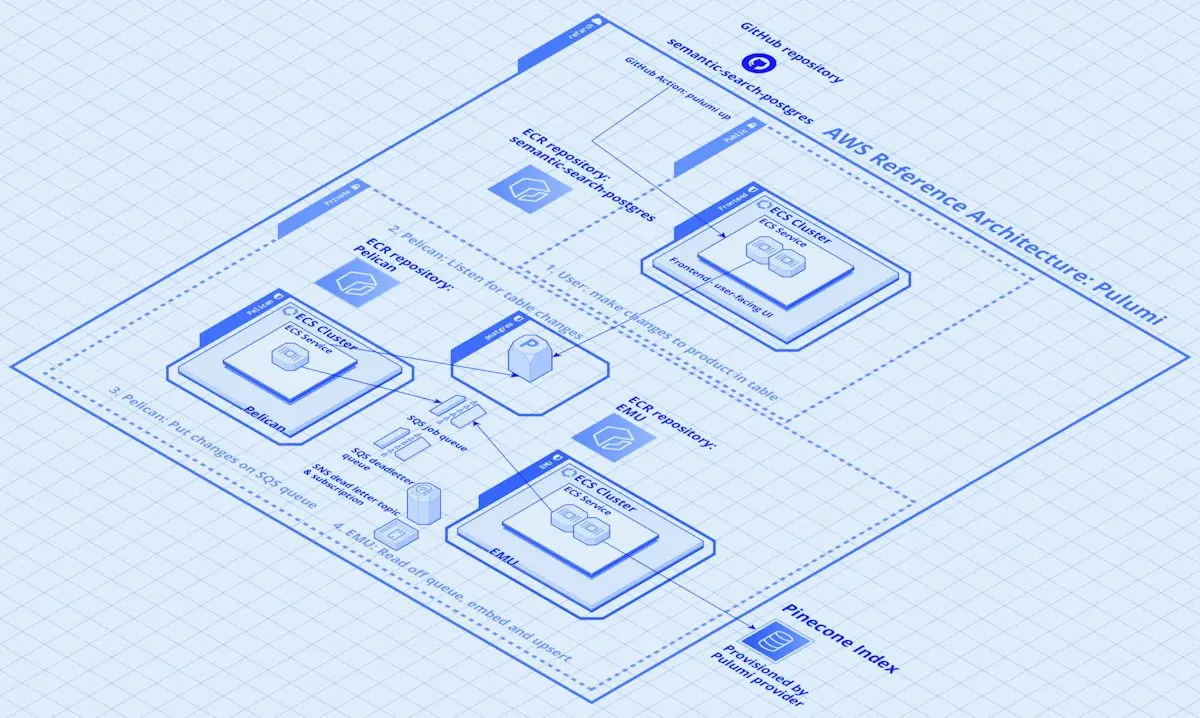
Pinecone AWS Reference Architecture Technical Walkthrough
An examination of the Reference Architecture components and functionality
03 / 04Testing Pinecone Serverless at Scale with the AWS Reference Architecture
A step-by-step walkthrough on how to generate arbitrary system load and flex Pinecone Serverless
 04 / 04
Vector Databases in Production for Busy Engineers: CI/CD
I wrote the CI/CD chapter for Pinecone's latest book
Fine-Tuning and MLOps
Learning the training side of the stack in public: neural nets from scratch, LoRA and QLoRA, building your own instruction dataset, renting the GPUs, and actually fine-tuning Llama.
 01 / 06
MLOps Adventure - Learning to Fine-tune LLMs, create datasets and neural nets
I've been on an MLOps adventure lately, taking any excuse to get hands on with neural nets, fine-tuning, Hugging Face datasets and models.
 02 / 06
Building a Hand-Drawn Digit Recognizer with PyTorch and MNIST
I trained a neural net to recognize hand-drawn digits, then built a Next.js UI for it
 03 / 06
The Rich Don't Fine-tune Like You and Me: Intro to LoRA and QLoRA
LoRA and QLoRA are two important innovations related to fine-tuning large language models like Llama and GPT.
 04 / 06
How to create a custom Alpaca instruction dataset for fine-tuning LLMs
A step by step tutorial with companion notebook.
 05 / 06
Cloud GPU Services for Deep Learning and fine-tuning with Jupyter Notebooks Reviewed: Colab, Paperspace Gradient, Lightning.ai, and more
I tried a handful of services when I last needed to fine-tune an LLM, and I was mostly disappointed...
 06 / 06
How to Fine-tune Llama 3.1 on Lightning.ai with Torchtune
One of the better Jupyter Notebooks to GPU-backed environment experiences I've had...
Running Your Own Tech Blog
A decade of owning the whole stack under my own writing — from hating the maintenance, to rebuilding it, to dynamic OG images, data-driven pages, a 66% faster build, and finally a site that pays rent.
 01 / 10
Maintaining this site fucking sucks
Join me as I delve into the infuriating, yet enlightening journey of maintaining my own Javascript-heavy website. Learn how battling DNS issues, dependency chaos, niche CSS pre-processors and constant painful upgrades has led to one of the most rewarding projects I've ever created.
 02 / 10
Maintaining this site no longer fucking sucks
After re-doing my personal website in next.js and deploying to Vercel, I reflect on how much better the developer experience has become.
 03 / 10
Run your own tech blog
Control your own destiny, build your personal brand, and master web technologies by running your own tech blog.
 04 / 10
Opengraph dynamic social images
I built a custom opengraph image with '@vercel/og' that includes a fallback image for index pages
 05 / 10
How to build a dynamic sitemap for your Next.js project
Steal my implementation to save yourself some time and headaches
 06 / 10
Building data-driven pages with Next.js
To effectively maintain richer and more complex web experiences, separate data from presentation.
 07 / 10
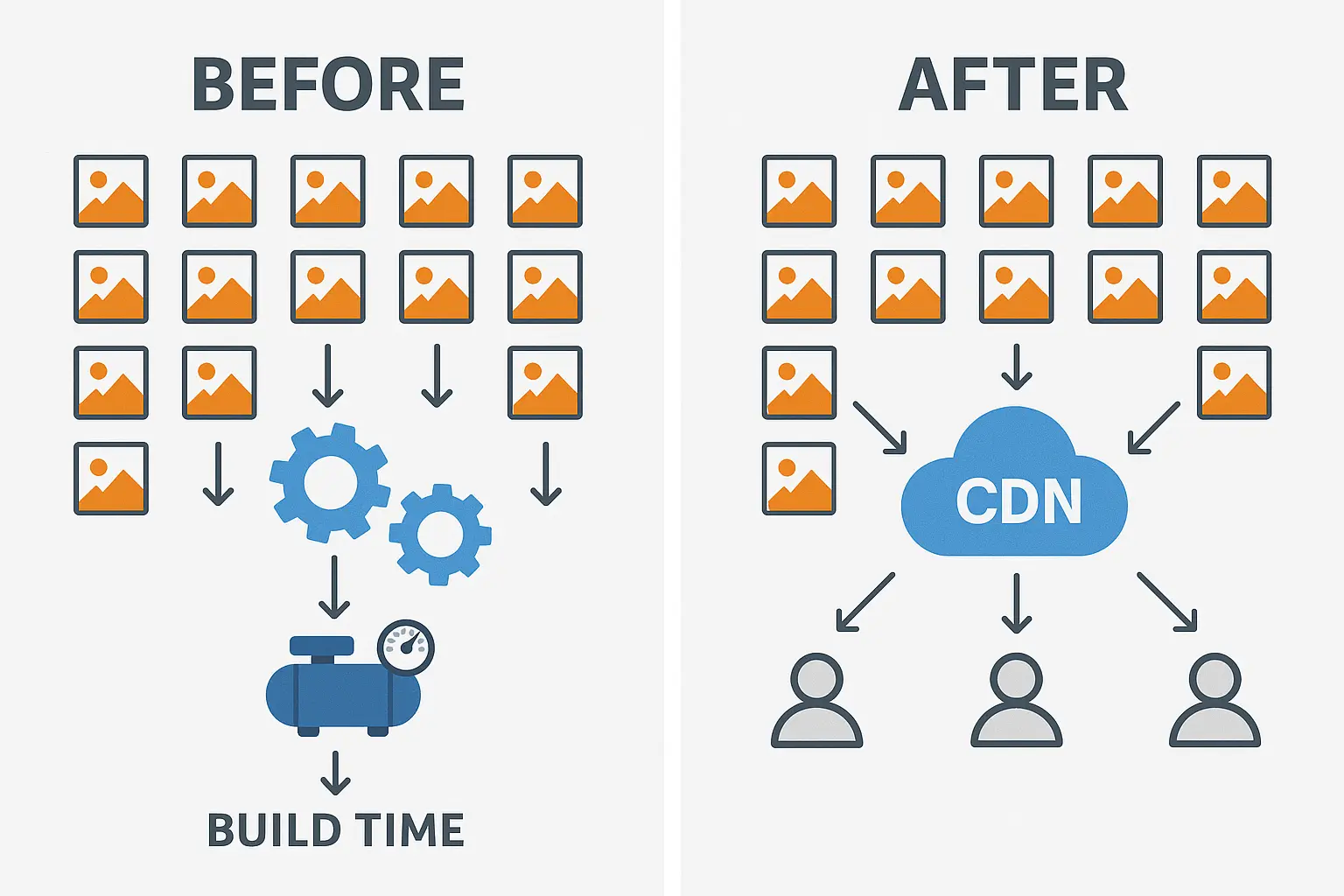
How I Cut My Vercel Build Time by 66% (5.5 Minutes to 1 Min 53 Seconds)
A detailed breakdown of how I optimized my Next.js site's build process, moving from static generation to ISR, migrating images to CDN, and implementing on-demand OpenGraph image generation.
 08 / 10
The Hero Glow-Up: My Whole Blog, Burning in Semantic Space
I replaced my portrait-centered homepage hero with the Mind on Fire mark rendered as living pixels, surrounded by every essay I've published as clickable constellations. Here's why, how it works, and the ember easter egg.
 09 / 10
How I grew my tech blog to 35,000 readers in a year
Learn how I grew my tech blog to 35,000 readers in one year through site optimization, UX improvements, consistent publishing, and building useful tools.
 10 / 10
Why my site has a rate card now
I shipped a partnerships page. This is the why-now: capacity, an inbox auto-classifier I haven't built yet, and the years of compounding work that made it the right moment to tie it together.
Cognitive Infrastructure
What happens when an autistic, ADHD engineer builds tooling around his own wiring instead of against it. Part memoir, part systems design, entirely first-hand.
 01 / 08
In the LLM, I Saw Myself
How LLMs mirrored my neurodivergent thinking, helped me connect the dots, and became the glue in a personal cognitive toolkit.
 02 / 08
Training Claude to Compensate for My Neurological Patterns
How I'm systematically teaching an AI system to compensate for specific ADHD/autism processing patterns—building collaborative intelligence that works with my neurology.
 03 / 08
The LLM Is Not My Friend (It's Something More Useful)
I talk to my AI assistant like a person. I give it access to everything. And no, I don't think it's sentient. Here's why that's the point.
 04 / 08
The List of People and Things That Have Failed to Kill Me
A running tally.
 05 / 08
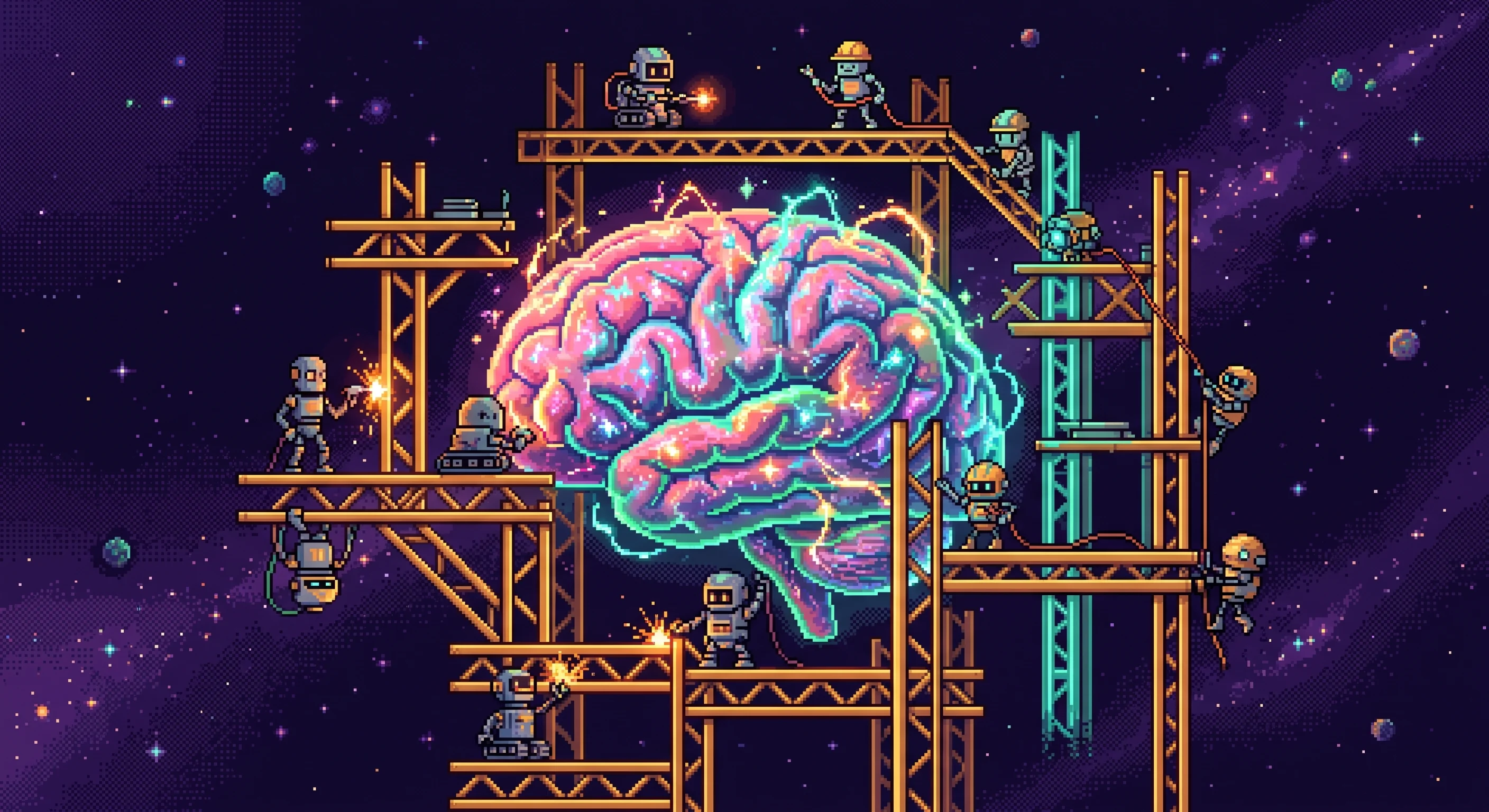
What It Feels Like To Be a Neurodivergent Engineer (Interactive)
An interactive primer on the ADHD engineering brain — a 3D brain you can put through hyperfocus and crash, a simulator for what reading feels like under intrusive thoughts and notification overload, and the AI scaffolding I use to work around all of it.
 06 / 08
Intensity and I
We called him Intensity. He chain-smoked at the edge of every room. Twenty years later in a therapist’s chair my partner used the same word on me.
 07 / 08
My Algorithm
Gasoline and electricity, the line that won't dim. Forty years inside the appetite I have never been able to turn off.
 08 / 08
Who Is an Illusion. What Is the More Interesting Question.
Applying systems thinking to my internal experience.
AIE Conferences
The AI Engineer circuit, written up from the inside — two talks and a workshop in London, the podcast booth, the teammate who made it work, and the World’s Fair follow-up.
 01 / 06
Untethered Productivity: My Talk at AI Engineering London
I gave a talk at AI Engineering London about staying healthy, creative, and shipping while working with AI coding agents. The core idea: the agents scale infinitely, but your nervous system doesn't. Here's the full recap.
 02 / 06
Skills at Scale: Our Workshop at AI Engineering London
Nick Nisi and I ran an 80-minute hands-on workshop at AI Engineering London on building Claude Code skills that are portable, executable, and composable. We taught constraints over instructions, evidence over guesses, and measurement over vibes.
 03 / 06
Live on the Scaling Devtools Podcast at AI Engineering London
I sat down with Jack Bridger on the Scaling Devtools podcast at AI Engineering London to talk about how WorkOS builds with AI coding agents, the patterns behind portable skills, and where developer tooling is heading.
 04 / 06
Nick Nisi Is One Talented Motherfucker
An appreciation post for my colleague and friend Nick Nisi — TypeScript wizard, conference organizer, and the best workshop partner I could ask for.
 05 / 06
A Conference Workshop Playbook: What We Learned Teaching 200+ Engineers
Practical lessons from running hands-on technical workshops at AI Engineer World Fair SF, AI Engineering London, and beyond. What works, what doesn't, and why most conference workshops suck.
 06 / 06
Lifestyles of the AI-Native: Our Workshop at the AI Engineer World's Fair
Nick Nisi and I taught a hands-on hour at the AI Engineer World's Fair 2026: voice coding, agentic loops, verification gates, and scheduled tasks — one repo, four moves, and a live board showing the room reclaim hours of weekly toil in real time.
Teaching AI Engineering
The craft behind the talks: what actually lands with a room of engineers, what makes a workshop worth the seat, and how to get on stage without the anxiety running the show.
 01 / 04
Walking and Talking in the Woods with AI: The Future of Untethered Software Development
A DevSecCon 2025 keynote summary: orchestrate voice, agents, and a hardened CI/CD lane so you can think where you think best—while background agents safely ship production-grade code.
 02 / 04
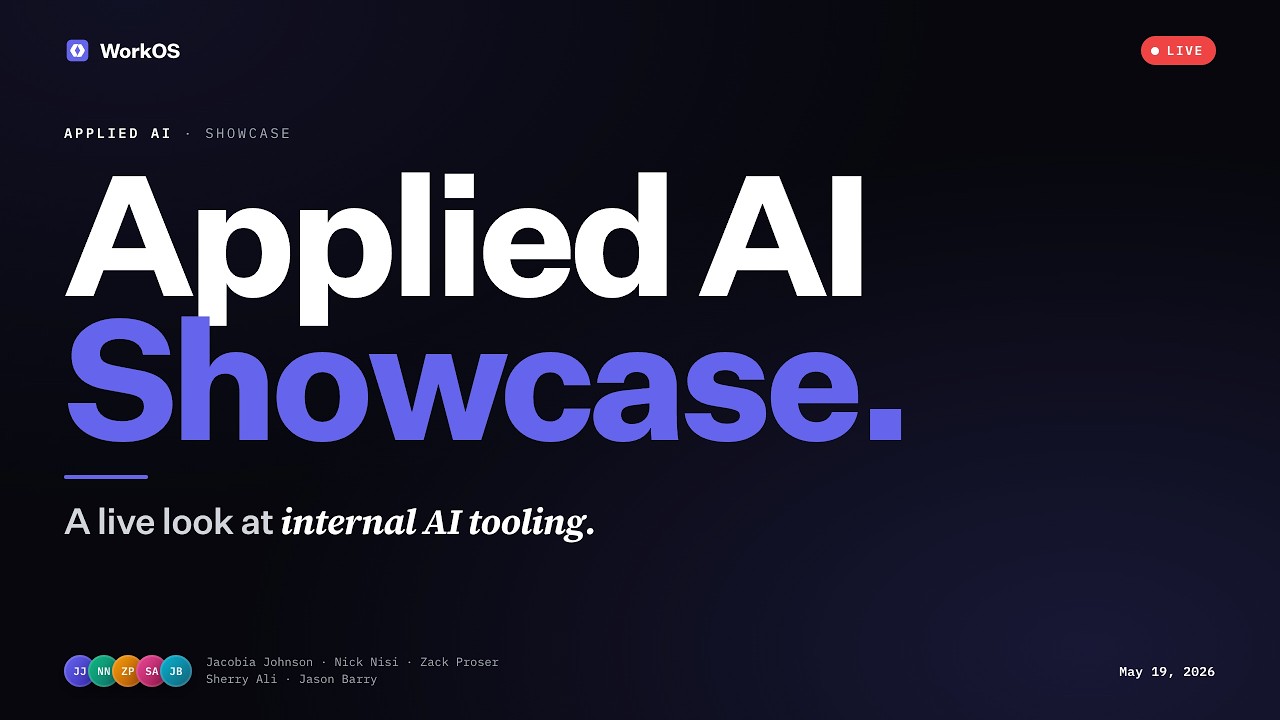
Applied AI: Three Learnings from Shipping — My Talk at the WorkOS Applied AI Showcase
I closed the WorkOS Applied AI Showcase with three learnings from shipping internal AI tooling: interface beats stack, complete the loop, and the imagination gap. Bartleby vs Blog Bot, capture → plan → execute → ship, and re-asking the question every quarter.
 03 / 04
What Makes an AI Workshop the Gold Standard
swyx told us our workshops are the gold standard for AI Engineer content. Here are the five principles behind that: ship the workshop as a product, make the room do the work, show people their own data, and build everything to keep running after the hour ends.
 04 / 04
Everything I've Learned About Public Speaking
I went from blacking out on stage in front of 4,000 engineers to sleeping fine before jet-lagged days of talks abroad. Here's the whole pile of crumbs that got me there — medication, mindset, slides, reps, and putting your talks online.
Eval Harness Field Notes
Lighter reads mined from the 60-run local-versus-cloud coding matrix — the patch-footprint cliff, the null result, the cost-per-accepted-patch arithmetic, and the two-score split. Each points back to the flagship drawing and its flight recorder.
 01 / 02
The Eval Harness: 60 Local and Cloud Coding Runs
A complete record of 60 coding-agent runs across an 80.76 GiB local DeepSeek quant, hosted DeepSeek, and hosted Claude: task design, hidden scorers, repair passes, provider recovery, exact cost, uncertainty, and workload fit.
 02 / 02
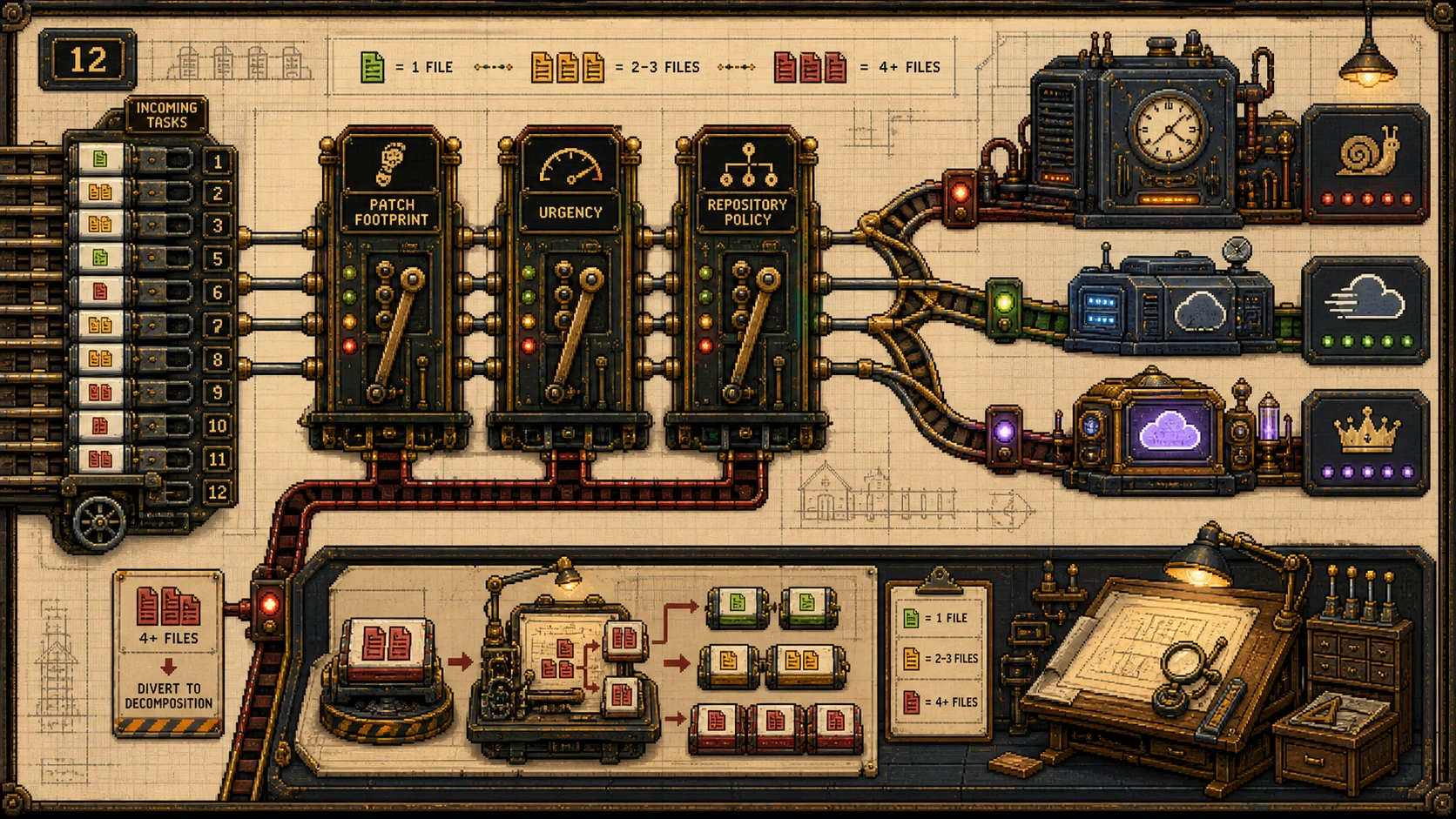
Patch footprint beat model price: the clearest signal in 60 coding-agent runs
The strongest predictor in a 60-run local-vs-cloud coding-agent benchmark wasn't model quality or price — it was patch footprint. Four-plus-file changes fell to 3/7 held-out checks on every route, including the lane that cost 25x more per run. Decomposition, not a bigger model, is the intervention.
Inference Routing in Practice
How an AI gateway actually routes, fails over, and bills — measured at the request trace. Provider fallback versus model fallback, the credential-recovery tax, and cost-per-accepted-patch as the metric that retires tokens-per-second.
01 / 02The Price Floor
What does it actually cost to run a frontier-class open model? I measured DeepSeek V4 Flash 0731 across every layer in August 2026: why the same weights run 5x faster in a different inference engine, prefill versus decode, why speculative-decoding gains don't transfer between stacks, measured cloud throughput against the listed figures, the prompt-cache price that dominates agent workloads, the sold-out market for fast inference, and the monthly crossover where a home Blackwell rig beats the API.
 02 / 02
OpenRouter vs Vercel AI Gateway: Cost, Routing, and Model Coverage
A measured comparison of OpenRouter and Vercel AI Gateway across fees, provider redundancy, model catalogs, prompt caching, routing controls, privacy, and developer experience.
Local Inference
Everything I can push through a maxed-out MacBook Pro with nothing rented and nothing phoning home: open-weight models on the desktop, apps and games built against them, local voice, local video, and where the ceiling actually is.
- 01Sizing the machine: what a maxed-out MacBook Pro actually buys you
- 02Serving open-weight models locally, and the quantization tradeoffs
- 03Building a real app against a model on your own hardware
- 04Making a game with an open-weight model in the loop
- 05Local voice: speech in and speech out, no API key
- 06Local video generation, and where the ceiling is