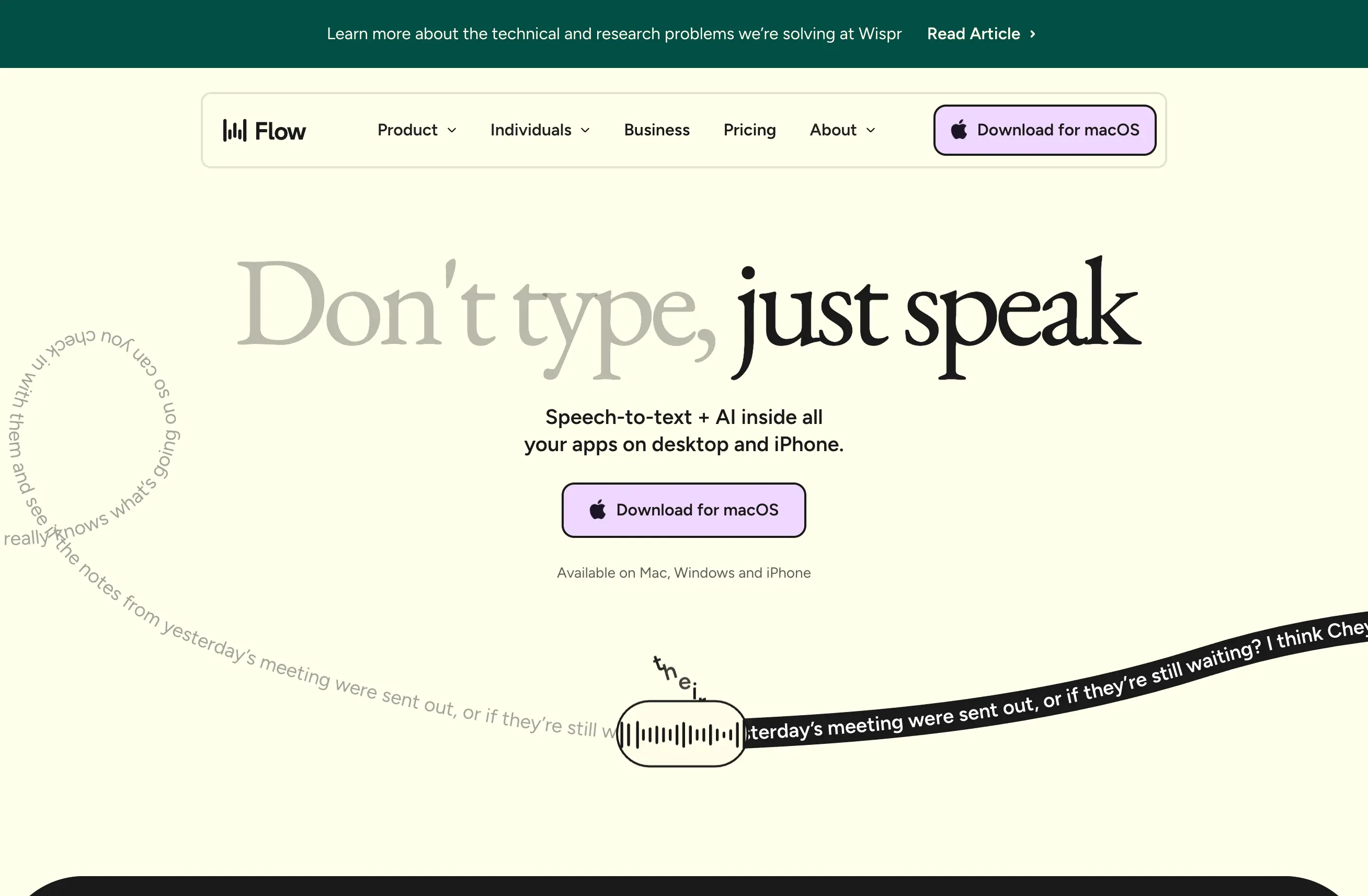
Enterprise Android deployments require sophisticated security controls, compliance frameworks, and mobile device management integration that protect corporate data while enabling productivity. Voice AI tools like WisprFlow introduce additional security considerations around audio processing, data transmission, and content generation that IT departments must address.
WisprFlow's February 2026 Android launch includes enterprise-grade security features designed for corporate deployment with comprehensive MDM integration and compliance frameworks.
Enterprise Security Architecture
WisprFlow implements multi-layered security controls designed for corporate Android environments:
Local-First Processing: Initial voice analysis occurs on-device before any network interaction, protecting sensitive conversations during the most vulnerable processing stage.
Zero-Trust Architecture: Every component authentication and authorization required, with no implicit trust between system components or network connections.
End-to-End Encryption: All data transmission uses AES-256 encryption with certificate pinning and perfect forward secrecy for maximum protection.
Secure Enclave Integration: Leverages Android's hardware security module for cryptographic operations and key storage when available.
This architecture ensures corporate data protection while maintaining the productivity benefits of voice AI technology.
Mobile Device Management Integration
Enterprise Android deployments rely on MDM platforms for device configuration, policy enforcement, and security monitoring. WisprFlow integrates with major MDM solutions:
Microsoft Intune: Native integration with Intune app protection policies, conditional access controls, and compliance monitoring.
VMware Workspace ONE: Full integration with UEM policies, application wrapping, and enterprise app catalog deployment.
Google Android Enterprise: Native Android for Work profile support with containerization and data separation.
MobileIron/Ivanti: Complete policy enforcement integration with security controls and application management.
MDM integration enables centralized deployment, configuration management, and security policy enforcement across enterprise device fleets.
Data Loss Prevention and Content Controls
Enterprise voice AI deployment requires sophisticated controls over what data can be processed and how generated content is handled:
Content Classification: Automatic detection and handling of confidential, proprietary, and regulated content with appropriate protection controls.
Data Loss Prevention: Integration with enterprise DLP platforms to prevent unauthorized transmission of sensitive information.
Content Filtering: Configurable restrictions on what types of content can be generated, shared, or synchronized to cloud services.
Watermarking and Attribution: Generated content includes metadata tracking for audit trails and content ownership verification.
These controls ensure voice AI productivity benefits while maintaining enterprise data protection requirements.
Compliance and Regulatory Frameworks
Different industries require specific compliance controls for voice AI deployment. WisprFlow supports major regulatory frameworks:
HIPAA Compliance: Healthcare organizations receive comprehensive HIPAA controls including PHI detection, audit logging, and business associate agreements.
SOX Compliance: Financial services get controls for document retention, audit trails, and segregation of duties around generated content.
GDPR/Privacy Regulations: European deployments include data minimization, consent management, and right-to-deletion controls.
Industry-Specific Requirements: Specialized compliance frameworks for legal, financial services, government, and defense contractors.
Compliance integration enables voice AI adoption in regulated industries with appropriate risk management and audit capabilities.
Network Security and VPN Integration
Corporate Android devices typically operate within restricted network environments with VPN requirements and firewall controls:
VPN Compatibility: Seamless operation through corporate VPN connections including split-tunnel and always-on VPN configurations.
Proxy Server Support: Full compatibility with corporate proxy servers, packet inspection, and content filtering systems.
Certificate Management: Integration with corporate certificate authorities and automatic certificate provisioning and renewal.
Network Segmentation: Support for segmented networks with appropriate traffic routing and access controls.
Network integration ensures voice AI functionality while maintaining corporate network security policies.
Identity and Access Management
Enterprise voice AI requires integration with corporate identity systems and access control frameworks:
Single Sign-On Integration: Native SSO support for SAML, OAuth, and OpenID Connect with major identity providers.
Multi-Factor Authentication: Required MFA integration with corporate authentication systems and hardware tokens.
Role-Based Access Control: Granular permissions based on user roles, departments, and security clearance levels.
Privileged Access Management: Special controls for administrative users and high-privilege account access to voice AI capabilities.
Identity integration enables secure access control while maintaining user experience and productivity.
Audit Logging and Monitoring
Enterprise deployments require comprehensive logging and monitoring capabilities for security and compliance:
Activity Logging: Complete audit trails of all voice interactions, content generation, and data access with tamper-evident storage.
Security Event Monitoring: Real-time alerting on security events, policy violations, and unusual usage patterns.
Compliance Reporting: Automated generation of compliance reports for various regulatory frameworks and audit requirements.
Performance Analytics: Enterprise dashboard showing adoption rates, productivity metrics, and system performance across the organization.
Monitoring capabilities provide visibility and control necessary for enterprise risk management.
Deployment Strategies for Enterprise Organizations
Large organizations require phased deployment approaches that minimize risk while maximizing adoption:
Pilot Program Phase: Limited deployment with selected users and controlled use cases to validate security controls and productivity benefits.
Department Rollout: Expansion to specific departments or business units with appropriate training and change management support.
Enterprise Deployment: Organization-wide rollout with comprehensive training, support infrastructure, and performance monitoring.
Integration Optimization: Fine-tuning of policies, controls, and integrations based on usage patterns and organizational feedback.
Structured deployment ensures successful adoption while maintaining security and compliance requirements.
Cost-Benefit Analysis for Enterprise IT
Enterprise voice AI deployment requires careful analysis of costs, benefits, and risk factors:
Total Cost of Ownership: Licensing costs, implementation services, training, and ongoing management overhead analysis.
Productivity ROI: Quantifiable productivity improvements across different roles and departments with measurable business impact.
Security Risk Assessment: Evaluation of additional security risks versus existing mobile application portfolio and mitigation strategies.
Compliance Cost Avoidance: Reduced compliance overhead through automated controls and improved audit capabilities.
Enterprise analysis typically shows positive ROI within 12-18 months for organizations with significant mobile workforce productivity requirements.
Integration with Enterprise Content Systems
Corporate voice AI must integrate with existing content management and collaboration platforms:
SharePoint Integration: Direct integration with SharePoint Online and on-premises with proper permissions and content organization.
Microsoft Teams Integration: Voice-generated content flows directly into Teams channels, chats, and document libraries.
Google Workspace Integration: Native integration with Google Drive, Docs, and Workspace collaboration features.
Enterprise Social Networks: Integration with Yammer, Workplace, or other internal social collaboration platforms.
Content system integration ensures voice AI productivity integrates seamlessly with existing corporate workflows.
Future-Proofing and Technology Evolution
Enterprise technology decisions require consideration of long-term viability and evolution:
API Stability: Commitment to stable APIs and backward compatibility for enterprise integrations and custom development.
Platform Evolution: Regular updates and feature enhancements without requiring major infrastructure changes or redeployment.
Vendor Relationship: Enterprise support, service level agreements, and long-term partnership approach for mission-critical deployments.
Technology Roadmap: Transparency about future development directions and emerging capability roadmaps for strategic planning.
Enterprise voice AI adoption represents a strategic technology decision that enables mobile workforce productivity while maintaining security and compliance requirements.
The question for enterprise IT isn't whether voice AI will become standard corporate technology. It's whether organizations will implement these capabilities while maintaining appropriate risk management and security controls.
Corporate Android deployments with comprehensive voice AI capabilities provide significant competitive advantages in employee productivity, communication quality, and operational efficiency.

Discussion
Giscus