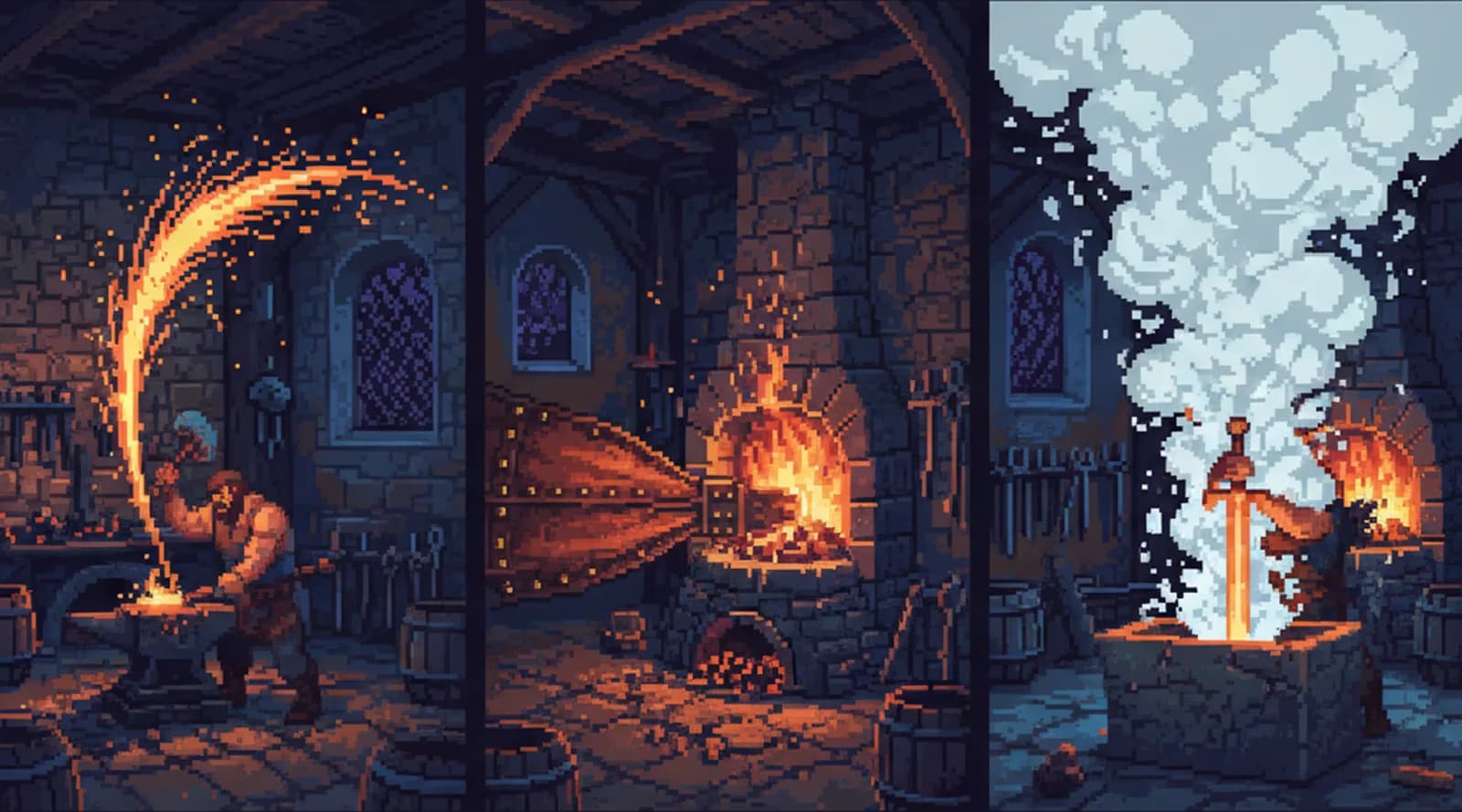
A stranger online dinged us last week. We'd shipped a post the blog bot wrote about itself — a system I built on Cloudflare Workers and Workflows that drafts and publishes to the WorkOS blog, including that post and a recap of the Applied AI Showcase we'd just run. His complaint wasn't that the writing was wrong, or boring, or inaccurate. It was that he now reads everything with a flinch. He's become suspicious of all writing, he said. He knows he's supposed to think it's cool that AI helped — but instead he catches himself interrogating every sentence. Was this one AI? Was this one? What about this?
I don't agree with the take, but I understand the reflex. And I want to say it plainly: that is the wrong question.
I've written more or less every day for twenty-plus years. People ask me how I write so fast, and the honest answer has never had much to do with typing speed. It has to do with how an idea moves from the world, through me, and onto the page. The tools at the end of that pipeline have changed a dozen times. The pipeline hasn't.
What the cymbal line showed me
A while back — when the AI wave was first cresting, before the latest agentic patterns landed — I was on a call with Michael Grinich, the founder of WorkOS. He pulled up a video of a cymbal factory. Zildjian, the company whose cymbals you've heard on basically every record you love.
The line is almost entirely automated. Bronze gets cast, pressed, hammered, and lathed by machine at a pace no room full of people could match. Except for one step. Every single cymbal — every one — gets picked up at the end by a person. A craftsman who is also a musician. They play it. They listen. They decide whether it's good enough to carry the name.
"This screams craft to me," Michael said.
That has been rattling around in my head ever since.
My first reaction, honestly, was a flinch — the speed felt like it should cheapen the result. Then it hit me that I'd been doing the same thing with my own writing for years. I wrote one of my most-read posts, Run your own tech blog, in about twenty-three minutes, crammed in between putting the kids to bed after a hectic day. I could do that because I'd already done the writing in my head. Sitting down to bang it into MDX and push it up through my Vercel publishing pipeline — against the greased rails I've built into my blog over the years — is part of the writing, not a step bolted on after it. The speed was never the point. It was the residue of all those years of building the rails.
That's what Michael's cymbal line named for me. What I do breaks into three parts — and a machine can take over the middle one, but never the ends.
I am the spark
The spark is the first fire — the bit you strike by hand before anything else can burn.
I'm still the one who has to be alive in the world. Talking to people. Dealing with people. Sitting inside systems long enough to feel where they chafe. Having thoughts and feelings about all of it. An idea doesn't come from a model. It comes from friction — a conversation, a problem, a thing somebody said that won't leave me alone.
Rick Rubin describes this in The Creative Act as something closer to weather than to work. Ideas arrive; your job is to notice them and keep the ones that won't let go. That's the part no pipeline reaches. I carry an idea around for days, sometimes weeks. It nags me. It surfaces at inconvenient times. And eventually I don't decide it needs to be written — I know it does. That recognition is the spark. It's still mine, and it's still struck by hand.
I am the bellows
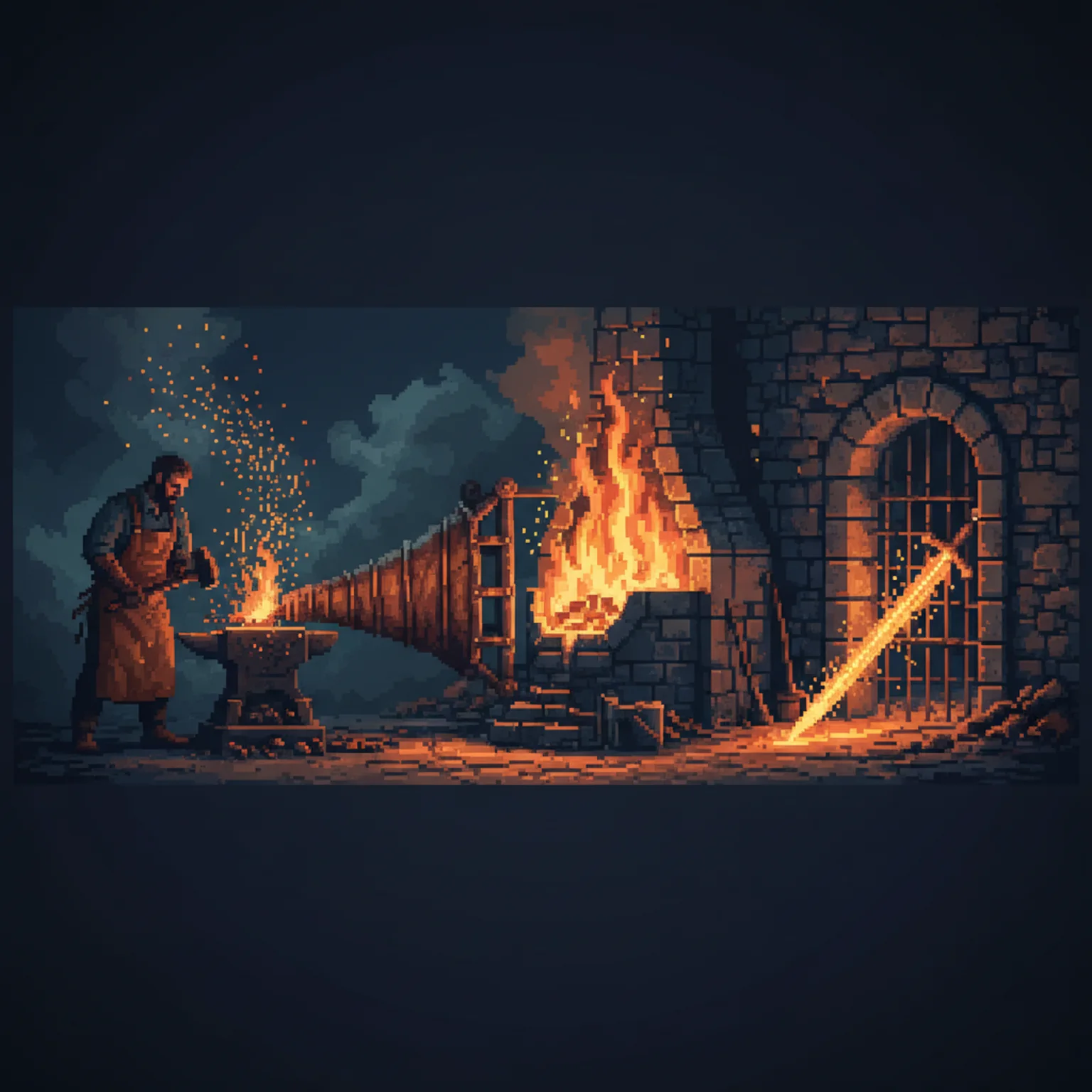
A bellows is the bag of air a smith pumps to push the fire hotter.
I have a whole spread of ways to write now, from the heavily automated to hand-assembling MDX element by element. On the automated end, I'll let a tool scaffold a start — a rough draft, what Anne Lamott would call a shitty first draft. She's right that you have to let yourself write a bad one before you can write a good one. A model is very good at handing me a bad one fast.
The draft is not the work, though. The draft is the coals. The work is everything after, and that part is all me. I read it and I go: that's right, in this one narrow way — but these three things are off, and this over here is not at all what I meant, and this paragraph is technically fine but we have to go much deeper, and expand this, and cut that, and fan this one line until it actually catches.
I do the same thing to code, to systems, to prose. I'm the bellows: the steady, directed pressure that turns an ember into something with heat and shape. The skill is knowing which flame to feed and which to smother — and that judgment is twenty years deep. A model can hand me coals all day long. It cannot tell me which ones are worth fanning.
I am the quench
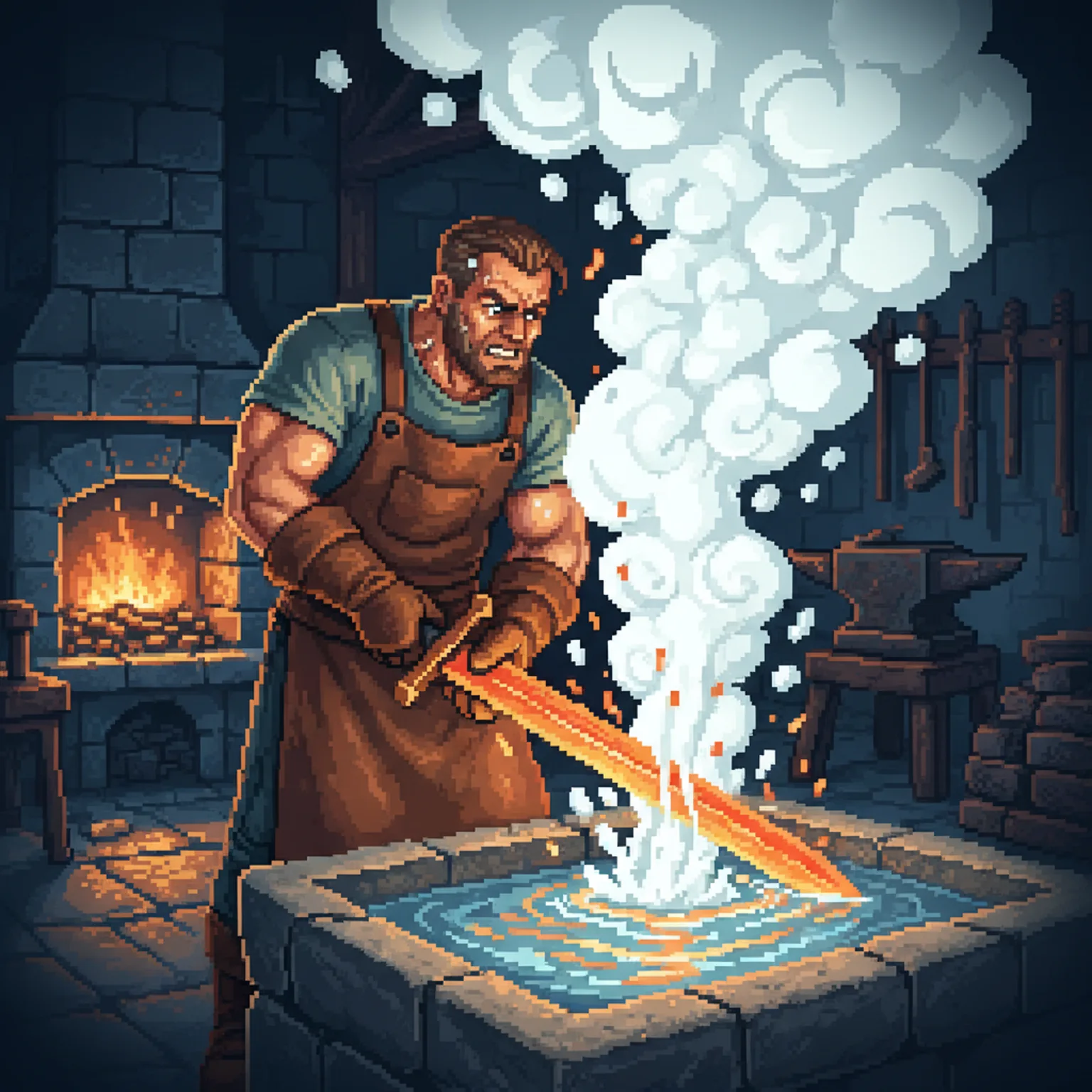
The quench is the moment a smith drops the glowing blade into water or oil — the hiss where hot, workable steel turns hard and permanent. It's also the test: do the earlier steps wrong and the blade cracks right there in the bath. Everything you did up to that instant suddenly becomes load-bearing.
That's hitting publish. It's irreversible (in a sense) and it's public, and the work either holds or it shatters — and that part is on me. Not the model. Not the pipeline. Me. A smith's mark goes only on a blade he'll stand behind; the byline is mine, and the reputation that took two decades to build rides on every single thing I let through. The cymbal gets played one more time before it goes in the box, and I'm the one playing it.
The artifact is the only thing that was ever real
Here is what I actually believe, after all of it.
If an experienced operator arrives at the same artifact they would have made by hand anyway — because their distilled experience and their command of real tools and real patterns let them compress the creation time fifteen-fold or more — and the result is excellent, accurate, useful, and beautiful, I genuinely do not see the problem.
"Is this AI?" is the wrong question because you cannot answer it from the artifact, and the artifact is the only thing that reaches the reader. Put two posts side by side. One was written on index cards in pen and ink, transcribed into MDX by hand, every element hand-coded, staged, and published. The other was talked through with Claude, run through a pipeline to a rough shape, then hand-edited, read fourteen times, polished, and then published. You cannot tell which is which. And if you can't tell — if the only real difference is how long it took and how the maker's hands happened to move — then the question was never about quality. It was about purity. Purity is a much worse standard than excellence.
We have done this exact dance every time the tools changed. Writers were going to be ruined by the typewriter, because real writing lived in longhand, in ink and smudges. Then by the word processor. Then by spell check. Each time, someone was certain the soul lived in the friction we'd just removed. Each time, the good work stayed good and the bad work stayed bad, and the tool turned out to be a tool.
I think this is close to inescapable. We are a tool-using species — it is somewhere near the core of what we are. We extend ourselves through the things we build, and then we build with the extensions. To draw the line at this tool, in this year, and declare everything downstream of it suspect, is intellectually lazy. It's a cop-out. It lets you wave a thing away without ever doing the harder work of judging it (usually because it makes you uncomfortable or insecure).
So judge the artifact. Is it true? Is it useful? Is it beautiful? Does it help anyone? Those are difficult questions, and they are the only ones that have ever mattered.
The cymbal comes off the line in a fraction of the time it used to take. A person still picks up every single one and plays it before it ships. The speed and the craft can live in the same motion.
The Amazon book links above are affiliate links — these two have shaped how I think about making things, and I recommend them without reservation.

Discussion
Giscus