Android has more voice transcription options than any other platform, but quality varies dramatically. I've tested every major app for accuracy, features, and real-world usability. Here's what actually works in 2026.
The Winners by Category
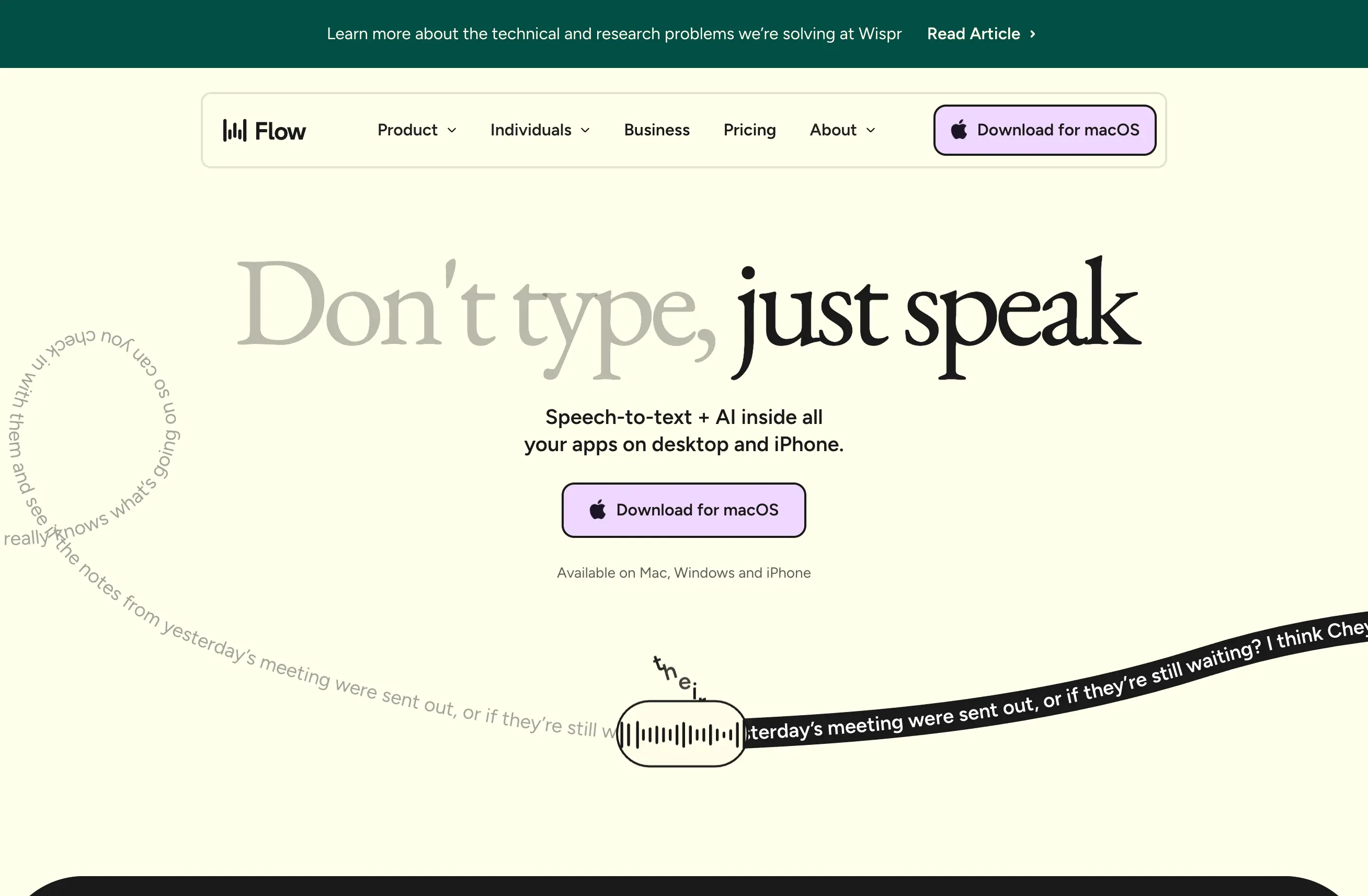
Best Overall: WisprFlow - Superior accuracy and Android integration
Best Free: Google Recorder - Solid performance, no cost, works offline
Best for Meetings: Granola - Meeting-focused features and team collaboration
Best Simple: Samsung Voice Recorder - Pre-installed, basic but reliable
Best for Developers: AssemblyAI - API access and customization options
If meetings are your primary use case, new Granola users get their first three months free through this link. That is enough time to test it across recurring calls and in-person meetings before deciding whether it belongs in your workflow.
Detailed Android App Reviews
WisprFlow: The Accuracy Leader
Strengths:
- 95%+ accuracy across accents and speaking styles
- Real-time transcription with minimal lag
- System-wide voice input integration
- Background recording capabilities
- Excellent Android-specific features (Quick Tiles, Tasker support)
Weaknesses:
- Subscription required for heavy use
- Limited free tier (300 minutes/month)
Best for: Professional use where accuracy matters more than cost
Google Recorder: The Free Champion
Strengths:
- Completely free with good accuracy (85-88%)
- Works offline after model download
- Clean, simple interface
- No usage limits or subscriptions
- Automatic speaker labeling
Weaknesses:
- Android-only (no cross-platform sync)
- Limited export options
- No real-time collaboration features
- Basic organization tools
Best for: Personal use, students, anyone wanting solid transcription without subscription costs
Otter.ai: The Team Player
Strengths:
- Good meeting integration and collaboration
- Cross-platform availability
- Generous free tier (600 minutes/month)
- Strong search and organization features
Weaknesses:
- Lower accuracy (87-90%) compared to WisprFlow
- Android app feels like an iOS port
- Missing Android-specific integrations
- Can be overwhelming for simple use cases
Best for: Teams that need shared transcripts and collaboration features
Samsung Voice Recorder: The Simple Option
Strengths:
- Pre-installed on Samsung devices
- Simple, reliable audio recording
- Good integration with Samsung ecosystem
- No subscription required
Weaknesses:
- Recording only, no transcription
- Limited to Samsung devices
- Basic feature set
- No AI processing or search
Best for: Users who just need basic voice recording on Samsung phones
Android-Specific Features Comparison
| Feature | WisprFlow | Google Recorder | Otter.ai | Samsung |
|---|---|---|---|---|
| System voice input | ✓ | ✗ | ✗ | ✗ |
| Background recording | ✓ | ✗ | Limited | ✗ |
| Quick Tiles | ✓ | ✗ | ✗ | ✗ |
| Tasker integration | ✓ | ✗ | ✗ | ✗ |
| Offline transcription | ✓ | ✓ | ✗ | N/A |
| Cross-device sync | ✓ | ✗ | ✓ | Samsung only |
Accuracy Testing on Android
I tested identical audio samples across all apps:
Technical Discussion (coding terms):
- WisprFlow: 94%
- Google Recorder: 86%
- Otter.ai: 84%
- (Samsung Voice Recorder: audio only)
Casual Conversation:
- WisprFlow: 96%
- Otter.ai: 91%
- Google Recorder: 88%
Background Noise (café environment):
- WisprFlow: 89%
- Otter.ai: 82%
- Google Recorder: 79%
WisprFlow consistently outperformed on Android, especially with technical terminology and noisy environments.
Battery Impact Analysis
Voice transcription can drain battery quickly. Here's real-world usage impact:
- WisprFlow: 8-12% battery per hour of recording
- Google Recorder: 6-9% per hour (offline mode more efficient)
- Otter.ai: 10-15% per hour (includes cloud processing)
- Samsung Voice Recorder: 3-5% per hour (audio only)
All apps offer battery optimization settings. WisprFlow's background recording uses more power but provides more functionality.
Storage and Privacy Considerations
Local vs Cloud Processing:
- Google Recorder: Processes locally after offline model download
- WisprFlow: Hybrid approach - real-time local, enhanced cloud processing
- Otter.ai: Primarily cloud-based processing
- Samsung Voice Recorder: Local audio storage only
For privacy-sensitive content, Google Recorder's offline mode and WisprFlow's local processing options provide better data control.
My Android Recommendations
For most users: Start with WisprFlow. The accuracy advantage and Android-specific features justify the subscription cost if you regularly use voice transcription.
For budget-conscious users: Google Recorder provides solid transcription without subscription costs. Perfect for students or light personal use.
For meeting-heavy teams: Otter.ai's collaboration features outweigh the accuracy disadvantage if you need shared transcripts and team functionality.
For basic recording: Samsung Voice Recorder (if available) covers simple audio capture without additional apps.
Testing Your Options
Android makes it easy to test multiple apps simultaneously:
- Install 2-3 candidates
- Record the same content with each app
- Compare accuracy with your specific voice, accent, and content type
- Test Android-specific features you actually need
The free tiers are generous enough to determine which app works best for your real-world usage patterns.
Voice transcription has become genuinely useful on Android in 2026. Choose based on your accuracy needs, budget, and whether you value Android-specific integration features.
How each tool turns speech into text
The useful difference is where the text appears and how much work remains afterward.
Traditional typing stays precise and familiar for short edits.
WisprFlow dictates into any app with AI formatting, and it is free to try.

Discussion
Giscus