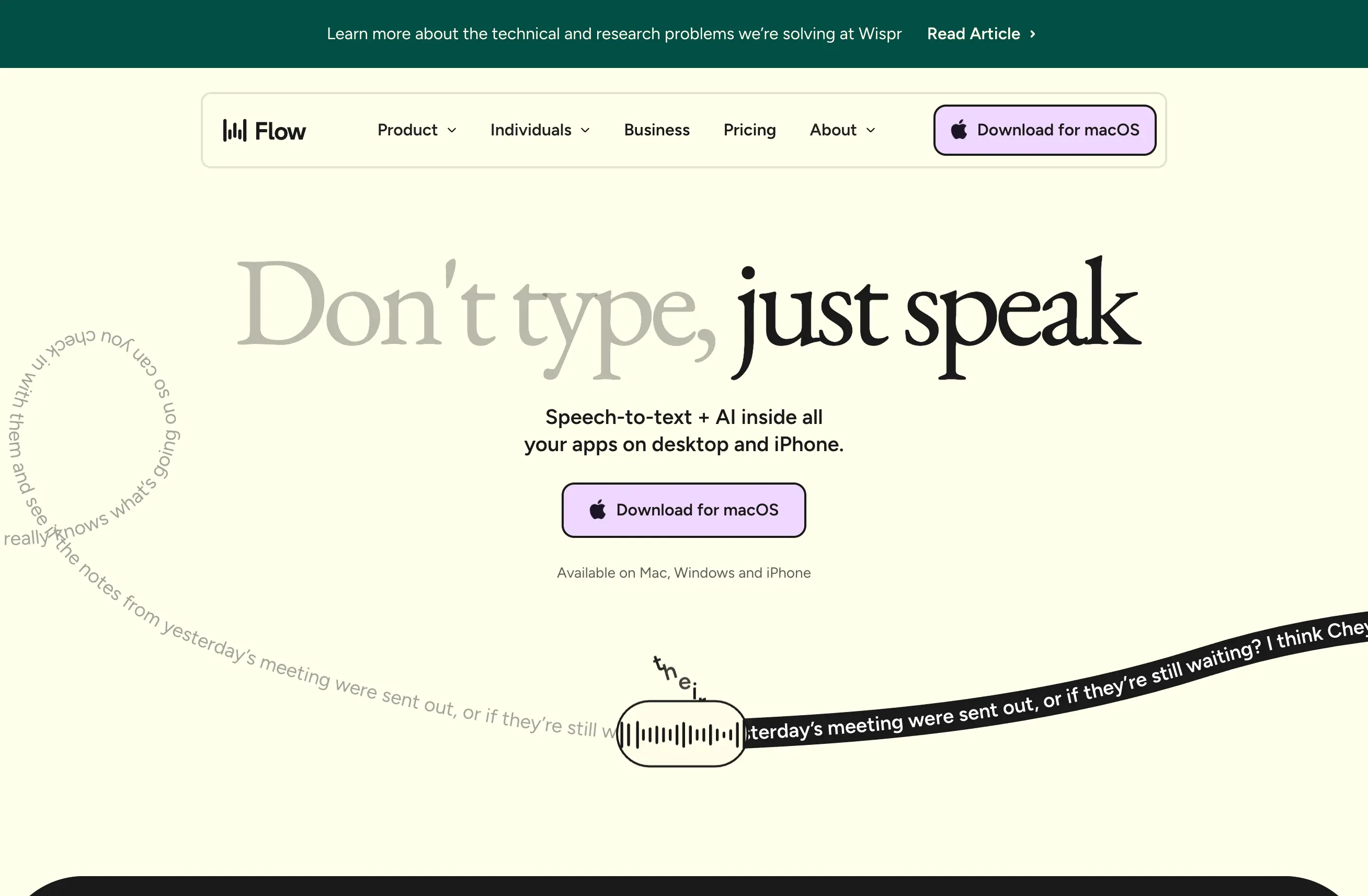
For an actual audio recording, start with Google Recorder on a Pixel or Samsung Voice Recorder on a recent Galaxy phone. Use Wispr Flow when your goal is different: speaking polished text directly into email, messages, documents, and other apps.
That distinction prevents a common bad recommendation. A dictation tool can save enormous typing time, but it should not be ranked as the best meeting recorder when it does not create the same kind of durable audio record.
Quick recommendations
| What you need | Best starting point | Main limitation |
|---|---|---|
| Long recordings and searchable transcripts on Pixel | Google Recorder | Pixel devices only |
| Voice recordings and Galaxy AI transcripts | Samsung Voice Recorder | Features vary by Galaxy model and language |
| Polished text inserted into Android apps | Wispr Flow | Requires Android 13+, permissions, and internet |
| Group meeting archive shared across a team | A dedicated meeting platform | More administration and cloud storage |
Google Recorder: best on Pixel
Google Recorder is the cleanest recommendation for Pixel owners who want to keep an audio file and search its transcript. Google supports Recorder on Pixel 3 and later phones and Pixel Tablet. A single recording can run for up to 18 hours, and Pixel 6 or later can label different speakers.
You can trim a recording by selecting audio or transcript text. Recorder can also work without a Google Account when you want recordings to remain on the device rather than sync to recorder.google.com.
Choose it for lectures, interviews, personal memos, and in-person meetings where an audio record matters. Check local law and obtain permission before recording other people.
Samsung Voice Recorder: best on supported Galaxy phones
Samsung Voice Recorder is the natural first choice for many Galaxy owners. It records standard audio, supports quality settings and stereo recording, and can share voice or text files.
On supported Galaxy AI devices, Transcript Assist can transcribe a saved recording, summarize it, translate supported languages, and send the result to Samsung Notes. Device model, region, software version, and language packs affect which features are available, so confirm the options on the phone you plan to use.
Samsung's app is a better fit than a third-party subscription when the built-in recorder already covers the job.
Wispr Flow: best for dictating into other apps
Wispr Flow for Android uses a floating bubble that appears when you focus a standard text field. Tap it, speak naturally, and Flow inserts cleaned-up text into the app. It removes filler words, handles self-corrections, formats lists, and can apply writing styles.
This is useful for:
- replying to email or Slack without typing;
- drafting a document while walking;
- entering notes directly into a CRM;
- composing longer messages with punctuation and formatting;
- using a personal dictionary for names and technical terms.
It is not the right choice when you need an 18-hour audio file, a group recording, or a durable source recording for later review. Android dictation sessions currently have a five-minute cap, require an internet connection, and may need extra overlay, accessibility, microphone, and battery permissions depending on the phone manufacturer.
Recording and dictation solve different problems
A recorder preserves what happened. Dictation turns your speech into text you intend to send or edit. Meeting assistants sit between those categories by capturing a conversation and producing a transcript or summary.
Pick based on the artifact you need at the end:
- Audio evidence: use a recorder and retain the file under an approved policy.
- Searchable memory: use a recorder with transcription and speaker labels.
- Finished written text: use Wispr Flow or another dictation tool.
- Shared meeting operations: use a meeting platform with permissions, retention, and team access.
How to test an Android voice app
Run the same short script through each candidate rather than trusting a generic accuracy score. Include names, numbers, punctuation, an acronym, a self-correction, and a sentence spoken with background noise.
Then check:
- Did it preserve names, negation, and numbers?
- Can you correct the transcript without fighting the app?
- Is the original audio available when you need to verify a sentence?
- Does it work with your device, keyboard, headphones, and language?
- Can you export or delete the recording cleanly?
- Does the data handling fit the sensitivity of the material?
My recommendation
Use the recorder built for your phone before paying for another one. Pixel Recorder and Samsung Voice Recorder are both strong when supported by the device. Add Wispr Flow when the recurring problem is typing, not recording.
Current product documentation
- Google Recorder device support and recording behavior
- Samsung Voice Recorder and Transcript Assist
- How Wispr Flow works on Android
- Wispr Flow Android setup and limitations
How each tool turns speech into text
The useful difference is where the text appears and how much work remains afterward.
Traditional typing stays precise and familiar for short edits.
WisprFlow dictates into any app with AI formatting, and it is free to try.

Discussion
Giscus