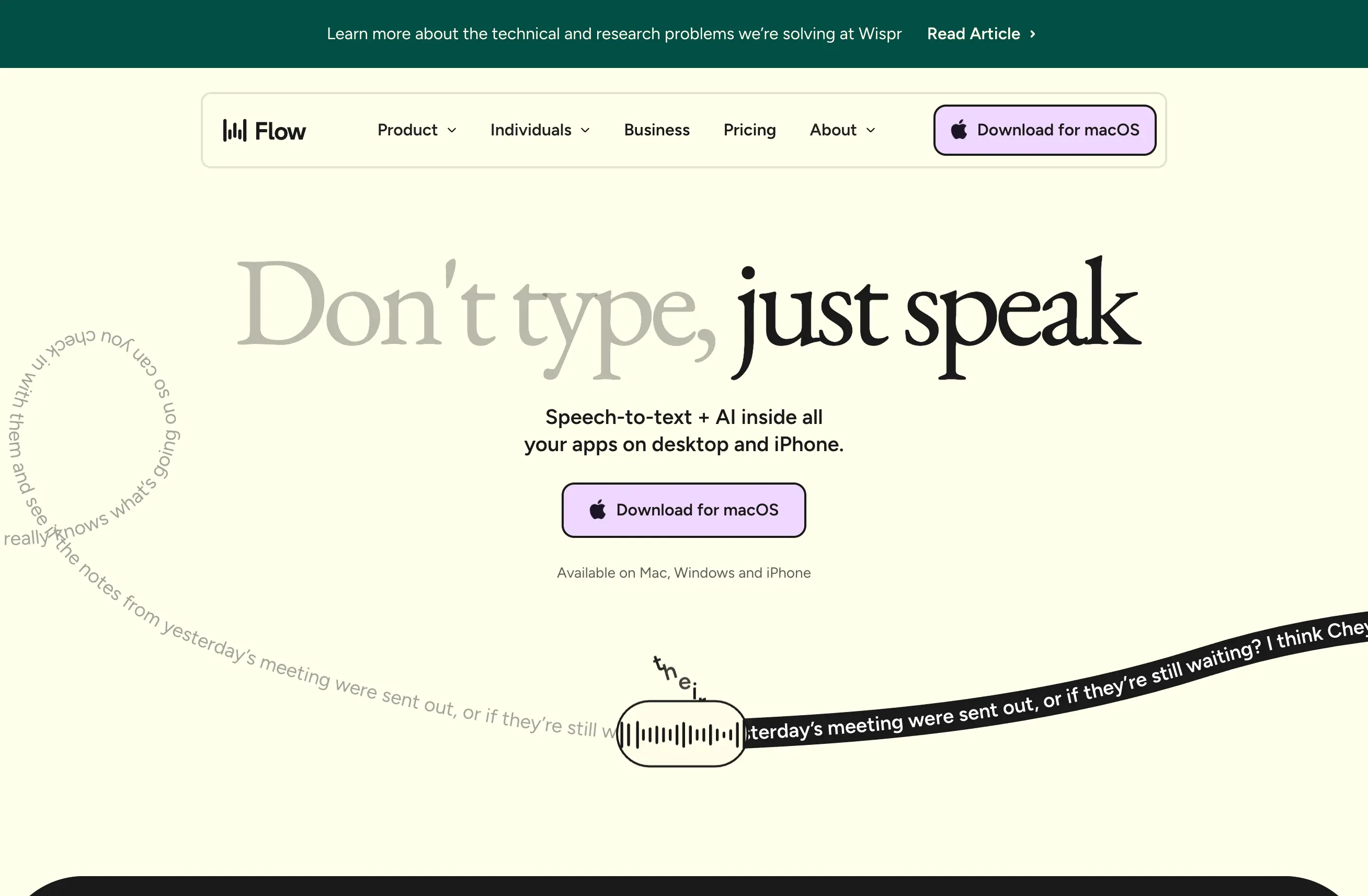
Remote work has fundamentally changed how we approach productivity and collaboration. Voice coding tools offer unique advantages for distributed teams, enabling new levels of efficiency while addressing common remote work challenges.
The Remote Work Productivity Evolution
Remote work in 2026 faces distinct challenges that voice coding can solve:
- Isolation from keyboard-dependent workflows: Traditional coding ties developers to specific workstations
- Meeting fatigue: Endless video calls reduce actual productive coding time
- Ergonomic limitations: Home office setups often lack proper ergonomic support
- Collaboration friction: Difficulty in explaining code and technical concepts remotely
Voice coding tools enable location independence, ergonomic flexibility, and enhanced remote collaboration.
The Ultimate Remote Voice Coding Setup
Hardware Configuration
Primary Workstation:
- High-quality microphone: Audio-Technica AT2020USB+ or Shure SM7B for professional accuracy
- Noise-canceling headphones: Sony WH-1000XM5 or Bose QuietComfort for focus
- Ergonomic keyboard: Keep for precision tasks, reduce primary reliance
- Standing desk setup: Enables voice coding while walking or standing
- Multiple monitors: Visual code review while voice coding new features
Mobile Setup:
- Laptop with external mic: Voice coding from any location with quality audio input
- Portable standing desk: Height-adjustable surface for cafe or co-working spaces
- Noise-isolating earbuds: AirPods Pro or equivalent for public spaces
- External battery pack: Extended mobile coding sessions without power constraints
Software Configuration
Voice Coding Platform:
- Primary: WisprFlow or Dragon Professional for technical accuracy
- Secondary: Granola for meeting notes and documentation
- Backup: Built-in platform dictation for basic tasks
Collaboration Tools:
- Asynchronous code review: Voice-generated PR descriptions and review comments
- Documentation creation: Voice-driven README files and technical specifications
- Video presentation: Screen recording with voice narration for technical explanations
- Team communication: Voice messages in Slack/Discord for complex technical discussions
Location-Independent Productivity
Voice coding enables true location flexibility for remote work:
Home Office Optimization
Dedicated Voice Coding Space:
- Acoustic treatment: Minimal echo and background noise for accurate recognition
- Lighting setup: Proper illumination for visual code review and debugging
- Temperature control: Comfortable environment for extended voice sessions
- Distraction isolation: Separate space from household activities and interruptions
Ergonomic Benefits:
- Posture flexibility: Code while standing, walking, or in comfortable seating
- Reduced strain: Less typing-related wrist, neck, and back tension
- Movement integration: Voice coding while using treadmill desk or exercise ball
- Eye strain reduction: Less focused screen staring during voice input
Nomadic Coding Workflows
Voice coding supports true digital nomad development:
Cafe and Co-working Spaces:
- Background noise handling: Modern voice recognition filters ambient sound effectively
- Discrete input method: Less conspicuous than aggressive typing in quiet spaces
- Portable setup: Minimal hardware requirements for full productivity
- Flexible seating: Voice coding works from couches, bar stools, or outdoor tables
Travel Development:
- Airport productivity: Voice coding during flight delays with noise-canceling headphones
- Hotel room optimization: Productive development in limited space environments
- Time zone adaptation: Voice coding requires less mental energy than complex typing during jet lag
- International collaboration: Easier to maintain productivity across different physical environments
Remote Team Collaboration
Voice coding enhances distributed team productivity:
Asynchronous Code Communication
Voice-Enhanced Code Review:
- PR descriptions: Voice-generated explanations of changes and architectural decisions
- Code walkthroughs: Screen recordings with voice narration explaining complex logic
- Review comments: Detailed voice-generated feedback on implementation choices
- Architecture discussions: Voice-created technical documentation for design decisions
Knowledge Sharing:
- Technical tutorials: Voice-guided creation of team learning materials
- Troubleshooting guides: Voice documentation of problem-solving processes
- Best practices: Voice-generated team coding standards and conventions
- Onboarding materials: Voice-created documentation for new team member training
Real-Time Remote Collaboration
Pair Programming Enhancement:
- Navigator role optimization: Voice description of implementation approaches while partner types
- Driver role efficiency: Voice coding while partner provides guidance and feedback
- Screen sharing annotation: Voice commentary during shared coding sessions
- Remote mob programming: Voice coordination for multi-person distributed coding
Meeting Productivity:
- Technical planning: Voice-driven architecture discussions and system design sessions
- Sprint planning: Voice input for story estimation and task breakdown
- Daily standups: Voice-generated status updates and blocker identification
- Retrospectives: Voice capture of team feedback and improvement suggestions
Remote Work Productivity Patterns
Time Zone Optimization
Voice coding enables flexible productivity across distributed teams:
Follow-the-sun Development:
- Handoff documentation: Voice-generated project status for next time zone team
- Context preservation: Rich voice documentation maintains project continuity
- Issue tracking: Voice-created detailed bug reports and reproduction steps
- Progress updates: Voice-generated summaries for team members coming online
Personal Productivity Optimization:
- Peak energy alignment: Voice coding during optimal personal productivity hours
- Meeting block optimization: Voice coding during focused work blocks between meetings
- Deep work sessions: Voice coding enables flow state without keyboard interruption
- Multi-tasking balance: Voice coding while handling family or personal responsibilities
Health and Wellness Integration
Remote work voice coding supports better work-life integration:
Physical Health Benefits:
- Repetitive strain prevention: Reduced risk of carpal tunnel and RSI
- Posture improvement: Voice coding while walking, standing, or stretching
- Movement integration: Productive coding combined with light exercise
- Eye strain reduction: Less intensive screen focus during voice input periods
Mental Health Benefits:
- Reduced isolation: Voice interaction feels more social than silent typing
- Cognitive variety: Different input method provides mental stimulation
- Stress reduction: Voice coding can be more relaxed than intense keyboard sessions
- Work-life boundary management: Voice coding enables productivity from comfortable, personal spaces
Remote Work Tool Integration
Productivity Stack Optimization
Core Development Tools:
- IDE integration: Voice commands for VS Code, IntelliJ, or preferred development environment
- Version control: Voice-generated commit messages and branch management
- Testing workflows: Voice-driven test creation and debugging processes
- Documentation systems: Voice integration with team wikis and knowledge bases
Communication Enhancement:
- Async video creation: Voice-narrated screen recordings for complex explanations
- Team updates: Voice-generated status reports and progress summaries
- Technical mentoring: Voice-guided code reviews and learning discussions
- Client communication: Voice-created project updates and deliverable explanations
Security and Privacy Considerations
Remote voice coding requires attention to security:
Data Protection:
- Voice data encryption: Ensure voice AI tools encrypt audio data in transit
- Local processing options: Prefer tools with offline or on-premise processing capability
- Access control: Implement proper authentication for voice coding tool access
- Audit trails: Maintain logs of voice coding activities for security review
Privacy Management:
- Background noise filtering: Prevent inadvertent capture of household or personal conversations
- Meeting separation: Clear boundaries between work voice coding and personal device usage
- Client confidentiality: Voice coding tools appropriate for sensitive client project work
- Compliance requirements: Ensure voice tools meet industry-specific regulatory requirements
Implementation Strategy for Remote Teams
Team Adoption Process
Pilot Program Development:
- Individual adoption first: Team members experiment with voice coding independently
- Use case identification: Determine which workflows benefit most from voice input
- Tool standardization: Agree on voice coding platforms for team consistency
- Best practices sharing: Create team guidelines for effective voice coding
Scaling Across Teams:
- Training and support: Voice coding workshops and peer mentoring programs
- Integration planning: Voice coding workflow integration with existing team processes
- Productivity measurement: Track team velocity and quality improvements
- Continuous optimization: Regular review and refinement of voice coding practices
Measuring Remote Work Voice Coding Success
Productivity Metrics:
- Code output velocity: Lines of code and feature completion rates
- Meeting effectiveness: Reduced meeting time through better asynchronous communication
- Documentation quality: Improved technical documentation coverage and clarity
- Team collaboration: Enhanced remote team coordination and knowledge sharing
Quality of Life Metrics:
- Work-life balance: Improved flexibility and location independence
- Health indicators: Reduced physical strain and improved ergonomic outcomes
- Job satisfaction: Enhanced productivity and reduced frustration with remote work limitations
- Team cohesion: Better remote collaboration and communication effectiveness
Remote work voice coding represents the next evolution of distributed team productivity. By enabling location independence, improving ergonomics, and enhancing collaboration, voice coding tools help remote teams achieve productivity levels that rival or exceed traditional in-office development.
For remote teams ready to transform their distributed productivity through voice-enhanced workflows, the tools and techniques are ready today. The future of remote work is spoken, not typed.
How each tool turns speech into text
The useful difference is where the text appears and how much work remains afterward.
Traditional typing stays precise and familiar for short edits.
WisprFlow dictates into any app with AI formatting, and it is free to try.

Discussion
Giscus