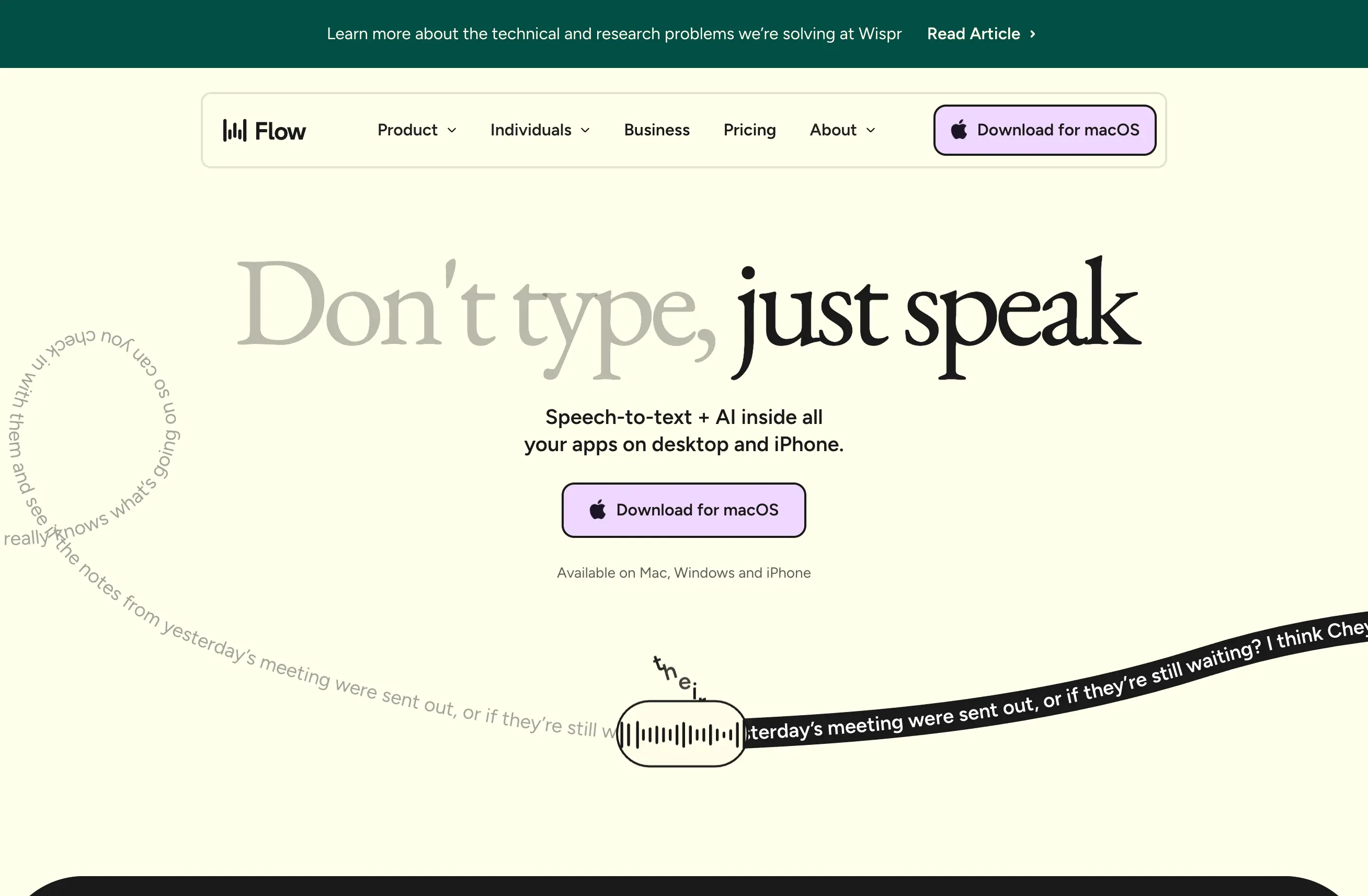
Voice-to-text apps like WisprFlow can be battery hungry if not configured properly. Since WisprFlow launched on Android in February 2026, many users are discovering they need to optimize their device settings to get maximum battery life while maintaining smooth voice productivity.
This guide covers everything you need to know to run WisprFlow efficiently on Android without draining your battery.
Understanding WisprFlow's Battery Usage
WisprFlow's Android app uses several system resources:
- Audio processing: Continuous listening when activated
- Network connectivity: Real-time transcription and syncing
- Display: Screen wake during voice input
- CPU: Local processing for wake word detection
The key is configuring Android's power management to allow WisprFlow the resources it needs while restricting unnecessary background activity.
Essential Android Battery Settings
Disable Battery Optimization
Android's Doze mode can interfere with WisprFlow's background processing:
- Open Settings → Apps → WisprFlow
- Tap Battery → Battery optimization
- Select Don't optimize for WisprFlow
- Confirm the change
This prevents Android from putting WisprFlow into deep sleep when you need it ready for voice input.
Configure Adaptive Battery
Android 9+ includes Adaptive Battery that learns your app usage patterns:
- Go to Settings → Battery → Adaptive Battery
- Enable Adaptive Battery
- Use WisprFlow regularly for 2-3 days so Android learns it's important
Set WisprFlow to Unrestricted
For maximum reliability:
- Settings → Apps → WisprFlow → Battery
- Set Background activity to Unrestricted
- Enable Allow background activity
This ensures WisprFlow can process your voice commands instantly without delay.
WisprFlow-Specific Optimizations
Adjust Voice Detection Sensitivity
Lower sensitivity reduces battery usage:
- Open WisprFlow → Settings
- Go to Voice Detection
- Set sensitivity to Medium or Low if you're in quiet environments
- Test to ensure it still catches your voice reliably
Configure Transcription Mode
WisprFlow offers different transcription modes with varying battery impact:
- Real-time: Highest battery usage, instant results
- Batch processing: Better battery life, slight delay
- Offline mode: Best battery life, no network usage
Choose based on your workflow needs.
Optimize Audio Quality Settings
Higher quality audio processing uses more battery:
- WisprFlow Settings → Audio Quality
- Use Standard quality for most use cases
- Reserve High quality for critical transcriptions
- Low quality works well for quick notes and reminders
Device-Specific Tips
Samsung Galaxy Devices
Samsung's One UI has additional power management:
- Settings → Device care → Battery
- Add WisprFlow to Apps that won't be put to sleep
- Disable Put unused apps to sleep if it affects WisprFlow
Google Pixel Devices
Pixel phones with stock Android:
- Settings → Apps → Special app access
- Device admin apps → Enable WisprFlow if available
- Modify system settings → Allow WisprFlow
OnePlus Devices
OnePlus has aggressive battery optimization:
- Settings → Battery → Battery optimization
- Set WisprFlow to Don't optimize
- Settings → App management → Disable auto-launch management for WisprFlow
Monitoring Battery Usage
Track WisprFlow's actual battery consumption:
- Settings → Battery → Battery usage
- Tap WisprFlow to see detailed usage
- Look for patterns in Screen vs Background usage
- Adjust settings if background usage is unexpectedly high
Normal WisprFlow battery usage should be:
- Light usage: 2-4% per hour
- Moderate usage: 4-8% per hour
- Heavy usage: 8-15% per hour
Troubleshooting High Battery Drain
If WisprFlow is using excessive battery:
Check for Background Issues
- Settings → Apps → WisprFlow → Storage
- Clear Cache (not data)
- Restart the app
- Monitor usage for 24 hours
Update the App
Newer versions often include battery optimizations:
- Open Google Play Store
- Search for WisprFlow
- Tap Update if available
- Check release notes for battery improvements
Reset Network Settings
Network connectivity issues can cause battery drain:
- WisprFlow Settings → Network
- Reset network preferences
- Reconnect to WiFi
- Test battery usage
Advanced Power Management
Use Tasker Automation
Automate WisprFlow's battery settings with Tasker:
- Profile: Location-based (office, home, car)
- Task: Adjust WisprFlow sensitivity and quality
- Example: High quality at office, low quality in car
Custom DND Integration
Configure Do Not Disturb to optimize WisprFlow:
- Settings → Sound → Do Not Disturb
- Apps → Allow WisprFlow notifications
- Set automatic DND rules that don't interfere with voice input
Battery-Friendly Usage Patterns
Optimize Your Voice Workflow
- Batch similar tasks: Record multiple notes in one session
- Use offline mode: When network isn't needed
- Voice shortcuts: Reduce screen-on time with quick commands
- Scheduled syncing: Instead of continuous real-time sync
Manage Background Apps
Other apps can interfere with WisprFlow's battery optimization:
- Limit other voice assistants running simultaneously
- Close unused apps that access microphone
- Disable location services for non-essential apps
- Use airplane mode + WiFi when possible
Alternative Approaches
If battery drain remains an issue:
External Battery Solutions
- Portable chargers: 10,000mAh for all-day usage
- Wireless charging pads: For desk/car setups
- Battery cases: Extend total capacity
Device Upgrades
Consider phones with better battery life for heavy WisprFlow usage:
- Battery capacity: 4,000mAh minimum
- Fast charging: 25W+ for quick top-ups
- Wireless charging: For convenient charging
Conclusion
WisprFlow's Android app can run efficiently without destroying your battery life when properly configured. The key is balancing performance with power management through Android's settings and WisprFlow's built-in optimization options.
Start with disabling battery optimization and setting WisprFlow to unrestricted background activity. Then fine-tune voice detection sensitivity and transcription quality based on your specific usage patterns.
With these optimizations, you can enjoy all-day voice productivity without constantly hunting for a charger. Your Android device will efficiently handle voice-to-text conversion while maintaining solid battery life for everything else you need to do.
How each tool turns speech into text
The useful difference is where the text appears and how much work remains afterward.
Traditional typing stays precise and familiar for short edits.
WisprFlow dictates into any app with AI formatting, and it is free to try.

Discussion
Giscus