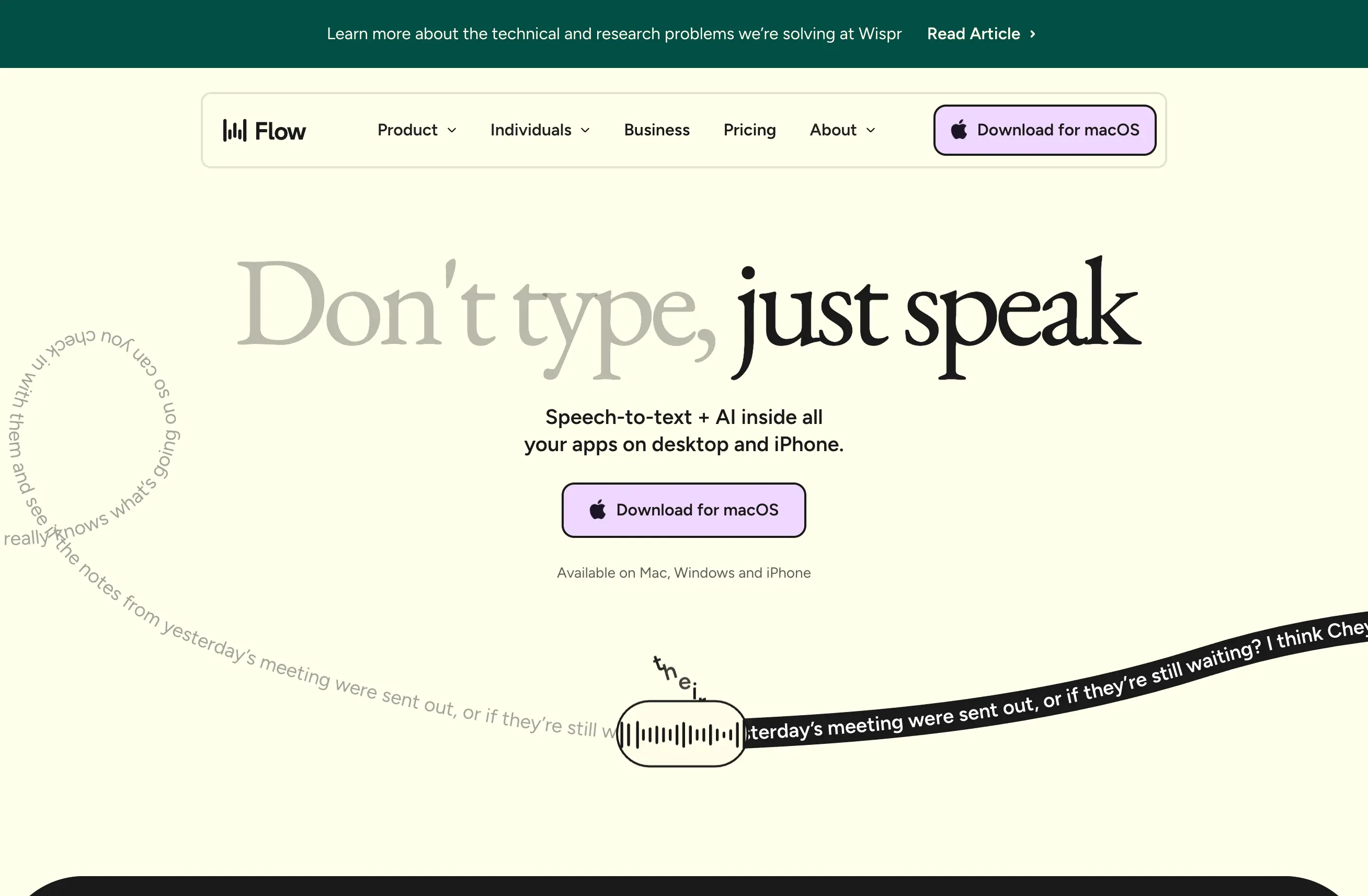
Construction work demands constant attention to safety, quality, and deadlines. Stopping to write reports or update project status means less time building and more risk of missing critical details. WisprFlow's voice-to-text technology lets construction workers document everything hands-free while staying focused on the job.
This guide shows how construction professionals are using WisprFlow to handle job site documentation, safety reporting, and project communications without ever putting down their tools.
Why Construction Workers Choose Voice Documentation
Hands-Free Operation
Construction work involves:
- Power tools: Can't stop to type while operating equipment
- Dirty hands: Gloves and dust make phone screens unusable
- Safety gear: Hard hats and hearing protection limit screen visibility
- Time pressure: Every minute counts on tight deadlines
WisprFlow solves these problems by converting speech to text instantly, letting you document work progress, safety observations, and quality issues without interrupting your workflow.
Real-Time Accuracy
Unlike waiting until the end of the day to write reports, voice documentation captures:
- Exact measurements: Speak dimensions directly as you measure
- Material counts: Record inventory as you use it
- Safety observations: Report hazards immediately when noticed
- Quality issues: Document problems while they're fresh
Common Construction Use Cases
Daily Progress Reports
End-of-day reports become effortless:
Traditional approach: "Spend 30 minutes after work typing up what happened"
WisprFlow approach: "Foundation pour completed at 2:15 PM. Used 47 cubic yards of concrete. Weather clear, temperature 68 degrees. No delays or safety issues. Ready for inspection tomorrow morning."
Safety Incident Documentation
OSHA compliance requires detailed incident reports:
Traditional: Stop work, find paperwork, write detailed report
WisprFlow: "Safety incident at 10:30 AM. Worker slipped on wet concrete near north wall. No injury, but immediate area cordoned off. Applied non-slip treatment and posted warning signs. Supervisor notified."
Material and Inventory Tracking
Keep accurate records without clipboards:
- Deliveries: "Lumber delivery received 8:15 AM. 200 2x4x8 studs, 150 2x6x10 joists. Driver: Mike Johnson, truck 47. All materials inspected and stored in lot B."
- Usage: "Used 47 sheets of half-inch plywood for subfloor installation. Need to order 25 more for tomorrow."
- Waste tracking: "Concrete waste approximately 2 cubic yards. Disposed in designated area per EPA guidelines."
Quality Control Inspections
Document quality issues as you spot them:
- Defects: "Drywall crack observed in bedroom 2 northeast corner. Approximately 8 inches long. Needs repair before paint."
- Rework needed: "Electrical box in kitchen 3 inches off center. Electrician needs to relocate before cabinet installation."
- Compliance: "All windows installed per manufacturer specifications. Flashing properly applied. Ready for insulation."
WisprFlow Features for Construction
Noise Cancellation
Construction sites are loud. WisprFlow's advanced audio processing handles:
- Equipment noise: Chainsaws, jackhammers, generators
- Background chatter: Multiple crews working nearby
- Environmental sounds: Wind, traffic, machinery
The app filters out background noise to capture only your voice, ensuring accurate transcriptions even in noisy environments.
Offline Capability
Many job sites have poor cell coverage. WisprFlow works offline:
- Local processing: Basic transcription without internet
- Sync when connected: Upload all documentation when back in coverage
- No data loss: Everything saved locally until network available
- Batch processing: Handle multiple reports efficiently
Custom Vocabulary
Construction has specialized terminology. Train WisprFlow to recognize:
- Materials: "Engineered lumber", "self-drilling screws", "vapor barrier"
- Tools: "Sawzall", "nail gun", "concrete mixer"
- Measurements: "Sixteen on center", "four-inch schedule 40"
- Company names: Subcontractors, suppliers, inspectors
Integration with Project Management
Connect WisprFlow to construction software:
- Procore: Voice notes sync to project files automatically
- PlanGrid: Field observations attached to specific plan sheets
- Fieldwire: Task updates and punch list items via voice
- Email: Send reports directly to superintendents and owners
Setup for Construction Sites
Equipment Recommendations
Smartphone setup:
- Protective case: Otterbox Defender or similar construction-grade protection
- Belt holster: Quick access without fumbling in pockets
- Bluetooth headset: For noisy environments (optional)
Tablet setup (for office trailers):
- Rugged tablet: Industrial-grade with large screen
- Voice activation: "Hey WisprFlow" hands-free startup
- External microphone: Better pickup in large spaces
Configuration Tips
Audio settings:
- High sensitivity: Catch voice commands over equipment noise
- Long pause timeout: Allow time to think between sentences
- Auto-punctuation: Proper sentence structure without verbal punctuation
Workflow optimization:
- Templates: Create standard formats for common reports
- Voice shortcuts: "Start safety report", "Begin progress update"
- Auto-send: Email completed reports to designated recipients
Team Implementation
Training Crew Members
Getting your team comfortable with voice documentation:
- Start simple: Begin with basic progress notes, not complex reports
- Lead by example: Supervisors use WisprFlow first to demonstrate value
- Address concerns: Many workers initially feel awkward talking to their phone
- Show benefits: Less paperwork at end of day, more accurate records
Standard Operating Procedures
Develop consistent voice documentation practices:
Morning startup:
- Weather conditions
- Crew attendance
- Equipment status
- Daily objectives
Throughout the day:
- Safety observations
- Material usage
- Progress milestones
- Issues requiring attention
End of shift:
- Work completed
- Tomorrow's priorities
- Equipment and material needs
Quality Control
Ensure accurate and complete documentation:
- Review transcriptions: Quick scan for obvious errors
- Standardize terminology: Company-specific vocabulary and formats
- Regular training: Keep crew updated on best practices
- Feedback loop: Improve voice commands based on results
Safety and Compliance Benefits
OSHA Documentation
Voice documentation improves safety compliance:
- Real-time reporting: Document hazards immediately, not hours later
- Complete records: Capture details that might be forgotten
- Consistent format: Standardized safety report structure
- Easy retrieval: Search voice transcriptions for incident patterns
Insurance Claims
Detailed voice records help with insurance and liability issues:
- Exact timing: Precise timestamps for all documentation
- Witness statements: Record observations from multiple crew members
- Photo coordination: Voice notes linked to photos and videos
- Chain of custody: Clear documentation trail for evidence
Regulatory Compliance
Meet documentation requirements efficiently:
- EPA reporting: Environmental compliance documentation
- Building codes: Inspection results and compliance notes
- Labor laws: Break times, safety meetings, training documentation
- Client requirements: Custom reporting formats via voice
Cost-Benefit Analysis
Time Savings
Traditional documentation: 30-45 minutes per day per worker
WisprFlow documentation: 10-15 minutes per day per worker
Annual savings per worker: 65-85 hours = $1,300-2,100 in labor costs
Accuracy Improvements
Voice documentation reduces:
- Missing information: Real-time capture prevents forgetting details
- Transcription errors: No handwriting interpretation issues
- Delayed reporting: Immediate documentation vs. end-of-day rush
- Incomplete records: Easier to capture complete information
Competitive Advantages
Companies using voice documentation gain:
- Faster project closeouts: Complete documentation throughout project
- Better client communication: Real-time updates and transparency
- Improved safety records: More thorough incident documentation
- Higher efficiency: Less time on paperwork, more time building
Common Challenges and Solutions
Background Noise
Problem: Equipment noise interferes with voice recognition
Solutions:
- Move to quieter areas for important documentation
- Use directional microphone or headset
- Speak clearly and project voice
- Repeat important details for accuracy
Crew Adoption
Problem: Workers resistant to new technology
Solutions:
- Start with volunteers and early adopters
- Demonstrate clear benefits (less paperwork)
- Provide adequate training and support
- Address privacy and job security concerns
Technical Issues
Problem: App crashes or poor connectivity
Solutions:
- Keep phones charged with portable batteries
- Have backup documentation methods ready
- Use offline mode when network unreliable
- Regular app updates and device maintenance
Advanced Features
Voice Commands
Set up custom voice commands for common tasks:
- "Start progress report" → Opens template with date and project info
- "Safety incident" → Begins safety documentation format
- "Material order" → Creates supply request with current inventory
- "End of day" → Completes daily report and sends to office
Integration Workflows
Connect WisprFlow to other construction tools:
Project management: Voice notes automatically update task status
Accounting: Time and material entries from voice documentation
Scheduling: Completion notifications trigger next phase scheduling
Quality control: Voice observations create punch list items
Future of Voice Documentation in Construction
Emerging Technologies
Voice documentation is evolving with:
- AI integration: Automatic report formatting and keyword extraction
- IoT connections: Voice notes triggered by equipment sensors
- Wearable devices: Hard hat mounted voice interfaces
- Drone integration: Aerial inspection notes coordinated with flight data
Industry Trends
Construction companies increasingly adopt voice technology for:
- Prefab coordination: Voice documentation of off-site manufacturing
- BIM integration: Voice notes linked to 3D building models
- Sustainability reporting: Environmental impact documentation
- Remote collaboration: Voice updates for distributed project teams
Conclusion
WisprFlow transforms construction documentation from a time-consuming administrative burden into a natural part of daily work. By enabling hands-free, real-time documentation, construction workers can maintain focus on safety and quality while creating comprehensive project records.
The result is more accurate documentation, better safety compliance, improved project communication, and significant time savings. For construction companies serious about efficiency and quality, voice documentation is becoming essential infrastructure for modern job sites.
Whether you're a general contractor managing multiple crews, a specialty subcontractor focused on quality, or a solo operator building your business, WisprFlow provides the tools to document your work professionally without slowing down your progress.
How each tool turns speech into text
The useful difference is where the text appears and how much work remains afterward.
Traditional typing stays precise and familiar for short edits.
WisprFlow dictates into any app with AI formatting, and it is free to try.

Discussion
Giscus