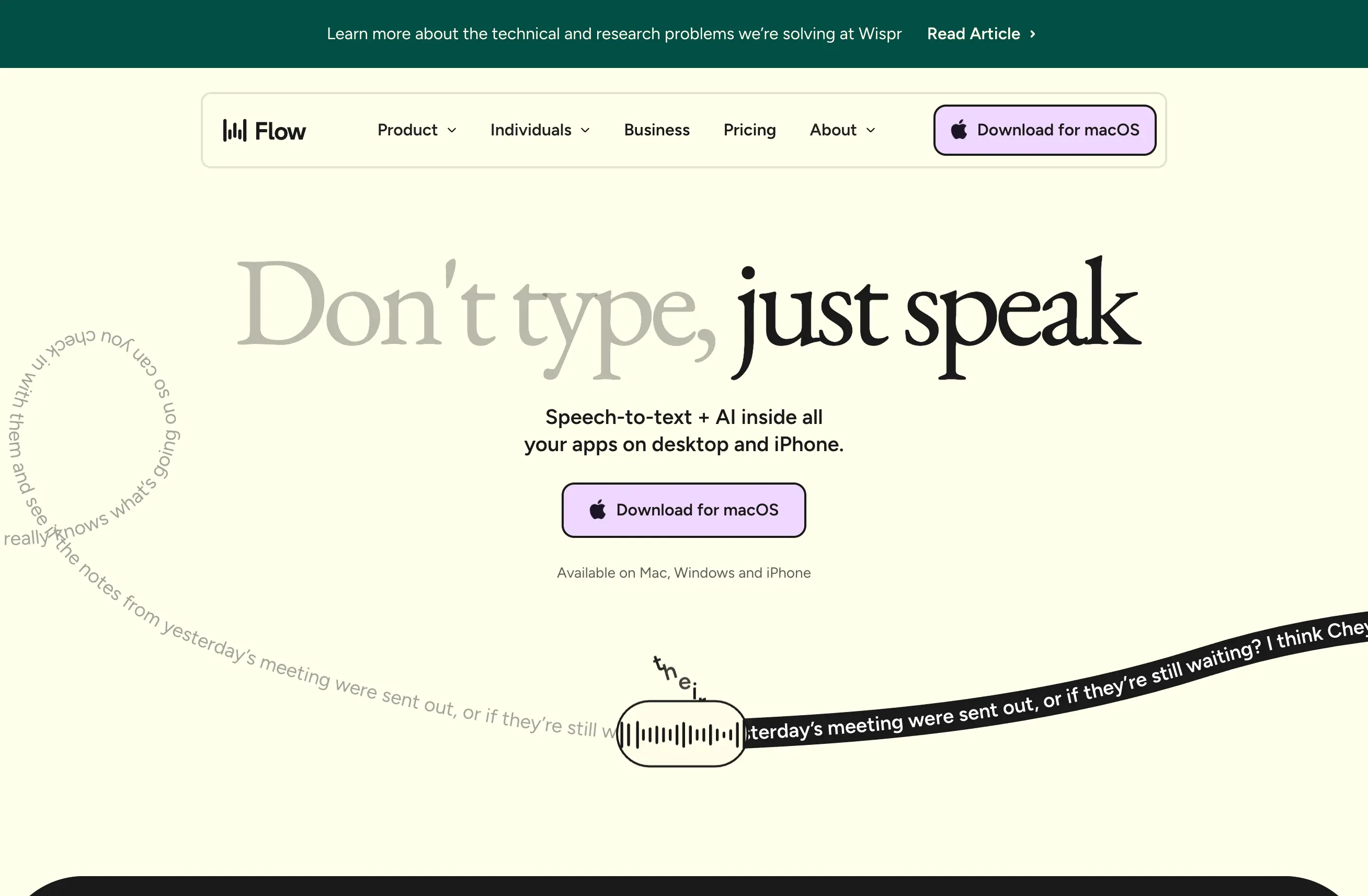
WisprFlow and TranscribeMe represent fundamentally different approaches to converting speech into text: AI-powered real-time recognition versus human-powered transcription services. Understanding these methodologies helps professionals choose the right solution for their specific accuracy, speed, and cost requirements.
Technology and Methodology
WisprFlow's AI Approach: Real-time speech recognition using advanced language models that process audio instantly. The app applies machine learning trained on diverse speech patterns to deliver immediate transcription results.
TranscribeMe's Human Network: Professional transcriptionists manually convert audio recordings into text documents. Human workers listen to recordings and type accurate transcriptions, with quality control processes ensuring consistency.
Speed and Turnaround Times
WisprFlow Performance: Instant transcription during speech input. Users receive text output in real-time as they speak, enabling immediate editing and content development without waiting periods.
TranscribeMe Delivery: Turnaround times ranging from hours to days depending on audio length and service tier. Standard service typically delivers results within 12-24 hours, with expedited options available for premium pricing.
Workflow Impact: WisprFlow supports real-time content creation and live meeting documentation, while TranscribeMe works better for post-event transcription and archival documentation projects.
Accuracy and Quality Control
WisprFlow's AI Accuracy: Achieves 90-95% accuracy with clear audio and standard speech patterns. Performance varies with background noise, accents, and technical terminology, but continues improving through AI model updates.
TranscribeMe's Human Precision: Delivers 98-99% accuracy through human intelligence and quality control processes. Professional transcriptionists handle complex audio scenarios, multiple speakers, and specialized vocabulary more reliably than AI systems.
Error Patterns: WisprFlow makes predictable AI errors with homophones and technical terms, while TranscribeMe errors typically involve unclear audio or complex speaker identification scenarios.
Cost Structure and Economics
WisprFlow Pricing: Subscription model with unlimited transcription within usage tiers. Predictable monthly costs that don't scale directly with transcription volume, making it economical for heavy users.
TranscribeMe Rates: Per-minute pricing for transcription services, typically $1-3 per audio minute depending on turnaround speed and quality requirements. Costs scale directly with transcription volume.
Economic Analysis: WisprFlow provides better value for frequent users who need immediate results, while TranscribeMe offers superior cost control for occasional high-accuracy transcription needs.
Use Case Specialization
WisprFlow Excels For:
- Real-time content creation and dictation
- Meeting notes and live documentation
- Frequent transcription needs with immediate turnaround requirements
- Mobile professionals who dictate on-the-go
TranscribeMe Works Better For:
- Legal depositions and court proceedings
- Academic research interviews requiring verbatim accuracy
- Medical transcription with specialized terminology
- Archival projects where maximum accuracy justifies longer turnaround times
Audio Quality Requirements
WisprFlow Flexibility: Handles varied audio conditions including background noise, mobile environments, and casual speech patterns. The AI adapts to different acoustic scenarios without requiring professional recording setups.
TranscribeMe Standards: Works with any audio quality but achieves best results with clear recordings. Human transcriptionists can interpret poor audio conditions that challenge AI systems, but clarity still affects accuracy and pricing.
Recording Recommendations: WisprFlow encourages natural speaking environments, while TranscribeMe benefits from professional audio capture when maximum accuracy is required.
Privacy and Data Security
WisprFlow's Hybrid Processing: Local audio processing with encrypted cloud enhancement. Audio data receives privacy protection while benefiting from cloud-based AI improvements and cross-device synchronization.
TranscribeMe's Human Review: Professional transcriptionists access audio files during the transcription process. The service provides confidentiality agreements and security protocols but involves human handling of sensitive content.
Compliance Considerations: Both services address professional privacy requirements, but organizations with strict data control needs may prefer WisprFlow's local processing model over human transcriptionist access.
Integration and Workflow
WisprFlow's Digital Integration: Direct text output to productivity applications, cloud storage, and collaboration platforms. The app integrates with digital workflows and content creation processes.
TranscribeMe's Document Delivery: Completed transcriptions deliver as formatted documents via email or client portals. Teams need additional steps to integrate transcribed content into existing workflows and systems.
Productivity Implications: WisprFlow accelerates real-time content development, while TranscribeMe provides polished transcripts that require less post-processing for professional presentation.
Professional Applications
WisprFlow's Mobile Advantages: Content creators, consultants, and business professionals benefit from immediate transcription capabilities that support mobile work patterns and real-time content development.
TranscribeMe's Precision Focus: Legal professionals, academic researchers, and medical practitioners choose human transcription when accuracy requirements exceed AI capabilities and justify longer turnaround times.
Making the Right Choice
Choose WisprFlow if you need immediate transcription results, work with varied audio conditions, and prioritize real-time content creation over maximum accuracy.
Choose TranscribeMe if your projects require maximum transcription accuracy, involve specialized terminology or complex audio scenarios, and can accommodate longer turnaround times.
Getting Started
Try WisprFlow for AI-powered voice recognition to experience how real-time transcription transforms content creation and meeting documentation workflows.
Both approaches serve important transcription needs, but their different methodologies mean the right choice depends on your accuracy requirements, timing constraints, and workflow integration preferences.
How each tool turns speech into text
The useful difference is where the text appears and how much work remains afterward.
TranscribeMe is a good fit when you want to capture audio and review a transcript later.
WisprFlow dictates into any app with AI formatting, and it is free to try.

Discussion
Giscus