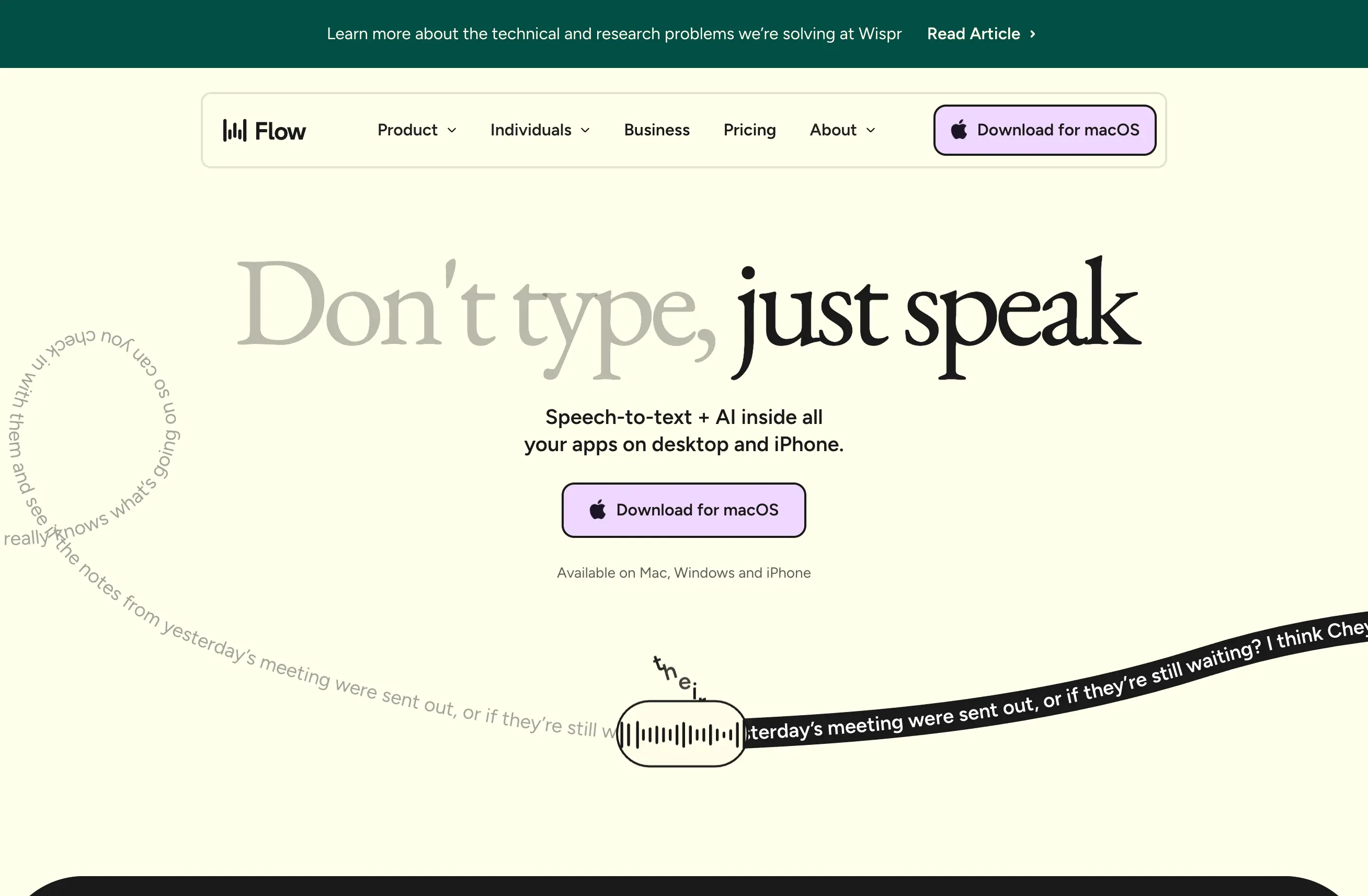
Voice input has revolutionized productivity, but choosing between dedicated mobile apps and browser extensions depends on your specific workflow needs. WisprFlow and Voice In represent two different approaches to voice-to-text conversion - mobile-first intelligence versus browser-based accessibility.
This comprehensive comparison examines both solutions across accuracy, platform coverage, feature depth, and workflow integration to help you choose the optimal voice input solution.
Platform Overview
WisprFlow is a dedicated mobile application focused on professional voice input with advanced AI processing, workflow integrations, and industry-specific optimization.
Voice In is a Chrome browser extension that adds voice input capabilities to any web-based text field, focusing on simplicity and universal browser compatibility.
Platform Coverage and Accessibility
Device and Platform Support
WisprFlow:
- Native iOS and Android applications
- Optimized for mobile device microphones and processing
- Offline capability for voice processing
- Mobile-first user interface and workflow design
- Requires smartphone or tablet for operation
Voice In:
- Chrome browser extension (desktop and mobile Chrome)
- Works on any device running Chrome browser
- Web-based interface accessible across operating systems
- No dedicated mobile app - relies on mobile browser
- Platform-agnostic through browser compatibility
Application Scope
WisprFlow:
- Works with any application on mobile device
- Cross-app voice input through system integration
- Native app switching and workflow management
- Mobile-specific features like voice while walking
- Device-level integration with notifications and multitasking
Voice In:
- Limited to web-based text fields and applications
- Cannot interact with native desktop or mobile applications
- Requires browser-based workflow for all voice input needs
- Works with web-based productivity tools (Gmail, Docs, Slack web)
- Cannot handle native app voice input (Word, native email clients)
Winner: WisprFlow - Broader application coverage beyond browser-based tools.
Voice Recognition and Accuracy
Speech Processing Technology
WisprFlow:
- Advanced AI models optimized for professional content
- Industry-specific vocabulary and terminology recognition
- Contextual understanding for technical and specialized language
- Real-time processing with post-processing accuracy improvements
- Mobile device optimization for various recording conditions
Voice In:
- Leverages Google's Web Speech API for recognition
- Standard vocabulary recognition without specialized training
- Good accuracy for general conversational content
- Browser-dependent processing quality and latency
- Limited customization of recognition parameters
Specialized Content Handling
WisprFlow:
- Legal, medical, and technical terminology recognition
- Programming language and code structure understanding
- Professional jargon and industry-specific acronyms
- Custom vocabulary training for specialized use cases
- Context-aware punctuation and formatting
Voice In:
- General-purpose voice recognition without specialization
- Standard punctuation and formatting rules
- No custom vocabulary or industry-specific optimization
- Basic command recognition for navigation and editing
- Limited ability to learn user-specific language patterns
Winner: WisprFlow - Superior accuracy for professional and specialized content.
Feature Depth and Functionality
Voice Commands and Automation
WisprFlow:
- Advanced voice commands for text editing and formatting
- Workflow automation and app integration commands
- Custom command creation and macro recording
- Voice-driven file management and organization
- Integration with productivity apps and project management tools
Voice In:
- Basic voice commands for cursor movement and selection
- Simple editing commands (delete, select, copy)
- Limited automation capabilities within browser context
- Standard punctuation and formatting voice commands
- No custom command or macro functionality
Productivity Features
WisprFlow:
- Meeting transcription and note organization
- Document template management and auto-formatting
- Project-specific vocabulary and workflow customization
- Team collaboration features and sharing capabilities
- Analytics and productivity tracking for voice usage
Voice In:
- Real-time transcription display in browser
- Basic text correction and editing capabilities
- Simple export and sharing through browser functions
- No advanced productivity or collaboration features
- Minimal customization beyond basic settings
Winner: WisprFlow - Comprehensive productivity ecosystem versus basic transcription.
Workflow Integration and Efficiency
Professional Workflow Support
WisprFlow:
- Integration with CRM, project management, and documentation tools
- Automated workflow triggers based on voice content
- Cross-application data synchronization and sharing
- Professional reporting and documentation generation
- Team collaboration and shared vocabulary management
Voice In:
- Limited to browser-based tool integration
- Manual copy-paste required for cross-application workflows
- No automated workflow or trigger capabilities
- Basic sharing through standard browser functionality
- Individual user focus without team collaboration features
Learning and Adaptation
WisprFlow:
- AI learning from user speech patterns and vocabulary
- Continuous improvement in recognition accuracy
- Industry and role-specific optimization over time
- Personal vocabulary and phrase learning
- Contextual understanding improvement through usage
Voice In:
- Limited learning capabilities tied to browser speech API
- No personal vocabulary training or adaptation
- Static recognition quality without improvement over time
- No user-specific optimization or customization learning
- Dependent on Google's general speech recognition improvements
Winner: WisprFlow - Adaptive learning and personalized optimization.
Pricing and Value Analysis
Cost Structure
WisprFlow:
- Freemium model with limited free tier
- Professional subscription: $25/month with advanced features
- Enterprise plans with team management and integration
- Per-user pricing with volume discounts available
- Additional costs for premium AI models and specialized features
Voice In:
- Free browser extension with basic functionality
- Premium version: $8/month with additional features
- One-time payment option available for premium features
- No per-user enterprise licensing complexity
- Lower cost but limited feature set compared to dedicated apps
Return on Investment
For Professional Users:
- WisprFlow provides comprehensive productivity improvement
- Higher cost justified by advanced features and workflow integration
- Significant time savings for specialized professional content
- Better accuracy reduces editing and correction time
For Casual Users:
- Voice In offers adequate functionality at lower cost
- Sufficient for basic web-based voice input needs
- Good value for occasional voice transcription requirements
- Minimal learning curve and setup complexity
Use Case Recommendations
Choose WisprFlow When:
- Professional content creation requiring high accuracy
- Workflow integration across multiple applications is important
- Industry-specific terminology and vocabulary is critical
- Team collaboration and shared workflows are needed
- Mobile-first productivity and on-the-go content creation is valuable
Choose Voice In When:
- Primary work happens in browser-based applications
- Budget constraints require minimal software investment
- Basic voice input functionality meets current needs
- Simple setup and minimal learning curve are priorities
- Occasional voice transcription rather than daily professional use
Technical Considerations
Privacy and Data Handling
WisprFlow:
- Local processing options for sensitive content
- Encrypted cloud storage with enterprise security
- Granular privacy controls and data retention policies
- Professional-grade compliance (HIPAA, SOC 2, GDPR)
- User control over data processing and storage location
Voice In:
- Dependent on Google's Web Speech API for processing
- Browser-based privacy controls and data handling
- Limited user control over voice data processing
- Standard browser security with Google's privacy policies
- Less control over data residency and processing location
Performance and Reliability
WisprFlow:
- Optimized mobile performance with offline capabilities
- Consistent quality across different recording environments
- Native app performance without browser dependencies
- Dedicated development focus on voice input optimization
- Professional support and service level agreements
Voice In:
- Browser performance dependent on device and connection quality
- Quality varies with Google's API availability and performance
- Potential for browser compatibility issues and updates
- Limited support options for technical issues
- Performance tied to overall browser and system resources
Final Recommendation
For professional users requiring comprehensive voice productivity, WisprFlow provides superior value through advanced accuracy, workflow integration, and specialized features that justify the higher cost.
For basic voice input needs in browser-based workflows, Voice In offers adequate functionality at a significantly lower price point with minimal setup requirements.
The choice depends on your voice input volume, accuracy requirements, workflow complexity, and budget constraints. Consider starting with Voice In for basic needs, then upgrading to WisprFlow if you discover voice input becoming central to your productivity workflow.
Most professional users who rely heavily on voice input will find WisprFlow's advanced features and accuracy improvements worth the additional investment, while casual users may find Voice In perfectly adequate for occasional voice transcription needs.
How each tool turns speech into text
The useful difference is where the text appears and how much work remains afterward.
Traditional typing stays precise and familiar for short edits.
WisprFlow dictates into any app with AI formatting, and it is free to try.

Discussion
Giscus