
Granola and Fathom can now both capture a meeting without adding a named bot, although Fathom describes its Mac bot-free option as a beta and still supports bot capture. The durable output remains the sharper distinction. Granola gives me a private document to shape and edit. Fathom creates a recording-centered call record with video, clips, summaries, search, and team workflows.
Choose Granola when you need the note. Choose Fathom when someone will replay, clip, coach from, or otherwise work with the recording.
The short answer
| Question | Granola | Fathom |
|---|---|---|
| Primary artifact | Editable enhanced note | Recording, transcript, summary, and clips |
| Capture model | Desktop microphone and system audio | Bot capture or bot-free Mac beta |
| Saved audio or video | Granola says it does not retain meeting audio | Unlimited recordings and transcriptions are advertised on Free |
| Human cues shape output | Yes | Transcript and Fathom's summary tools drive the record |
| Individual starting plan | Basic at $0 | Free at $0 |
| Best fit | Personal notes, decisions, and written follow-up | Replay, sharing, coaching, video clips, and team call review |
The free plans make a same-workflow test practical. The important result is not which summary looks polished in isolation; it is which product creates the artifact your work needs with less correction and handling.
What Granola is designed to produce
Granola starts from a calendar-led note or an unscheduled note. Its desktop app captures microphone and system audio without entering the call, sends the audio to cloud transcription providers, and uses the transcript, calendar context, and any typed cues to enhance the document.
My normal habit is to type very little: a decision that feels consequential, a phrase I want to preserve, or a question that needs a follow-up. After the call I correct names and numbers, trim anything irrelevant, and use the note as the basis for the real output.
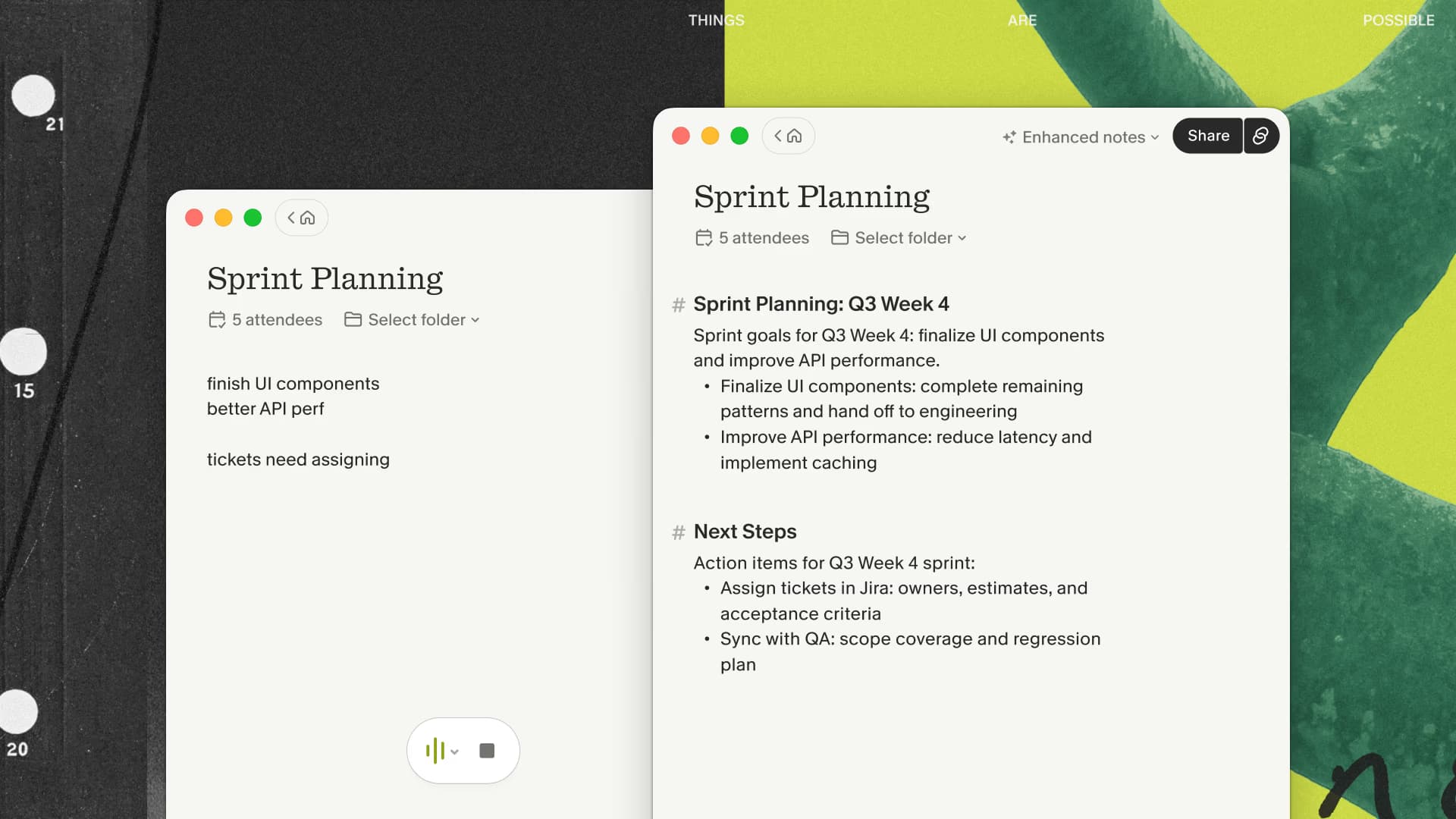
Granola says it does not retain meeting audio. That is attractive when nobody needs playback, but it is a hard limitation when tone, delivery, coaching, evidence, or shareable moments matter. The text must stand on its own after review.
If that note-first workflow describes the artifact you actually use, you can try Granola on a normal meeting with three months free and judge the edited result against your current recap.
What Fathom is designed to produce
Fathom centers a durable call record. Its current free plan advertises unlimited recordings and transcriptions, instant AI summaries, search, clips, and playlists. Paid individual and team tiers add action items, advanced summaries, conversational assistance, wider search, collaboration, CRM features, and administrative controls.
This is a strong model for sales and customer work. A manager can review how a call unfolded, a teammate can open a specific clip, and an account team can search the history rather than relying on a single person's edited recap.
Fathom's capture options have changed. Its current pricing page offers a choice between bot capture and a bot-free beta on Mac. The bot remains useful when obvious attendee-level capture or established conferencing support matters. The beta gives eligible users a quieter participant list, but a buyer should test its current platform and feature coverage rather than assuming full parity.
Why bot-free is no longer the deciding feature
Older comparisons present Granola as bot-free and Fathom as necessarily bot-based. That can send a reader toward the wrong product in 2026. Both can keep a named bot out of a supported call.
The better question is what persists. Granola preserves the transcript and editable note while discarding the audio stream. Fathom preserves a record that can include audio, video, and clips. One gives the note-taker editorial control; the other gives later viewers more of the original context.
Those choices have operational consequences. A Granola user needs a fact-checking habit because there is no audio file to resolve a disputed word. A Fathom team needs rules for recordings, access, sharing, retention, and CRM sync because the archive contains more sensitive material and reaches more people.
Pricing in 2026
Granola currently lists Basic at $0, Business at $14 per user per month, and Enterprise at $35 per user per month. Business includes unlimited meeting notes and history, advanced AI features, integrations, MCP, and API access. My affiliate link gives new users an additional first three months free.
Fathom lists an individual Free plan at $0 and Premium at $16 per month. With annual billing selected, Team is shown at $15 per user per month with a two-user minimum, and Business at $25. The Free plan already advertises unlimited recordings and transcriptions, while paid plans add more sophisticated individual or organizational workflows.
Do not choose on monthly price alone. If you need recording playback, Granola cannot become cheaper Fathom because the artifact does not exist. If nobody watches the recordings, the extra archive and controls may be overhead rather than value.
Where each product fails
Granola is the wrong tool when you need video, audio playback, shareable clips, automatic call coaching, or an imported recording. It also depends on the user starting the intended capture and verifying the resulting text.
Fathom is the wrong tool when a personal private note is all you need and a recording library would create needless retention and access questions. Its bot-free path is currently described as beta on Mac, so device, meeting platform, and feature support need hands-on verification.
Both can make confident-looking mistakes in transcripts, summaries, names, numbers, and action items. Neither should send a customer recap or update a system of record without review.
A same-call test that reveals the answer
Pick a permitted recurring meeting with a realistic level of complexity. In Granola, type two or three cues and turn the enhanced note into your normal written follow-up. In Fathom, use the capture mode you would actually deploy, create one clip, and ask another person to find a decision later.
Score four outcomes:
- How many corrections changed the meaning?
- How long did the final recap take?
- Did anyone need or use the recording?
- Did sharing the richer record create extra review or policy work?
If the recording solves a real recurring job, Fathom has the stronger product model. If the document is the only artifact anyone uses, Granola is cleaner.
For the document-only case, run the Granola side of this test through my three-month link; keep Fathom in the test if anyone genuinely needs playback or clips.
My recommendation
I prefer Granola for my own calls because I want to listen, add a few private cues, and edit a useful note. I would choose Fathom for a team that reviews calls, shares clips, coaches people, or needs a replayable customer record. Fathom's new bot-free beta makes the comparison fairer, but it does not erase that output difference.
For another recording-and-analytics system, read Granola vs Fireflies. For a live transcript in Chrome, see Granola vs Tactiq.

Discussion
Giscus